


This story is part of our September 2026 issue. To read the print version, click here.
I’m hunting elk at Point Reyes National Seashore in September of last year. I’m hunting with a camera, as hunting with a rifle isn’t allowed here, and that kind of sport isn’t my thing, anyway. Wildlife photography is a favorite hobby of mine and entails some of the same skills as hunting, including tracking animals.
Wildlife photography has led me to animal preserves statewide. None of them are as spectacular as the Tomales Point Trail, where you can see tule elk on a peninsula with views of the Pacific Ocean, Tomales Bay and Bodega Bay.
The Tomales Point elk were long penned into the end of the peninsula, with water on three sides and a fence on the fourth side. The fence created problems in drought years, so the National Park Service decided to remove a section in December 2024. The elk are now free to roam, although most stay near the trail. The North American elk is the second-largest deer species, surpassed only by the moose, and one of the largest land mammals.
This is my first visit since the fence opening, and I’m eager to find out how the elk have responded. I am also interested to find out how far I have to hike to find the elk. A count by the National Park Service a few months after my visit found 414 elk in the Tomales Point herd, and 125 of them were outside the fence. I don’t want to walk the full trail to find them, as it’s nearly 10 miles from the trailhead to the point and back. I’m carrying a lot of gear and supplies, including a big lens and a monopod.
The trail has modest descents and ascents as it makes its way along the Pacific Ocean side of the peninsula. In addition to the ocean, bays and cliffs, you can see wildflowers, songbirds and cypress trees on grassy knolls. Most of this part of the peninsula is elevated and a good distance from the ocean until you reach the end of the peninsula and descend to the water. McClures Beach also offers ocean views a short distance from the trailhead.
I scan for elk for a couple of miles before spotting my first group. The elk can often be found near clusters of vegetation as they graze. A handful of bulls are gathered about 200 feet east of the trail. I move to the side of the trail to avoid hikers but maintain a good distance from the elk.
“When you’re near the elk, stay on the trail. Don’t go off trail to get a picture,” says Dave Press, integrated resources program manager for the National Park Service and a wildlife biologist by trade. “There are plenty of places where you will be able to get a good picture. The elk are easily disturbed.”
Male tule elk grow antlers every year. The male elk compete for
dominance with one another, and the winners lead small harems of
females. (Photo by Brad Branan)
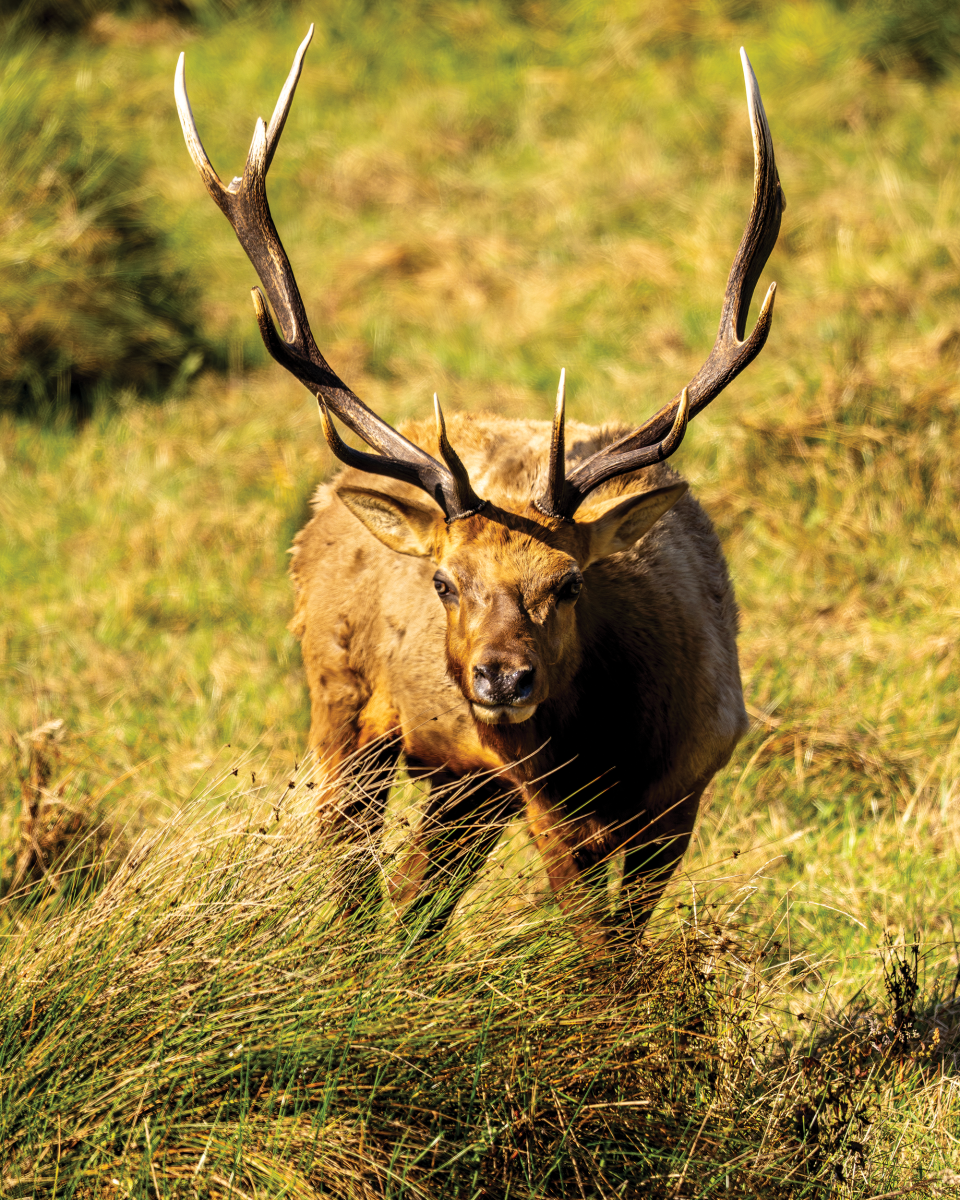
From July to September, elk are involved in several activities as part of the rut, Press says. The bulls fight one another with their antlers to establish dominance, with the winners then maintaining a small harem of female elk with whom they will mate. As their testosterone drops, the bulls return to bachelor groups, and cows stay with their young.
Market hunting brought tule elk to the brink of extinction in California in the late 1800s. A prominent rancher, Henry Miller, protected the last known herd. Elk now have herds across California. The state’s other native elk subspecies, the much larger Roosevelt elk, is protected in the northernmost part of the state, in federal and state parks.
Tule elk were reintroduced to Point Reyes in 1978, and their population has fluctuated a lot. The Tomales Point Trail area was thought to have enough resources to support 350 elk, and the numbers have gone from as low as 283 and as high as 543, Press says. The low population numbers have come during droughts, which limit drinking water and the growth of plants the elk eat.
In response, the National Park Service used to install water tanks during droughts, but with a management plan that called for the removal of the fence, they’ve since removed the tanks.
Assisting wildlife goes against the Park Service’s approach of leaving wildlife wild, Press says.
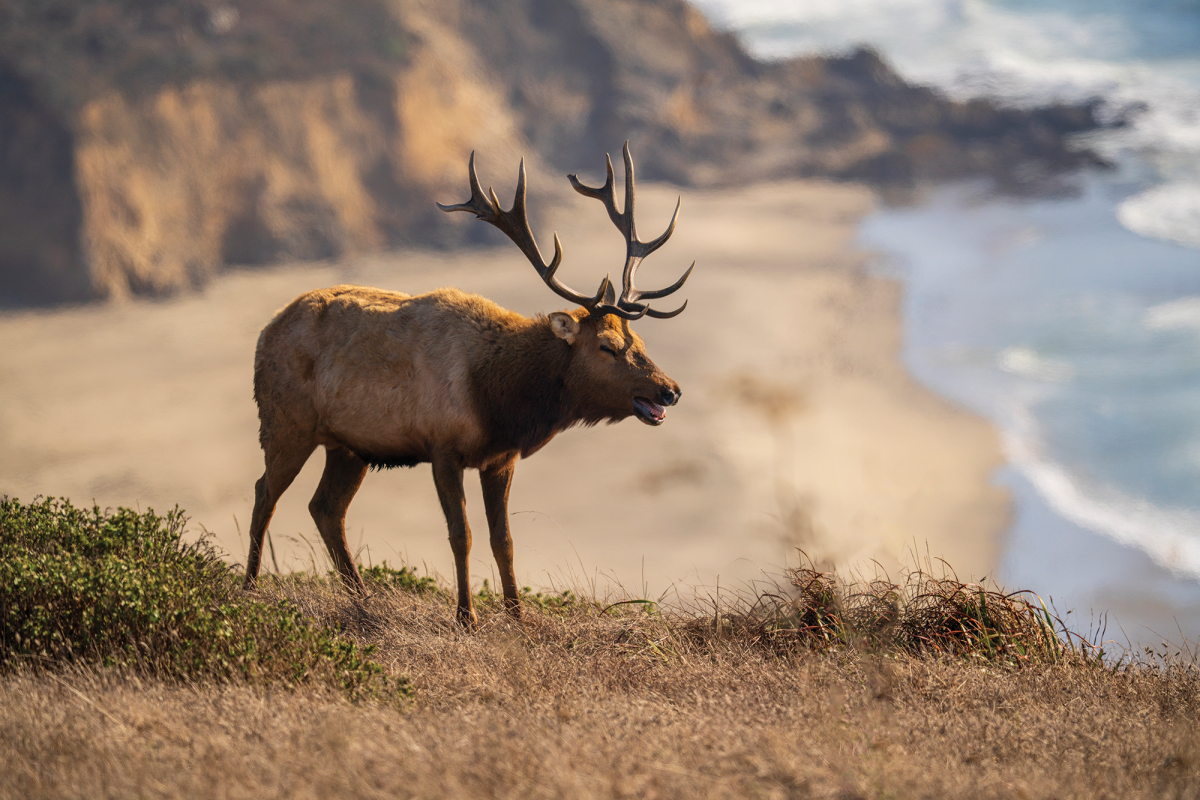
After years of watching the drama of the elk unfold, I’m just glad that the elk seem to be doing well now. After “bagging” a bunch of good pictures of the elk, I start hiking back to my car. I’ve walked to the end of the trail many times, and it is worth it — when I’m not carrying so much gear. On the hike to my car, I hear a bull bugling, then see him standing near a cliff, with McClure’s Beach in the distant background. I look in the viewfinder of my camera. Click. Then on the drive out, I see a row of elk outside the fence, looking toward the ocean. Click.
–
Stay up to date on business in the Capital Region: Subscribe to the Comstock’s newsletter today.
Recommended For You
There’s a Cool Cathedral of Trees Just a 2-Hour Drive From Sacramento
Sonoma County’s redwoods have survived over 1,000 years thanks to natural armor and other adaptations
There are some large, beautiful redwoods at parks closer to Sacramento, including Henry Cowell Redwoods State Park, near Santa Cruz, and Armstrong Redwoods.
From Trail Runs to Pubside Picnics, This Marin Coast Destination Has Something for Every Mom
Find a perfect weekend getaway where the redwoods meet the sea
Something about the sleepy town of Stinson Beach still feels undiscovered.
The Forgotten Mount Rainier Rescue That Changed America
An 1898 rescue linked a photographer to two men who would help define conservation in the United States
Most visitors come for the wildflowers and mountain views. Few know the story of the lost Marines, the famous photographer and the chance encounter that changed history.
Rainy Season Brings Waterfalls and Wildflowers to This Stunning Hike in Butte County
North Table Mountain Ecological Reserve comes alive with its multicolored mesa and vernal pools
I have seen Phantom Falls about a dozen times, and they never fail to inspire.