


This story is part of our April 2026 issue. To read the print version, click here.
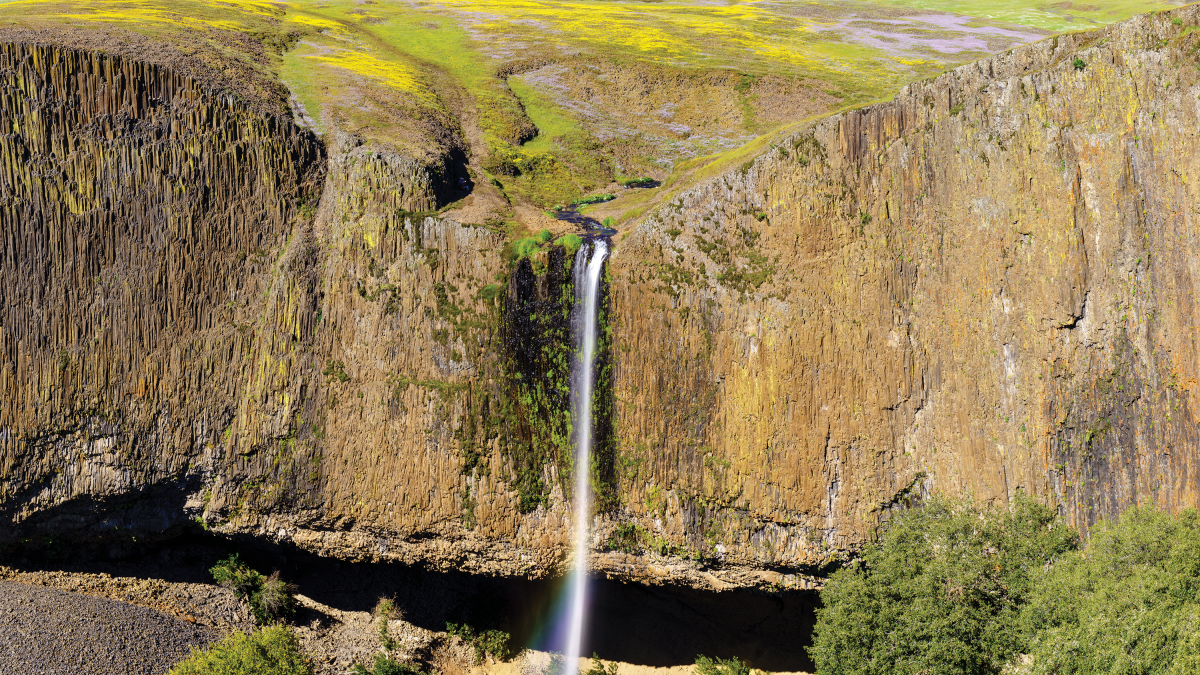
I have seen Phantom Falls about a dozen times, and they never fail to inspire. The falls are fed by an ephemeral creek that runs only after rainfall. It winds through rolling green hills before spilling 150 feet down into a gorge of columnar volcanic rock.
The falls regularly draw photographers, hikers and other nature lovers. Yet they aren’t even the most popular attraction at North Table Mountain Ecological Reserve near Oroville. That would be the wildflowers that cover the mesa from mid-March to mid-April. “At times, virtually the entire top of the mountain is covered with blossoms,” Albin Bills and Samantha Mackey write in “Wildflowers of Table Mountain: a Naturalist’s Guide.” Table Mountain, they add, is “one of the premier wildflower destinations in all of California.”
Waterfalls and wildflowers only begin to describe the wonder of the place. Unusual geology, sprawling oaks and intriguing vernal pools — seasonal ponds that teem with plants and creatures — also help to make the volcanic tableland unique. It was the ecosystems of the vernal pools that led the state to purchase the property about 30 years ago.
This is shaping up to be a great year for wildflowers. One of the key elements of an excellent wildflower year, called a superbloom, is significant early winter precipitation, which helps germinate the flowers. From October to early January, Oroville received 13 inches of rain — 50 percent more than usual.
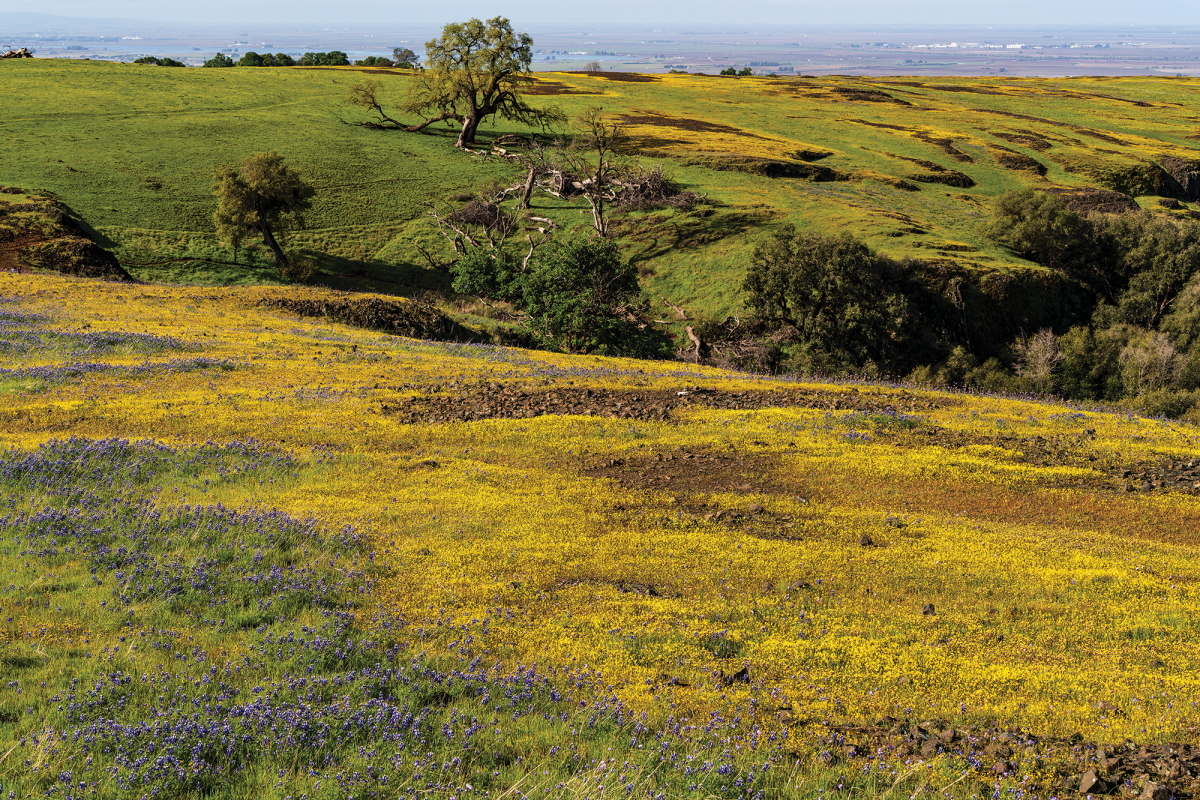
Noting that the Central Valley was once covered with seasonal wildflowers, Bills and Mackey point to a lack of development and few non-native plants as key reasons for the big blooms at Table Mountain. In spring, the reserve is covered with swirls of purple lupine, yellow goldfield, orange poppy and other colorful flowers.
Lupine and goldfield carpet the landscape at North Table
Mountain. Peak wildflower season is typically mid-March through
mid-April. (Photo by Brad Branan)
To visit Table Mountain, you need to get a day-use pass from the California Department of Fish and Wildlife. They are available on licenses.wildlife.ca.gov for $6. I bought one before visiting the reserve in December. I knew the wildflowers wouldn’t be out, but thought all the recent rain would make for great waterfall displays. The falls don’t have permanent water sources and only run in winter and spring when it is raining. That’s how Phantom Falls got its name. I wasn’t disappointed.
After parking in the reserve’s lot, I hiked west towards Hollow Falls. The trails aren’t named. Signs provide directions to some falls, but not all, including Hollow Falls. I won’t try to provide exact directions there.
I was wearing waterproof hiking boots, and I recommend something similar for springtime visits to the reserve. Water pools all over the place, thanks to the impermeable volcanic rock. The creek leading to Hollow Falls was audibly full. The grass was vivid green.
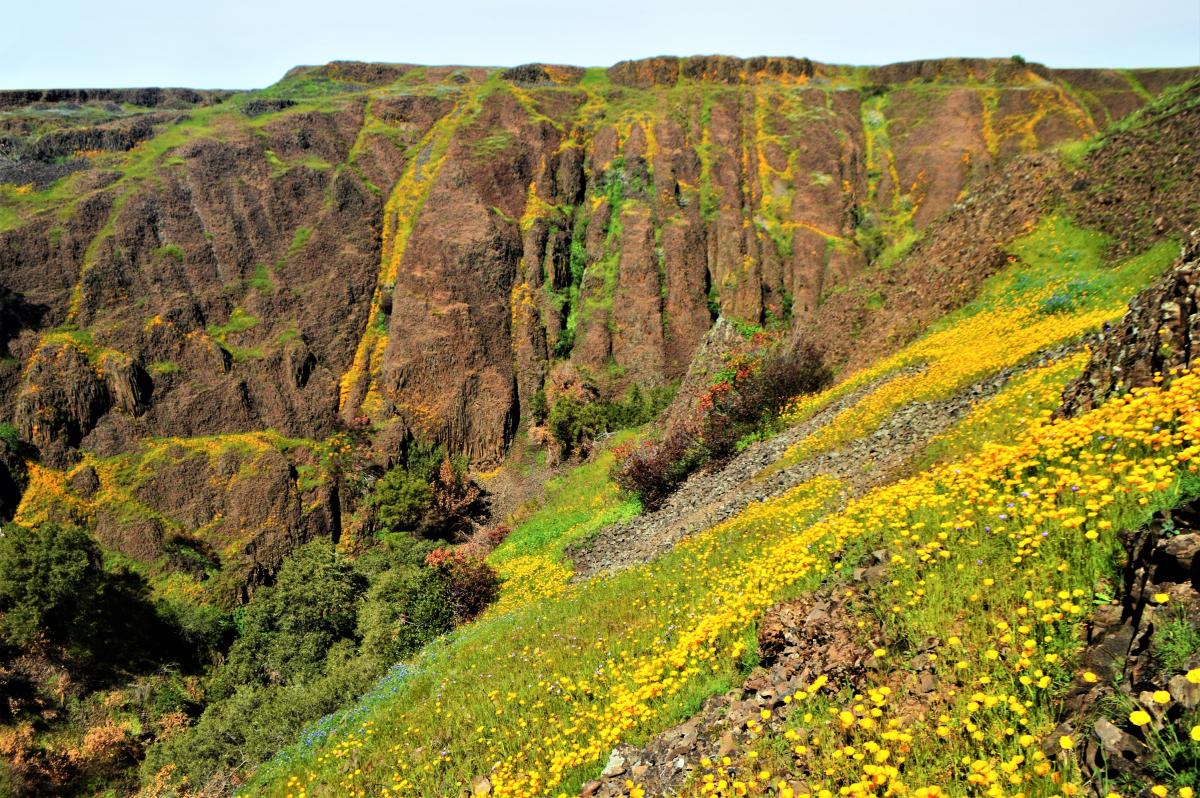
It’s possible to see the basalt pillars deposited from an ancient
lava flow on Table Mountain. (Photo by Anthonysthwd via Wikimedia
Commons, licensed under CC BY-SA 4.0)
The rolling green hills are broken up by volcanic rock outcrops. Take care walking over the rocks, because they are very slippery when wet. The trail approaches the falls from the rear and descends rapidly alongside them. I eventually crossed the creek and then walked back to the bottom of the falls.
A young couple was sitting on a rock, enjoying the view. The falls were gushing and looked great framed by the volcanic rock. I took a picture of the falls and left the couple to their solitude.
I eventually started hiking north towards two of the biggest falls at Table Mountain, Phantom and Ravine. To get to those falls from the parking lot, you can pretty much follow the crowds because that’s where everyone is going. You take the main trail west until you come to the first trail going north, roughly a mile in, and then take that trail. It is about another mile more to Ravine and then Phantom Falls.
The wildflower bloom on Table Mountain in early March 2021.
(Photo by Frank Schulenburg via Wikimedia Commons, licensed under
CC BY-SA 4.0)
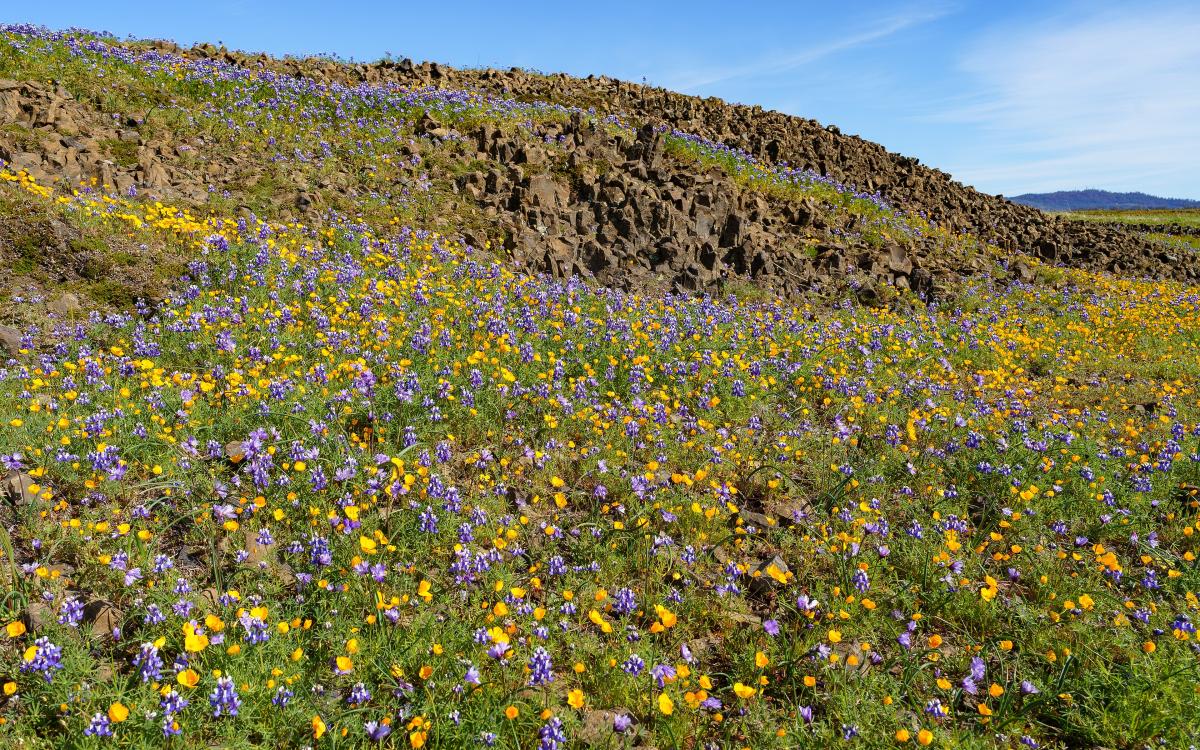
This section of the reserve is where the wildflowers are most abundant. They carpet the hills between the rock outcrops. Adding to the beauty are large blue oaks found near ridges and creeks.
Lacking powerful water sources, the falls at Table Mountain aren’t spectacular on their own but are still beautiful because of their surroundings. In the case of Ravine Falls, they are picturesque because of the trees and volcanic rock in the ravine. Depending on the amount of recent rainfall, Table Mountain can have up to a dozen waterfalls.
I sat at the edge of the ravine and enjoyed the view of Ravine Falls before heading back to my car, choosing to skip Phantom Falls this visit. I knew I would see Phantom Falls in the spring when I returned to the reserve to see the wildflowers.
–
Stay up to date on business in the Capital Region: Subscribe to the Comstock’s newsletter today.
Recommended For You
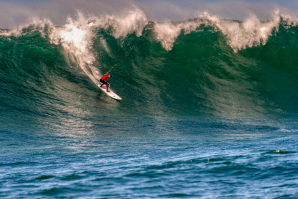
There’s Still Time This Season to See Some of the World’s Biggest Waves — Right in Northern California
The window for Mavericks’ biggest waves is closing, but there’s still time to catch the spectacle
From charter boats to cliffside trails, there are still ways to catch Mavericks before the swells fade off Half Moon Bay.

Between Sacramento and the Ski Slopes, a Gold Rush Town Serves Bacon Flights and Bagels
Out of Office: Auburn is worth a stop on any Tahoe trip
Compared to the Bay Area, Sacramento is pretty close to Tahoe’s
ski slopes, but even a short drive requires a proper
breakfast.
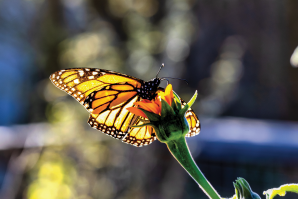
Thousands of Western Monarchs Winter in Santa Cruz — but Their Numbers Are Dwindling
November is the season for butterfly spotting at Natural Bridges State Beach
Through January, the only state-run monarch preserve in California becomes a magical stop for the overwintering western monarch butterflies.
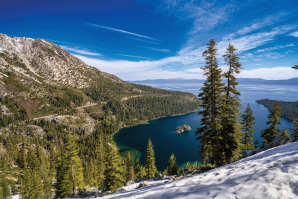
The Best Way to Explore Lake Tahoe Is On Foot
Those visiting Lake Tahoe shouldn't overlook its alpine trails — a great way to beat the crowds during the warmer months
For our new Out of Office column, reporter and photographer Brad
Branan takes us on a journey to some of his favorite hikes around
Lake Tahoe.