


This story is part of our June 2026 issue. To read the print version, click here.
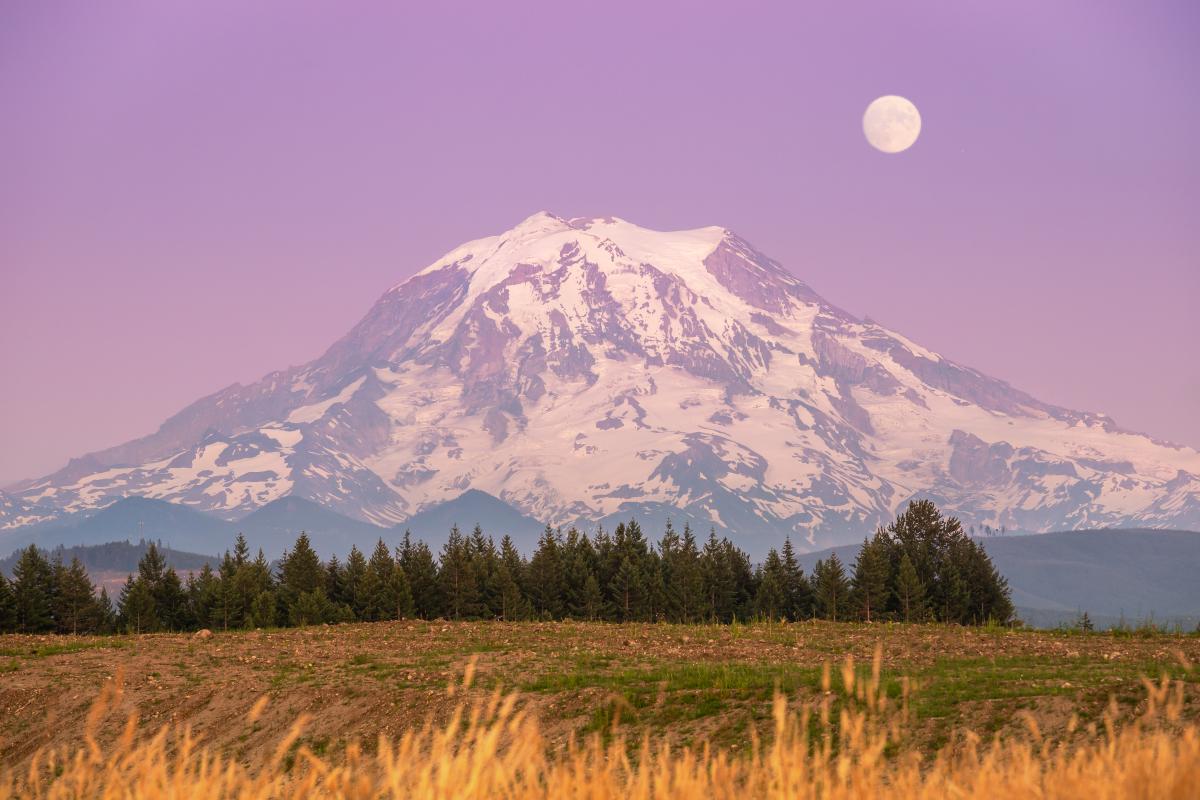
Lifting more than 14,400 feet into the clouds, Mount Rainier is not just the tallest peak by elevation in the contiguous United States — it is the sublime centerpiece of 369 square miles of pristine national park land in the Pacific Northwest.
It’s also a mountain that, for some, taps into our deepest fears.
That reality is on my mind as I hike up its Skyline Trail. I reach a cliffside waterfall below a green stretch of subalpine firs and mountain hemlock that spills across the terrain, separating the sheared gray crags of Rainier’s summit from plum-colored swirls of wildflowers in the meadows.
Such views are what I’d hoped to find when making the 50-minute drive from Tacoma to the little town of Ashford, where I’d rented a cabin at the southwest gateway of the park. This mountain hamlet is an ideal basecamp, with its smiling, storm-hardy locals and restaurant owned by a Nepali immigrant who serves Himalayan food and holds the world speed record on Mount Everest.
Water spills down Myrtle Falls on Mount Rainier’s Skyline Trail.
(Photo by Scott Thomas Anderson)
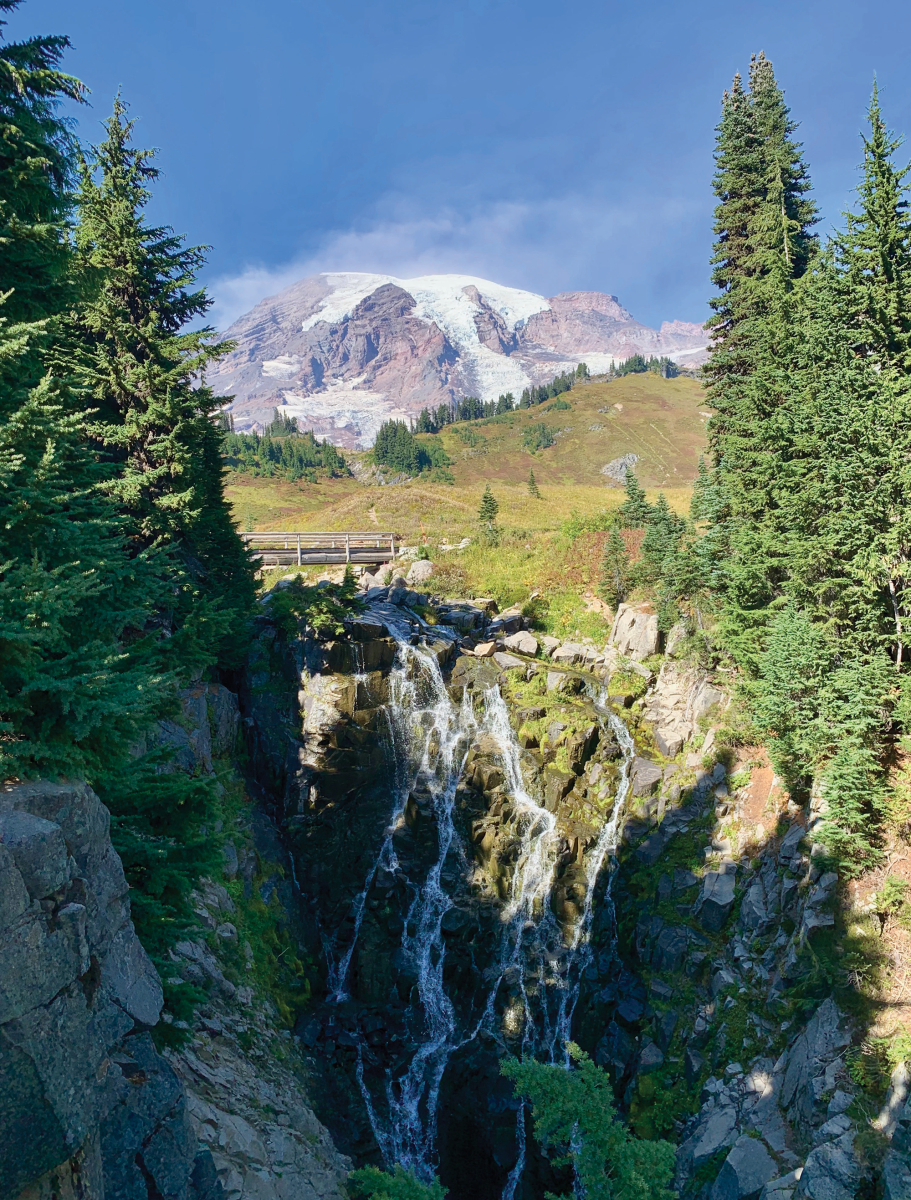
Catching my breath above Myrtle Falls, I look up at a vast sheet of whiteness known as the Nisqually Glacier and try to spot the exact ice blanket that the lost marines are sleeping under.
But that wasn’t the story that inspired me to see Mount Rainier. I’ve been more interested in a near-tragedy that was avoided — a tale of heroics that would have lasting implications for cultural and wildlife preservation across our nation.
Views through the generations
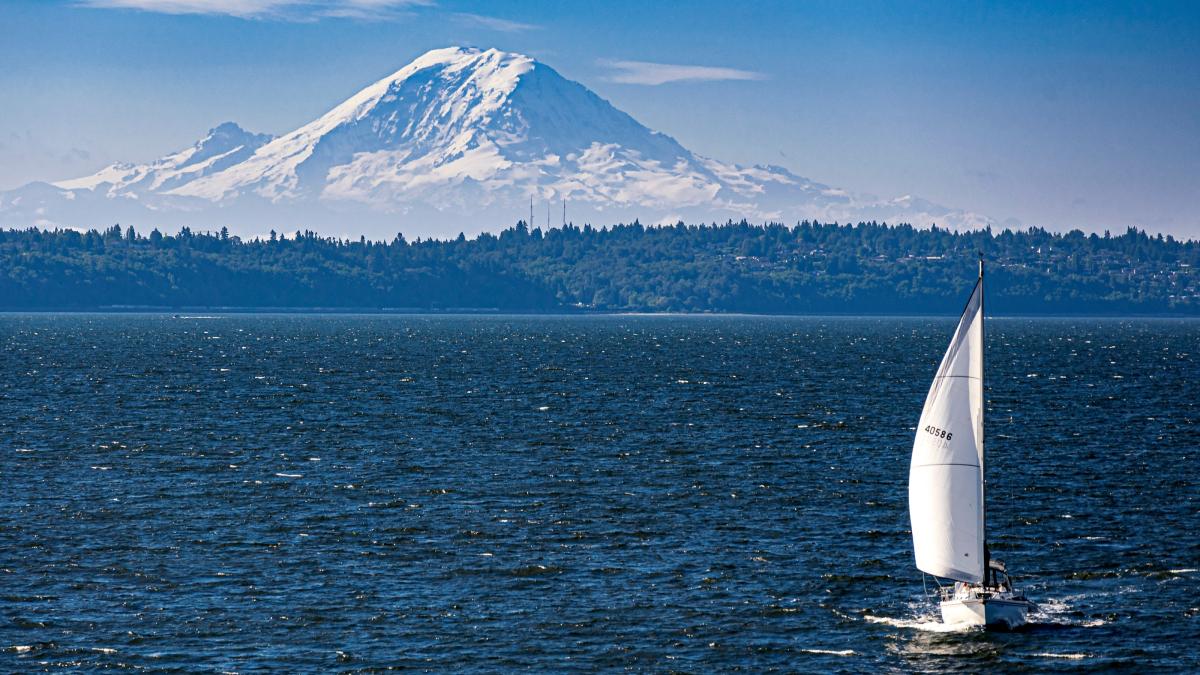
On a clear day, the imposing dignity of Rainier can be appreciated 73 miles northwest in the waters of lower Puget Sound. Captain Ethan Allen, who gives boat tours out of a small, gorgeously wooded fishing village called Gig Harbor, is experienced in sharing that view. Allen always makes sure to steer his vessel along the tree line of Point Defiance towards the Tacoma Straits so his passengers can glimpse the volcano’s hulking shape and pearly snowtops dominating the sky. It’s a spectacle that emerges beyond tossing waves and sun-bathing sea lions like some far-off, mist-clad mountain of myth.
A view of Mount Rainier from the Puget Sound.
“We have five different rivers here that all come from that mountain,” Allen mentions while steering his boat. “It’s really incredible. And people who come out here on our harbor tours just love the views of Rainier that we have during beautiful weather.”
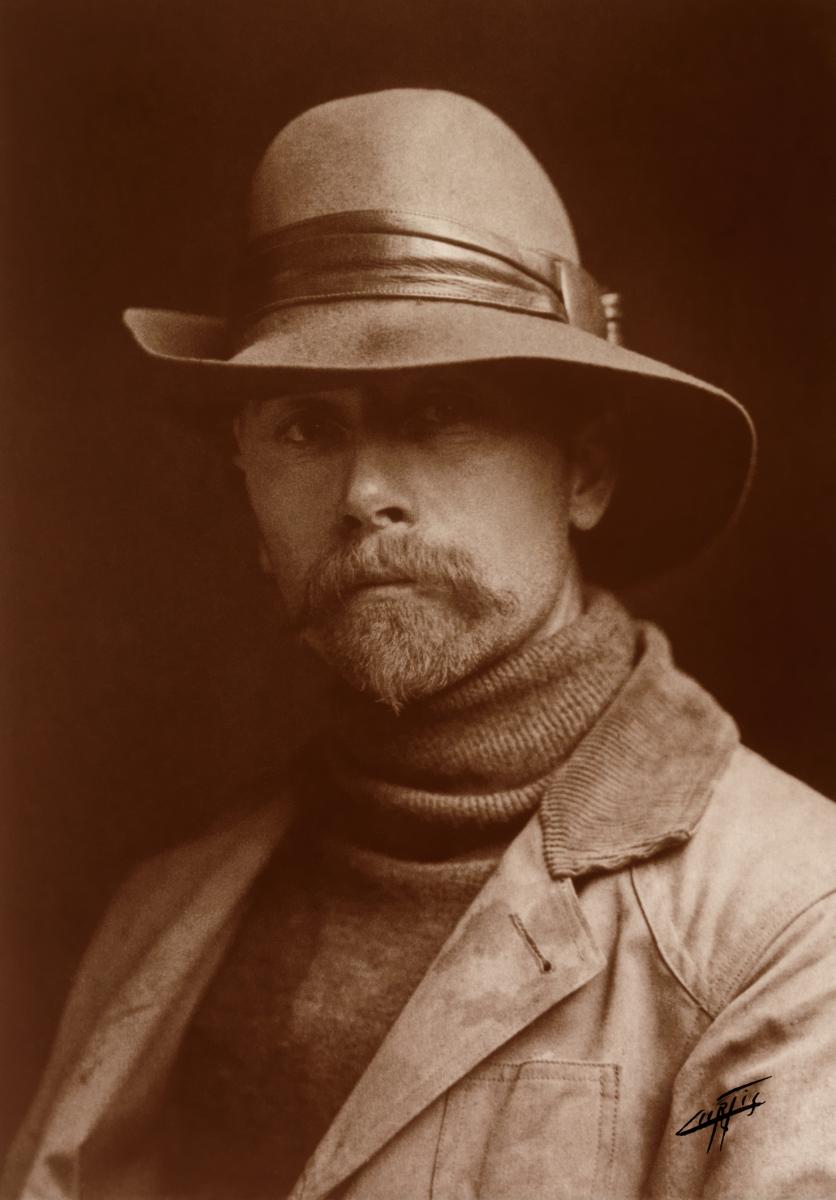
This is what Mount Rainier first looked like to Edward Curtis, a young photographer who moved to Seattle in 1887. Curtis took an interest in shooting portraits of Native Americans who lived from Everett to Tacoma. His focus was on capturing tribal members still engaged in traditional fishing, canoe-making and spiritual ceremonies, though he has since been criticized for manipulating images and presenting staged scenes as authentic. Curtis was also obsessed with Rainier, slowly teaching himself to become an expert mountaineer on its most dangerous slopes.
Edward Curtis’ self portrait circa 1899. (Public domain photo via
Wikimedia Commons)
Two of those rescued turned out to be George Bird Grinnell and Clint Merriam. Grinnell — founder of the Audubon Society — was a journalist and thought-leader who’d go on to be a driving force in the American conservation movement, helping establish a national park, create funding for fish and wildlife management and make sure that buffalo didn’t go extinct. Merriam, a zoologist and ecologist, was one of the founders of the National Geographic Society, which ultimately funded vital scientific and cultural research around the world. In other words, it’s a good thing Curtis was there.
George Bird Grinnell and his wife, Elizabeth Curtis Williams
Grinnell, on Grinnell Glacier in 1925. (Public domain photo via
Wikimedia Commons)

Resting above the waterfall on Rainier, I can’t help but marvel at how the volcano’s equal measures of risk and beauty have impacted what America is over the generations.
Correction June 11, 2026: A previous version of this article misstated the name of a plane that crashed on Mount Rainier. It was a Curtiss R5C-1 Commando, not a Curtis Commando R5C.
–
Stay up to date on business in the Capital Region: Subscribe to the Comstock’s newsletter today.