


This story is part of our June 2026 issue. To read the print version, click here.
The sun was bright on the water as my grandson and I launched our kayaks from the shore of Lake Natoma that afternoon. We were soon paddling across to the cove area, joining dozens of other colorful kayakers and paddle boarders, some with their dogs or children aboard for the ride. As we glided through the winding cove, we stopped at a sandy spot, looked down into the clear water and saw flecks of gold sparkling in the sand.
I knew I had to write about this historic spot.
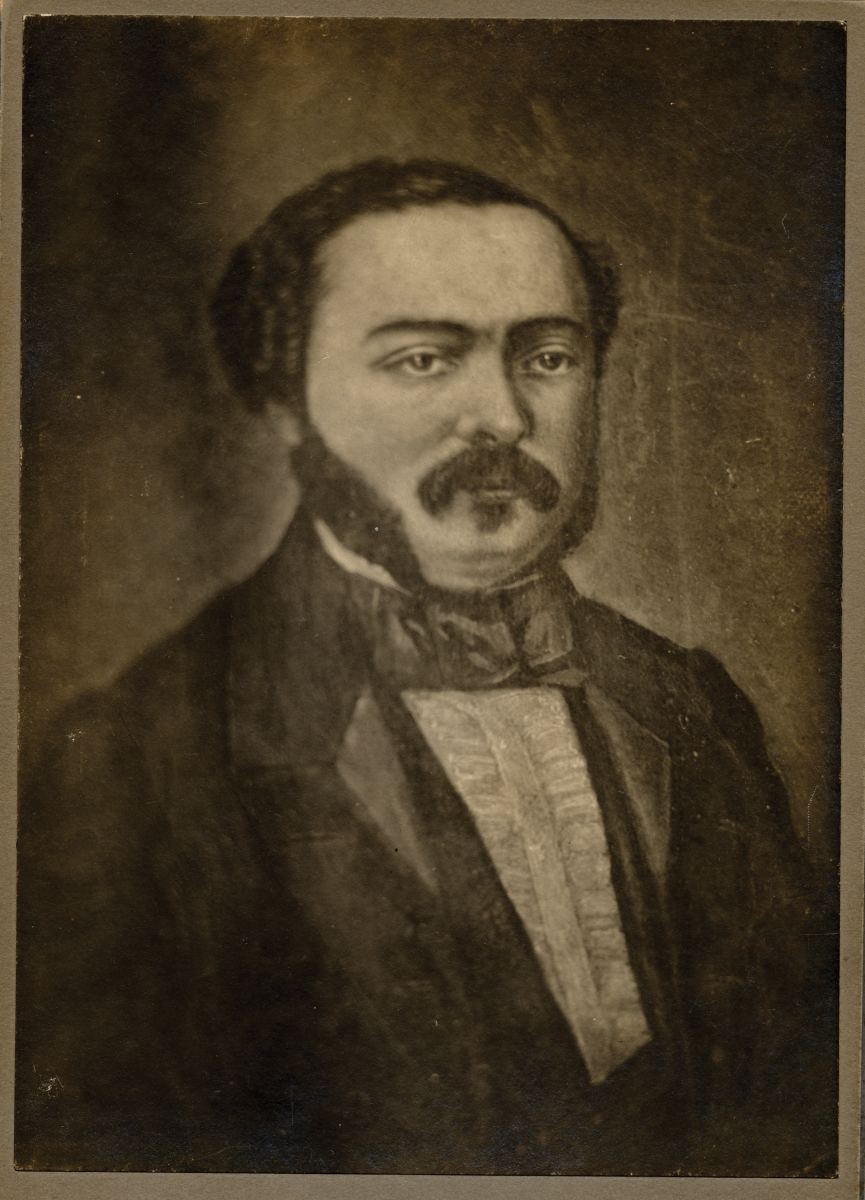
Through my research, I met many vibrant characters, including William Alexander Leidesdorff, who was born on the Caribbean island St. Croix in 1810, the illegitimate son of white Danish sugar merchant Wilhelm Alexander Leidesdorff and Anna Marie Sparks, a mixed-race woman described as free in a St. Croix census from the later years of her life. The younger Leidesdorff immigrated to the U.S., became a citizen in 1834 and made a fortune in the maritime industry.
He traveled West to Yerba Buena, later San Francisco, when California was still Mexico. He became a Mexican citizen with dual citizenship in 1844 and was granted 35,000 acres of land to develop along the American River from Folsom to Bradshaw Road, known as Rancho Rio de los Americanos.
William Alexander Leidesdorff, who was of Black descent, was
granted 35,000 acres along the American River by the Mexican
government which included the Negro Bar site where Black miners
panned for gold. (Courtesy of the California History Room,
California State Library, Sacramento, California)
So begins the history of the Gold Rush in the Sacramento region. While most history books focus on the discovery of gold at John Sutter’s mill in Coloma on Jan. 24, 1848, local historians want people to know about the rich Gold Rush history in Sacramento County.
Historians estimate 300,000 people traveled west in what was considered one of the largest human migrations in history. “And we’re basically Ground Zero for it,” says Sacramento historian Eric Webb, author of the book “Lost Gold Rush Towns of Sacramento.”
They came by land (in wagons and on foot) and on ships in search of fortune, crossing arid deserts and the grueling rocky Sierra Nevada mountain range. The territory of California had no formal land rights or mining laws at the time and did not acknowledge the claims of Native peoples such as the Nisenan Maidu, Miwok and Washoe, so miners could stake claims on property on a first-come, first-serve-himself basis.
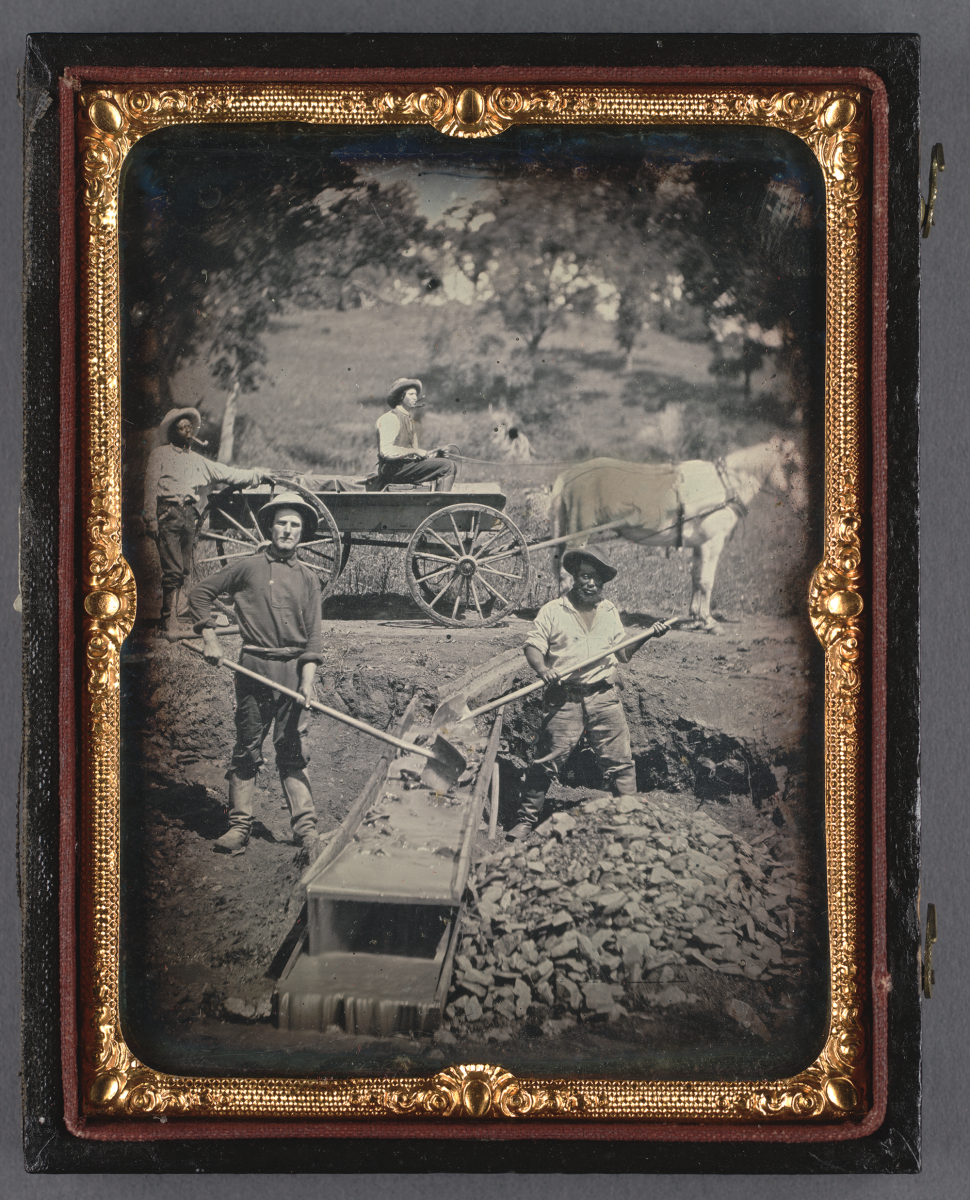
During the Gold Rush, Black miners worked side-by-side with
Chinese, Portuguese and Mormon miners in small mining communities
around our region. (Courtesy of the California History Room,
California State Library, Sacramento, California)
Ethnic groups, such as Black and Chinese miners, tended to stick together, as did Mormon miners. Historians write that Black miners chose to set up a community along the American River on Leidersdorff’s land on what is now alongside Lake Natoma. It was named Negro Bar in 1854 by engineer Theodore Judah when he created a map for the Sacramento Valley Railroad. At its peak, Black Miners Bar had 700 residents, a hotel, store and blacksmith shop.
“It was a settlement that folks moved into. They set up tents, a few permanent structures, but it was supplied by gold, so the town site was a pop-up,” says Zakary Adams, a California State Parks interpreter.
The miners were panning on pristine land, first settled by the Nisenan with the nearby resources of fresh water, fish from the river and animals to hunt. The foothills brimmed with wildflowers, acorns and wild oats. Blackberry brambles lined the trails, while deer, wolves, foxes, rabbits, raccoons and the occasional grizzly bear roamed nearby.
“This was a resource-rich area, and people came here because there was gold to get,” Adams says.
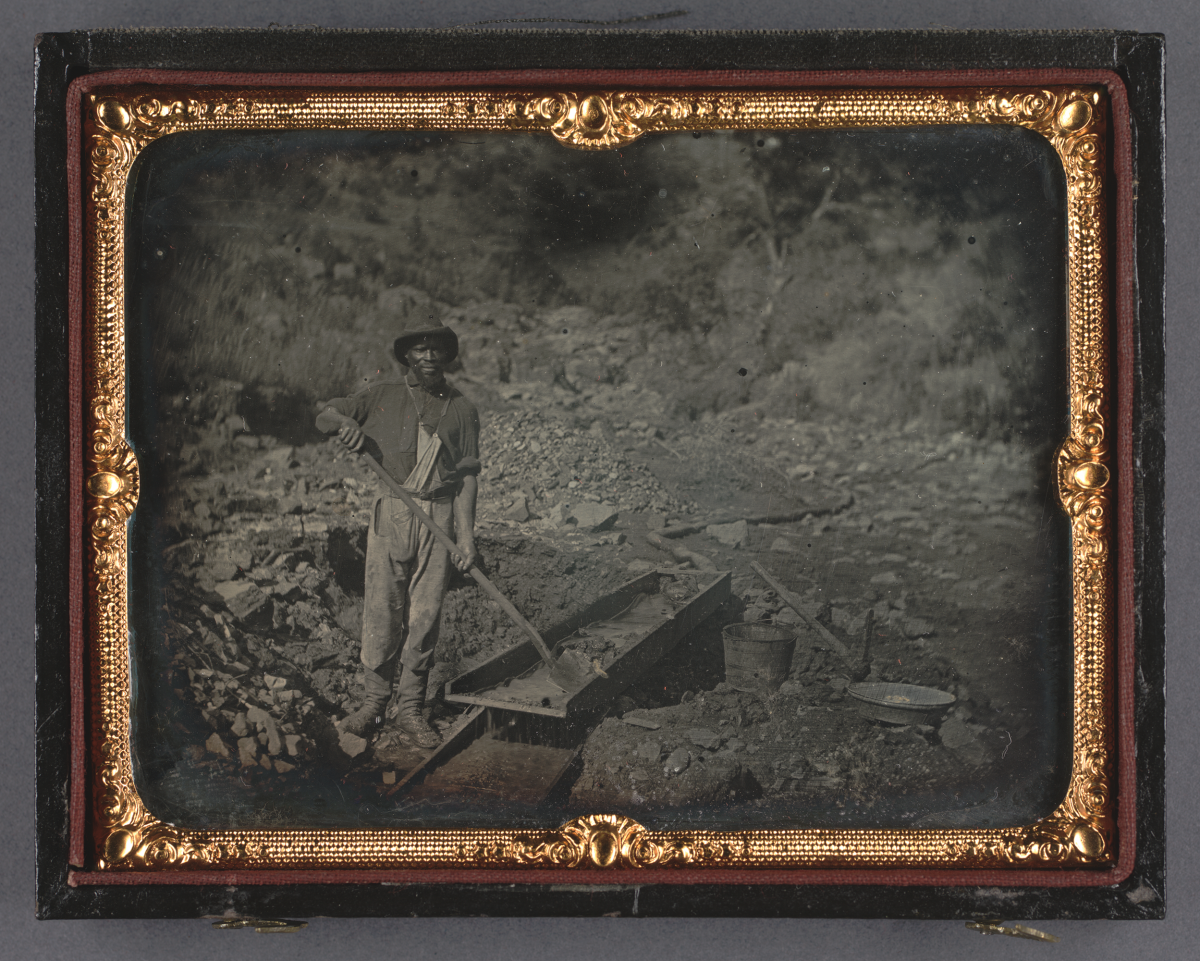
Black miners made the area their home for more than a year. Using pans, pick axes and shovels, they would mine the gravel in the cool water, finding various sized pieces of gold. There is no clear record of how much gold was found at Black Miners Bar between 1848-1850 nor how many Black people were there, although the 1850 Census estimated 500.
The late San Mateo College professor Rudolph M. Lapp, who wrote the Pulitzer Prize-nominated “Blacks in Gold Rush California” in 1977, estimates there were 1,000 Black miners altogether in California. That number would swell to 5,000 by 1860. Most of the Black miners were free people, while about 10 percent were enslaved in other states.
A Black gold miner during the California Gold Rush. (Courtesy of
the California History Room, California State Library,
Sacramento, California.)
“Most of them wanted to be here because they were the freest Black folk on the planet at the time here in California. You’re mining gold, you pick up money,” Harris says.
Historical records estimate that between 1848 and 1855, $2 billion worth of gold was extracted during the California Gold Rush. Adjusted for inflation, that comes to $20-$25 billion in today’s terms, according to Britannica. While some got wealthy, most didn’t. Money was quickly spent on gambling and liquor at the various Gold Rush saloons scattered around early Sacramento.
“Most went home broke or broke even. Those who got rich spent it on oysters and champagne,” Webb says.
The Black miners at Negro Bar could keep the gold they found. A cook named Hector made $4,000, while a man known only as Dick mined $100,000 in Tuolumne County, according to Lapp’s research. There were some slaves brought to California by their owners to mine for them. While most couldn’t keep the gold they found, some owners allowed their slaves to keep some and buy their freedom for themselves and their families.
The Gold Rush hits its peak
As fast as it started, the Gold Rush was over in just a few years. By 1851, Negro Bar and other mining spots along the American River were cleared of gold through placer mining — extracting gold from sand or gravel in the bed of a river or lake. Hydraulic mining was invented in 1853, which used water pressure to blast out hidden gold upstream, sending sediment carried by the river down to the Negro Bar area. Dredging companies like the Natomas Company came in later with huge machinery and further stripped the river from Folsom to Fair Oaks.
“Is there still gold in these hills? Yes,” says Webb. “Storms, development like the Folsom Dam and Sierra snowmelt are still unearthing it and pushing it downstream through the rivers and lakes.”
Times were changing for the Black miners as well. While most had their freedom, they didn’t have the right to vote or defend themselves in court. The federal Fugitive Slave Act of 1850 demanded that all escaped slaves be returned to their owners, and pro-slavery California state legislators passed another law in 1852 that stated that Black people who had entered California before it became a state were still the legal property of their former owners.
Some of the free Black people who came West returned to their homes in free states in the east. Some made the migration up river to Mormon Island and Negro Hill, two other historic communities that sprung up at the south fork of the American River in Sacramento County during the Gold Rush. The remnants of those towns were later buried underwater when the Folsom Dam was built in 1955. (Before it was flooded, the Army Corps of Engineers relocated graves from the towns to the Mormon Island Cemetery in El Dorado County.)
The City of Folsom’s corporation yard houses its trucks and
equipment. The yard sits atop the site of the original Black
Miners Bar encampment beside Lake Natoma. (Photo by Kial James)
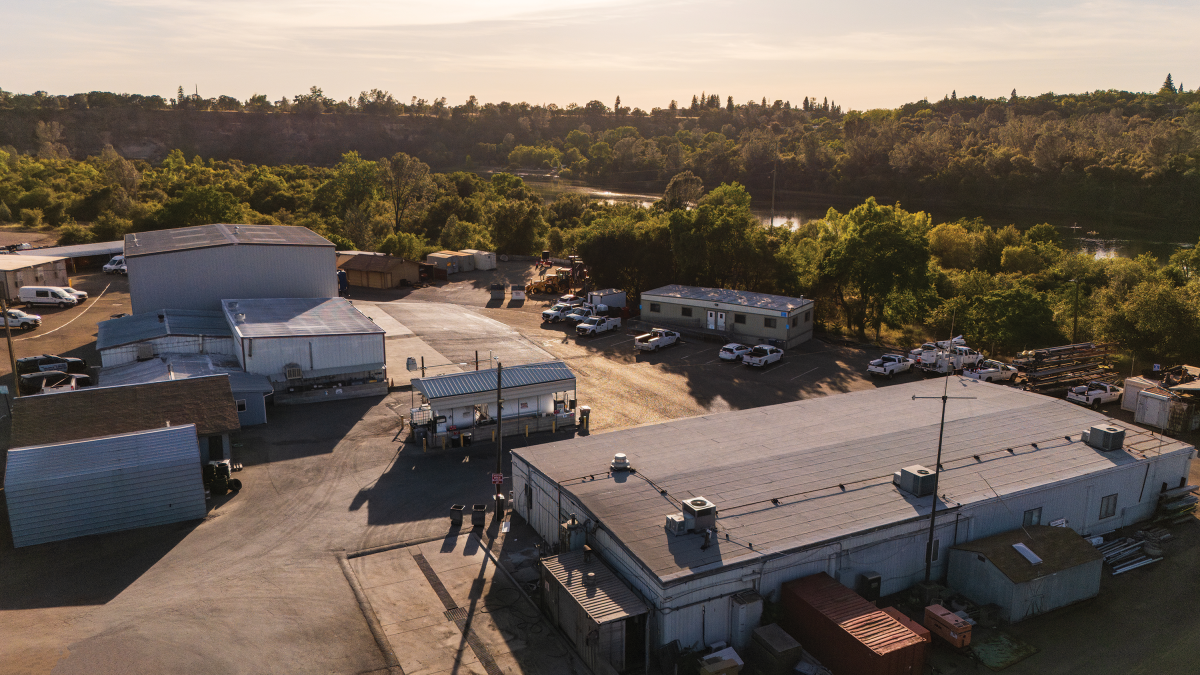
The area that was the actual townsite of Negro Bar is now buried under the City of Folsom’s corporation yard, which houses the city’s equipment. It sits alongside Lake Natoma and the recreation area named after the Black miners.
A controversial name change
Negro Bar retained its historic name, with a big granite plaque proclaiming it outside the entrance to the park, for nearly 175 years. But one day in 2018, Phaedra Jones, a Black woman from Stockton, was doing a food delivery to a nearby restaurant when she saw the park’s name and was outraged, calling it racist and offensive. She started an online petition that got 60,000 signatures.
Larishia Johnson is a Ph.D. student in the African American and African Studies department at UC Davis who lived in Folsom and was involved in the movement to change the name to Black Miners Bar. She says the sensitivity around the old name, which had bothered some Black residents long before the official name change, became particularly relevant after George Floyd, a Black man, was murdered by a white police officer in Minneapolis in 2020.
“Maybe we’re in a place in our country where we could start to have some real change, like culturally, a racial awakening,” Johnson says.
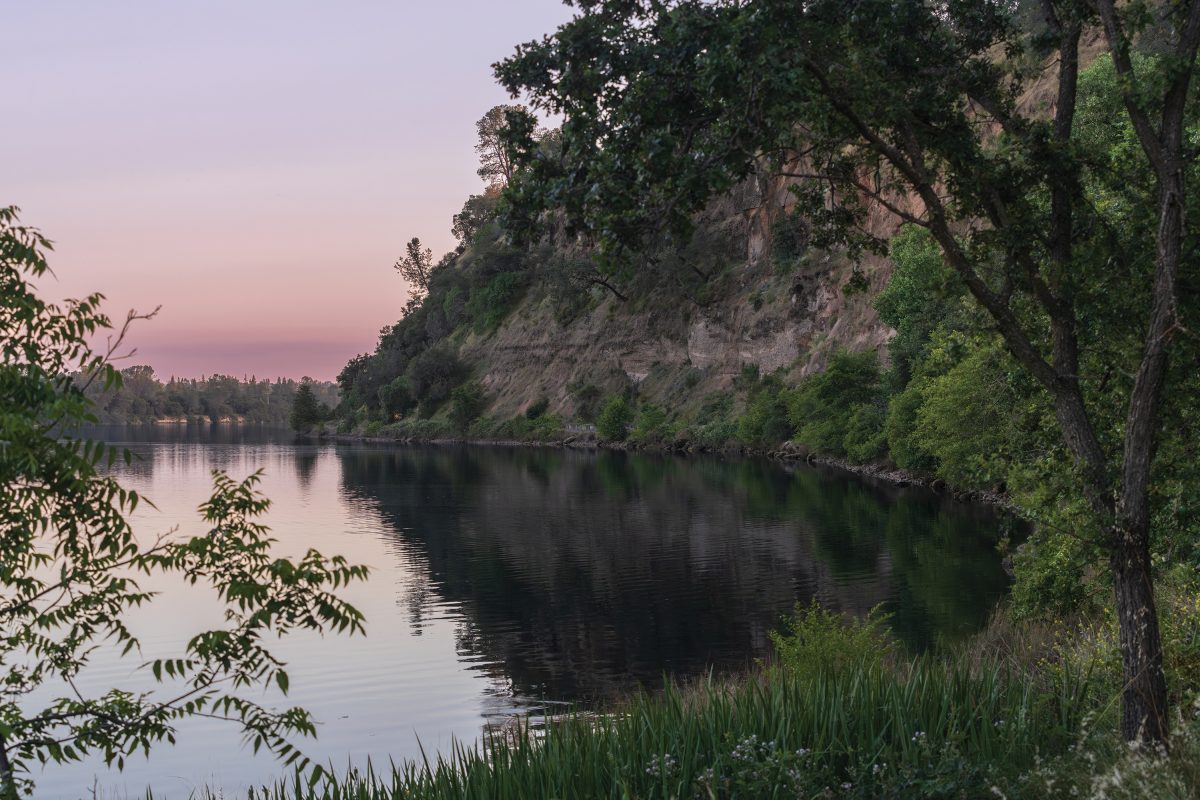
Black Miners Bar is an outdoor recreation spot at Lake Natoma in
Folsom. It was named to honor the Black miners who settled there
during the Gold Rush to pan for gold. (Photo by Kial James)
The California State Parks and Recreation Commission held contentious hearings on the name change. “The historical use of the name appears in reference to Black miners during the Gold Rush including from an 1850 newspaper article noting Black miners finding gold at this location in 1848,” the parks’ website states.
Many locals wanted to keep the name of Negro Bar, citing its historic value. Harris, the local Black historian, agreed, but he knew it would be an uphill battle. The state parks department has been undergoing a review of historic names and changing some of their racist history.
“Let me get my slingshot, because this is gonna be a David and Goliath story,” Harris says, recalling the fight. “I can count the votes. You’re gonna change the name, but this is ridiculous. You’re not going to erase history.”
The state parks commission voted unanimously to change the name to Black Miners Bar in 2022. All signage for the park has since been changed. “The name Black Miners Bar, the renaming that happened here, is part of the reexamining of our past,” says Adams, the state park ranger.
Other local historians admit, however, that some visitors are confused by the new name, believing that it might refer to a mine extracting black rock (there is a nearby quarry owned by Teichert), not that Black miners panned for gold there during a historic time in our state’s history.
A new era for Black Miners Bar
On an April morning, a Black man dressed in an 1850s period costume stands in Leidesdorff Plaza in Folsom. “I was not born here, like some of you. I was born in St. Croix in the Caribbean, and I became a sailor and a business trader in New Orleans, navigation and maritime law,” says local historian, actor and international law expert James Armstead, who plays Leidesdorff for Chautauqua Playhouse, a living history theater. He believes it’s important to keep Leidesdorff’s history alive.
Armstead says Leidesdorff’s father acknowledged him as his legitimate son in 1837 before he died, allowing him to inherit his father’s estate. Leidesdorff is buried at Mission Delores, one of the oldest missions in California, in San Francisco.
As for Leidesdorff’s estate, it was estimated at $1.4 million after he died. U.S. Army Capt. Joseph Folsom, a West Point grad from the East Coast, traveled to St. Croix and purchased the land for $75,000 from Leidesdorff ’s mother, Anna Marie Sparks. Far under market value, the land purchase was held up in court for many years. In the meantime, Capt. Folsom named the land Granite City, but like Leidesdorff, Folsom died suddenly at age 38 of renal failure. The executors of his estate changed the name of the town to Folsom in 1856.
“I think the big thing is that what we try to talk about and share is that there were black settlers during the Gold Rush. They made a difference. They existed.”
— Zakary Adams, California State Parks interpreter
“It’s my belief that he had very light skin,” Gary Palgon, author of the biography “William Leidesdorff: First Black Millionaire, American Consul and California Pioneer” told Comstock’s in an email. He adds that Leidesdorff had a fiancée in New Orleans who called off the wedding when she learned that he was mixed race. “He would have struggled to achieve such success during his short life had people recognized him as Black, as that was not the norm during this period of slavery in the United States (and Mexico).”
In 2020, state parks began a multi-year, multi-million dollar renovation of Black Miners Bar. At times in its recent history, it fell into disrepair and abuse, sometimes attracting drug dealers and vagrants. The restoration cleaned it up and modernized it, adding benches, barbecue grills, picnic and shaded areas plus kayak and paddle board rentals. Now during the summer, Lake Natoma is a kaleidoscope of color from the bright watercraft. It’s also become one of the most popular spots in Sacramento County for outdoor recreation, attracting more than 250,000 visitors a year.
Historians, and locals with deep connections to the area, want to keep the miners’ history and story alive.
“People have been coming here for the water for as long as people have been here; the Indigenous cultures, the food, the growth, the resources based on the water — Gold Rush-based. On the water now, kayakers, paddle boarders, fishers,” Adams says one peaceful morning at Black Miners Bar.
“I think the big thing is that what we try to talk about and share is that there were Black settlers during the Gold Rush,” he says. “They made a difference. They existed.”
–
Stay up to date on business in the Capital Region: Subscribe to the Comstock’s newsletter today.
Recommended For You
Sacramento’s Black Entrepreneurial History
African American entrepreneurs played a key role in the evolution of Sacramento’s business community
Despite having faced enormous challenges tied to our nation’s racial struggles, Black entrepreneurs have had a profoundly significant impact on the area’s historical, economic, and cultural trajectory.
The Sheraton Grand Undergoes a $35 Million Renovation That Honors Its Roots
Famed architect Julia Morgan originally designed the space as the Sacramento Public Market
More than 100 years after Sacramento’s Public Market Building opened, the Sheraton Grand hotel that now occupies it is paying homage to the market designed by famed architect Julia Morgan.
Head Underground to See the Hidden World of Gold Rush Sacramento
Many visitors to Old Sacramento may not be aware that remnants of
an 1850s gold rush city still exist below the buildings and
cobbled roads.
Dutch Flat Is a Trip Into California’s Gold Rush
Visitors find historic charm in the mountain community of just 133 residents
The well-preserved, semi-ghost Placer County town of Dutch Flat, an hour drive east of Sacramento in the Sierra Nevada foothills, has earned the description of being “a step back in time,” as local hotelier Leif Lowery described it.