


This story is part of our May 2026 issue. To read the print version, click here.
In 1923, the Public Market Building opened in downtown Sacramento as a central gathering place for residents. The Beavis Meat Company sold every kind and cut of meat; Durang & Schmidt operated a beloved delicatessen along the east wall with cheeses and salads, Bondi Fruit Company sold locally sourced fruit, while the Charles Williams Haberdashery made custom suits and shirts.
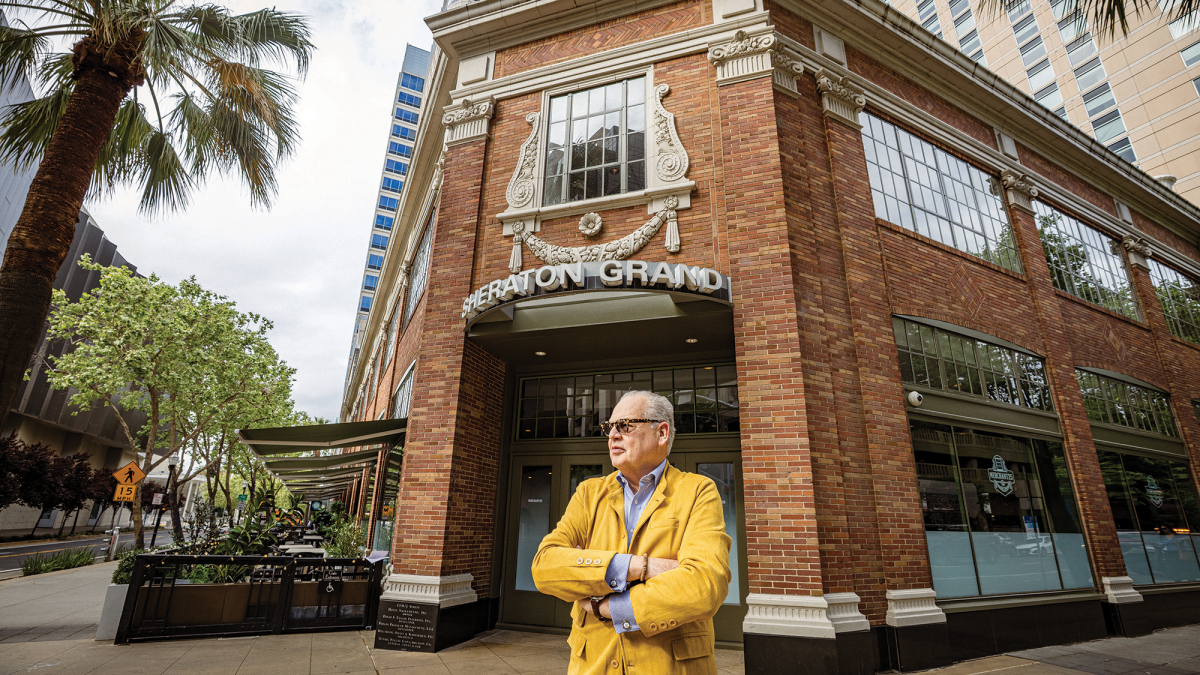
Now more than 100 years later, the Sheraton Grand on J Street is paying homage to this precursor to the shopping mall, designed by famed architect Julia Morgan. Morgan designed Hearst Castle and more than 700 other projects, including the Goethe House in Sacramento. The 28-story luxury hotel, located in this historic building, just concluded a multi-year, $35 million renovation that preserves and honors its original purpose as the 103-year-old Public Market Building.
Since the building’s merchants sold everything from baked goods to fresh produce, this is where electric refrigeration (of foods and the indoor climate) was put to its first tests — and where you could even buy your own refrigerator. Expansive steel girders continue to run the length of the building, used by aerialists who performed at the hotel’s grand reopening last month.
The Beavis Meat Co. was a major vendor when the site was a public
market from the 1920s-1970s.
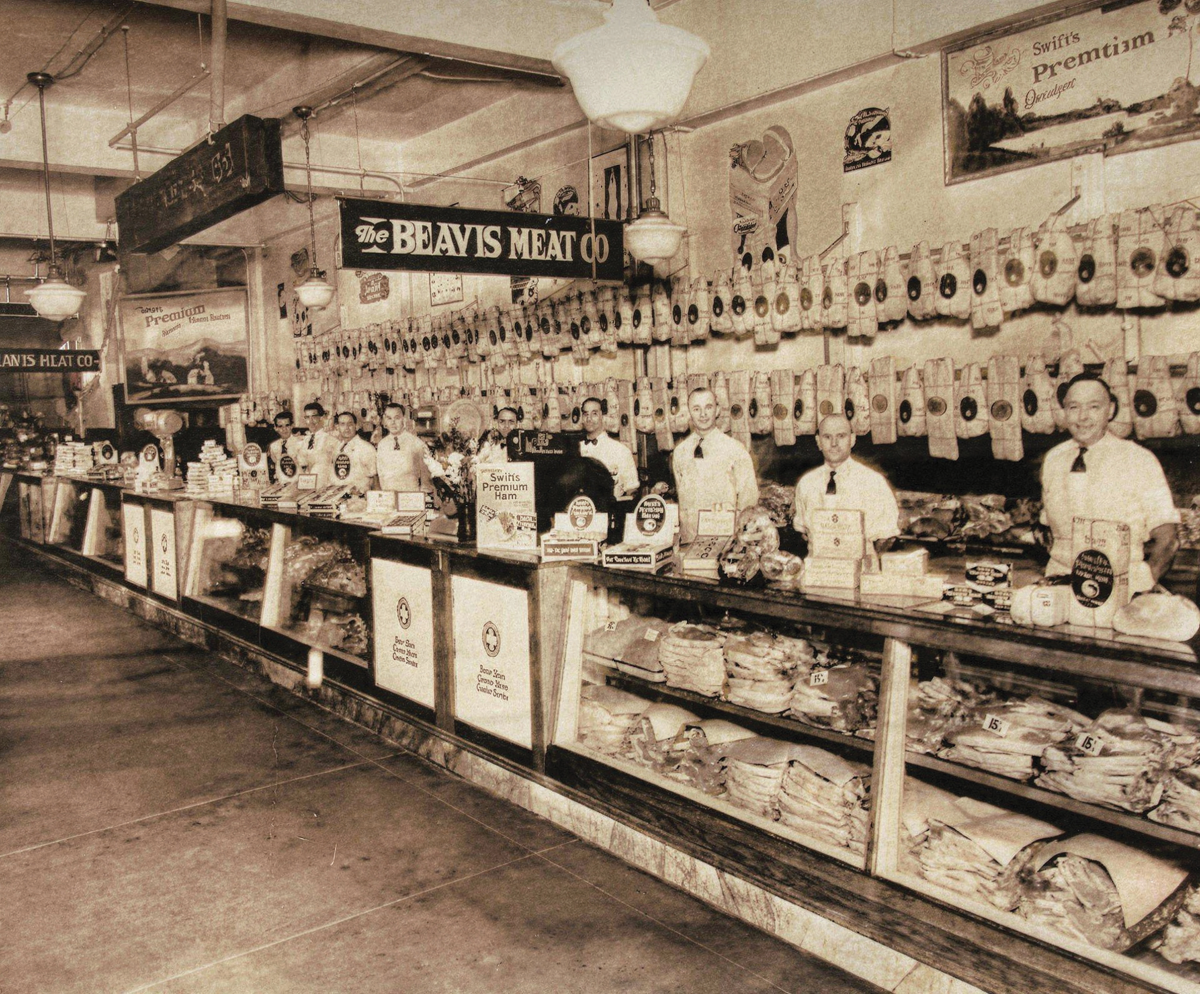
“They also hung entire steers from ceiling hooks. It was a genuine meat market,” says the hotel’s general manager Jeroen Gerrese. It stands to reason that if you’re an international hotel, the person running it should be, too. Enter Gerrese, who’s filled that role at the Sheraton Grand (owned by Marriott International) for the past five years, seeing it through the two-year partial shutdown to allow for the $35 million renovation, as well as the COVID epoch, which all but closed the hotel industry worldwide.
The Netherlands native has been in the hospitality business for nearly two-thirds of his life, starting in the cruise line game and working his way into more responsible positions around the world. He’s held almost every staff job — “I started my career as a dishwasher in my uncle’s restaurant in the Netherlands,” he says — as well as being the boss at sea and on land. His latter stints have included tenures in New York City, Philadelphia, Moscow, Minneapolis, Boston, Baltimore, Brussels, England and our own Central Valley. Not surprisingly, he speaks a few languages, including Dutch, English and French. He and his wife, Nancy, formerly in the linen business, have two grown sons.
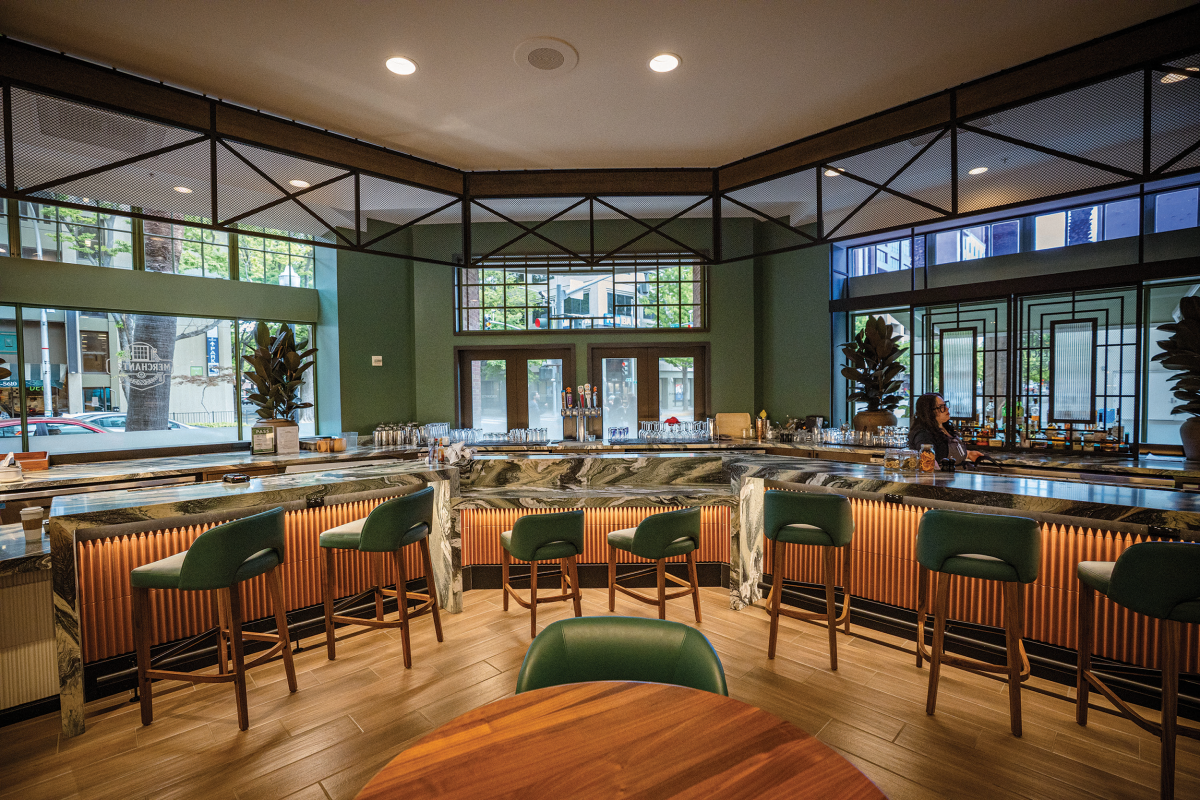
The Sheraton’s ground floor restaurant and bar area have been redone and restyled, with comfortable, colorful couches and cushioned chairs enticing you to unwind. Sheraton went for a gathering theme, creating a place for out-of-town visitors to mingle with business workers attending conferences at the SAFE Credit Union Convention Center next door.
Among the innovations on the first floor of the three-story public market is where most of this interview took place: a glassed-in room which can accommodate five or six people. “I think the people in the room like it because while they’re meeting or enjoying a private lunch, the excitement of the hotel passes around them,” Gerrese says. And the guests who stroll by and can’t help but stare? He laughs. “Oh, I think they wonder what secret, important meeting is taking place,” he says, “and who these important people might be.”
The Secretary of State utilized the office space after the market closed in the 1970s. Around 1998-99, a local developer partnered with the City of Sacramento under a public private partnership to build the hotel adjacent to the public market building and utilize the space where the market had been as a restaurant and bar. The Sheraton’s owners have restored, refreshed and subtly reimagined the hotel, which is celebrating its 25th anniversary in Sacramento this year.
The Sheraton Grand just underwent a $35 million renovation for
its 25th anniversary in Sacramento. (Photo by Wes Davis)
“The secret of combining the old and new is to have a great deal of respect for the old,” Gerrese says. As partial proof, a visitor can casually stroll onto the airy mezzanine level and enjoy historic photos on a wall that serves as a mini-gallery. One features a mouth-watering (if you’re a carnivore) array of the Beavis Meat beef stands, the company’s proud butchers standing among fully-loaded shelves of product. Another depicts J Street circa 1923, an immensely clean and startlingly unoccupied downtown thoroughfare. Today, the Sheraton’s valets await your arrival in a carved-out road entry that carries with it its own sense of excitement as commuters drive past the hotel on their way to I-80, Highway 50 and beyond.
The two-year project also saw the building’s five original artworks, which a hotel spokesperson says are valued at $1 million, get not only preserved but also highlighted with lighting and special placement. Among them are Jennifer Bartlett’s “Neighborhood” (a 10-by-60-foot-long work composed of hundreds of foot-long steel plates); a ceramic wall mural titled “The Marketplace,” by Viola Frey; William T. Wiley’s stunning oil and graphite canvas called “Sacramento California 2000” and two Robert Kushner mosaics: “Sacramento Georgic I & II.” Sacramento artist David Garibaldi performed at the grand opening celebration, and you just might see one of his paintings at the hotel in the future.
To sum it up, the art, openness, hardwood floors smooth enough you could play shuffleboard (no, that’s not allowed), the 503 updated guest rooms and suites, and the Sheraton’s undeniable bustle signal the vibrancy of the building’s past but also offer a portal into how a carefully curated past can take a city effortlessly back to the future.
–
Stay up to date on business in the Capital Region: Subscribe to the Comstock’s newsletter today.
Recommended For You
Folsom Powerhouse State Park Celebrates 130 Years
The Back Story: This American River treasure used to light up the Capital Region
The former utility is a celebration of an earlier time’s creative engineering and is now a verdant state park and learning center just above Lake Natoma.
Sutter’s Fort Returns to Its Roots: Authenticity Wins Out Over Mythology
Schoolkids still find it a delight, even without living history characters
The Back Story: Sutter’s Fort, the 6-acre state park in Midtown Sacramento, is an underappreciated jewel in the crown of the region’s historic attractions.

At 123 Years Old, McKinley Park Is the Still-Thriving Glory of East Sacramento
The park features the largest rose garden in the Capital Region
This isn’t just any park. The McKinley Park rose garden is the setting for countless al fresco weddings, confirmations, quinceañeras and private soirees. It also provided a stunning backdrop for the scene in Sacramento native and filmmaker Greta Gerwig’s “Lady Bird,” in which the two young lovers own up to their emotions.
Fairytale Town Is Still Magical at 69 Years Old
No thrill-seeking rides, just imaginative fun
Once upon a time — 1959, to be precise — Fairytale Town opened at
3901 Land Park Drive in Sacramento, just four years after
Disneyland debuted in Southern California. Almost immediately it
was acknowledged, year after year, as one of the region’s top
five family amenities — and still is.