


This story is part of our March 2026 issue. To read the print version, click here.
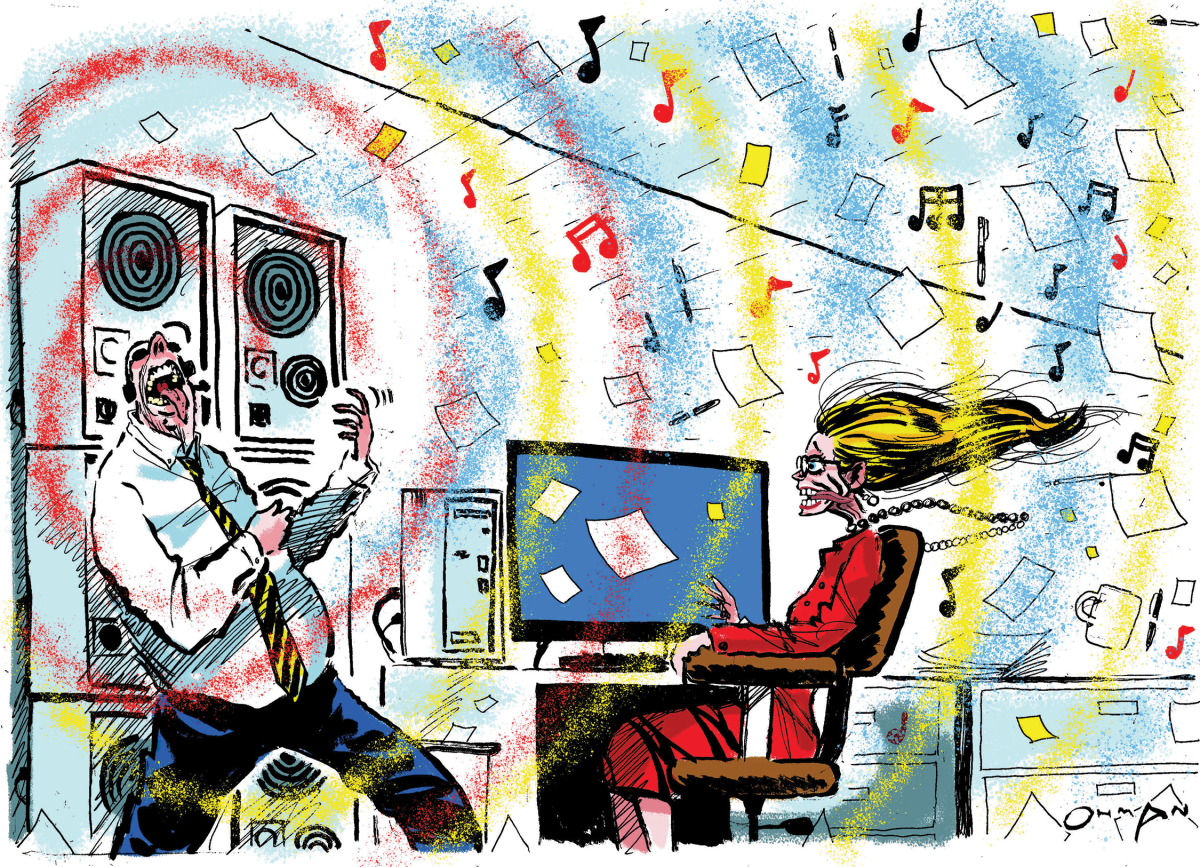
We’re a laid-back team, but last week two employees — let’s call them Jane and Carol — argued about Jane’s loud, sometimes inappropriate music. Jane likes her music so loud that it can be hard to hear customers. Carol confronted her, and while Carol admits she said things she shouldn’t have, she refused to share anything else, so I only know Jane’s side.
I later met privately with Jane. I stressed she wasn’t in trouble; I only wanted to document a conversation about keeping the volume down near customers. She became defensive, said we were “harassing” her about her music and made some indirect comments that sounded like threats toward Carol.
Today, after Carol left early, upset about something unrelated, Jane spent the afternoon telling coworkers she’d been “written up” and “reprimanded.” I clarified again that it wasn’t disciplinary, but she escalated, repeated accusations of harassment, and said she might quit.
At this point, any conversation with Jane turns volatile. Did I mishandle something? And how should I proceed?
I hate to break it to you, but there is a big problem at the company, and that problem is you and the management team.
Yikes. I’m sorry. You do not have a “laid-back team.” You have a toxic team where everyone is walking on eggshells to keep Jane happy.
Music should never, ever be so loud that you can’t hear customers. (I realize some restaurants disagree with me on this one, but I’m holding firm.) And you can’t ever allow “inappropriate” music in a public-facing workplace.
Yes, I know nobody has complained before, but look at how Jane reacted when you told her to keep the music down near customers. Carol refuses to answer your questions. Is it because she’s afraid her complaints will get back to Jane?
This is not a laid-back culture — it’s one where employees are managing around one person’s reactions. It’s a workplace full of toxic accommodations.
The problem of toxic accommodations
To get along with people, we all make accommodations. You may want to get Mexican food, while your friend wants Italian. One of you will accommodate the other’s request. In healthy relationships, that goes back and forth.
In a toxic relationship, you always go along with one person’s ideas because not doing so is very unpleasant. Everything looks nice and relaxed because Jane simply controls the loud and inappropriate music. No one objects, not because they love the music, but because it’s easier than making Jane upset.
You may even forget this is an accommodation for Jane — it’s just how things are. But when you rock the boat, even a little bit, Jane explodes.
Cutting off toxic accommodations
It’s time to pull back the accommodations and be clear and straightforward. Arrange a meeting with you, Jane and another member of the management team. Tell Jane you have a new company policy, and she will be expected to follow it.
Should you choose to allow music at all, this policy is two-fold:
- Music needs to be soft enough that people can carry on conversations in a normal tone. A manager can ask any employee to turn down the music at any time.
- Music must have safe-for-work lyrics. No F-bombs or sexually explicit language.
That’s it. That’s the policy.
You should have this two-on-one meeting with everyone who turns the music on loudly and provide the new policy to everyone. If Jane’s (or anyone’s) response is over the top, you’ll treat it like the bad behavior it is. This could be a formal write-up or a suspension.
The testing will then begin. Jane will push boundaries. If you ignore her and let her blast her music whenever she wants, you might as well appoint Jane as CEO because she runs the business. You must respond every time and use progressive discipline with everyone who violates the rules.
The last part is critical. You cannot come down like a load of bricks on Jane and allow Steve to blast his music. That is discrimination, and Jane would be right to complain about that.
Re-examining the work environment
Jane isn’t your only problem.
Carol left early because she was upset about something unrelated. If that something is outside the workplace — her kid’s principal called or her cat is sick — that’s fine. But if it was something workplace-related, this is not normal behavior.
Somehow, Carol thinks she doesn’t have to answer questions about workplace incidents, and when something upsets her, she can just leave. Neither of these are signs of a healthy work environment.
I suspect there are more problems in your “laid-back” environment. It might be well worth your company’s money to get some management training, or these problems will continue and escalate. But first, implement your music policy and stop letting Jane’s outbursts control the company.
–
Stay up to date on business in the Capital Region: Subscribe to the Comstock’s newsletter today.
Recommended For You
I Was Asked My Zodiac Sign During a Job Interview. Should I Be Worried?
Dilemma of the Month: The Evil HR Lady tackles a few categories of interview questions that could come off as clueless (or illegal)
Since lots of people face dumb questions in interviews, let’s tackle how to answer them.

Our Company’s Name Is Being Used by Job Scammers. What Can We Do for Damage Control?
Dilemma of the Month: What can companies do when scammers are impersonating them on job sites?
Job seekers need to keep vigilant, but there are several things
you can do to help make that easier.
My Boss (Who Has ADHD) Bombards Me With Rapid-Fire Requests. Can I Ask Her to Slow It Down?
Dilemma of the Month: The Evil HR Lady discusses neurodiversity in the workplace
Understanding neurodiversity doesn’t mean putting people into two categories: neurodiverse and neurotypical. Let’s break it down.

Employees Aren’t Washing Their Hands. Is It My Job as HR to Tell Them What They Should Have Learned in Kindergarten?
Dilemma of the Month: The Evil HR Lady addresses personal hygiene in the workplace
While I agree that non-handwashers are gross, the reality is that life is gross.