


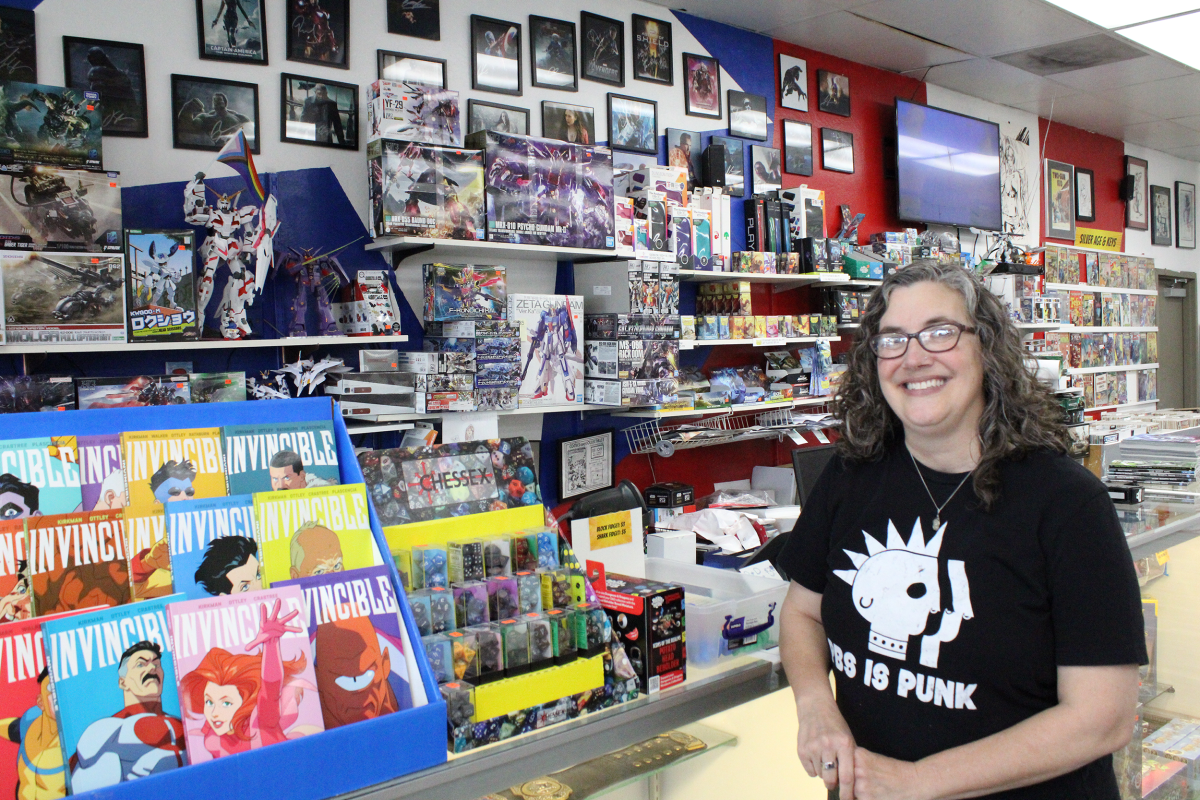
Inside Comics & Collectibles, a shop at the busy intersection between Sacramento’s Freeport Boulevard and Fruitridge Road, all three walls and even the ceiling are plastered with superhero posters, cartoon decals and other brightly colored imagery. Between boxes and shelves stuffed with back issues, figurines and other collectibles on display, staff and customers browse, chat or play board games as if at a second home.
Sacramento’s comic shop scene is a friendly one, but the city hasn’t always been a friend to comic book shops. Earlier this year, on Feb. 3, the Sacramento City Council repealed a 1949 ordinance that limited the selling and distribution of comic books to minors. The ordinance, Section 9.12.010, specifically referred to comics featuring crimes, which cut off most of that era’s most popular series, including Action Comics (home of Superman), Detective Comics (Batman), Wonder Woman and many others.
The ordinance hadn’t been actively enforced in decades and is now officially off the books, leaving Sacramento’s children and teens free to peruse the aisles of superhero comics at local stores like Empire’s Comics Vault, Comics & Collectibles and JLA Comics. But local shop owners and artists say that there are still plenty of challenges in the comic world.
One comic shop owner in Sacramento who is very familiar with these realities is Ben C. Schwartz, who opened his Arden Arcade store, Empire’s Comics Vault, in 2003. While he’s a lifelong comic fan and loves his work, he says that it’s not something to be taken on lightly.
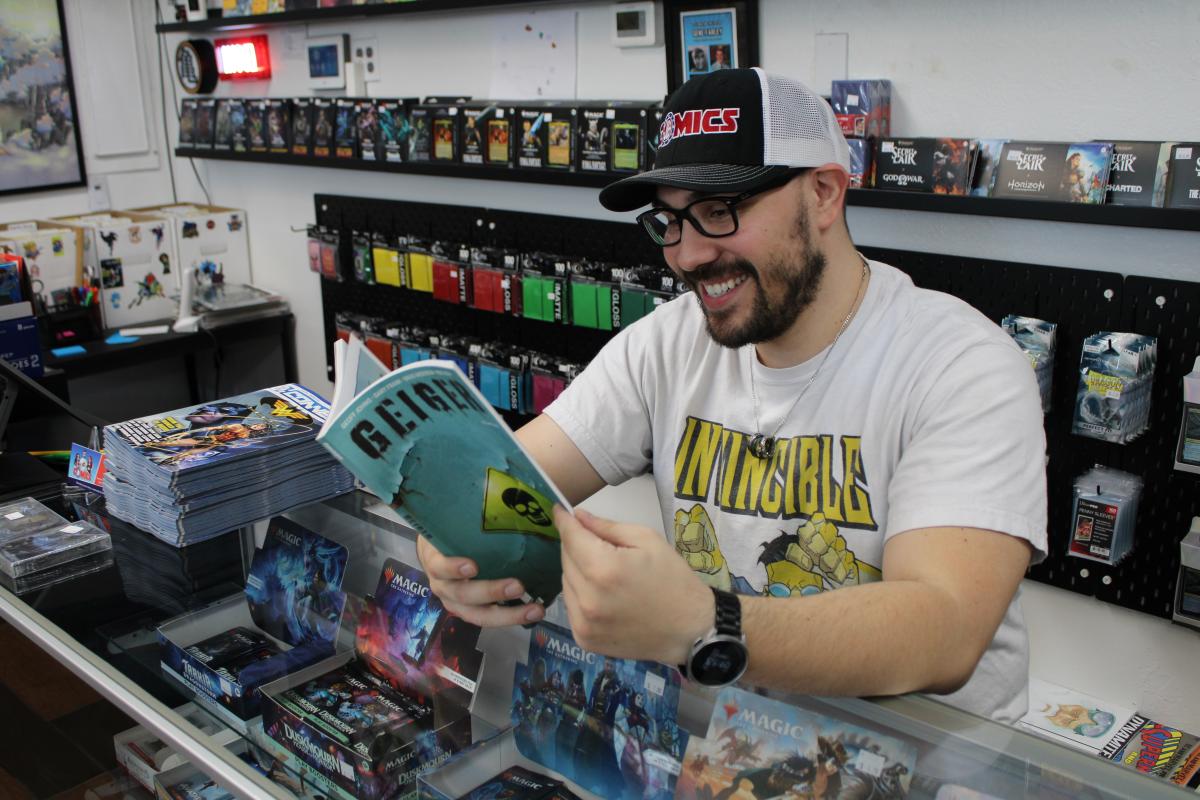
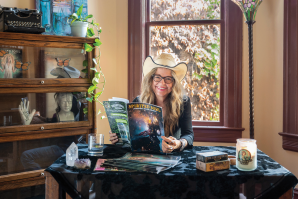
JLA Comics owner Lecho Lopez reads a copy of “Geiger,” at the
main counter, 374 Florin Road. (Photo by Jacob Peterson)
“One of the things I think people don’t understand is that there’s a romanticized version of what it’s like to run a comic book store,” Schwartz says. “At the end of the day, it’s still a job, and it’s actually more than just a job because you own your own business.”
Schwartz says one of the biggest challenges to running the store was keeping people engaged, getting them in the store and getting them to come back. Arguably the most difficult aspect is managing his store’s inventory to meet customer demands.
“If people come in and they consistently can never find what they’re looking for, then they’re going to go somewhere else,” Schwartz says. “And if they go to the other shop and they find it, they might not come back here.”
One of the biggest changes shops worldwide have had to deal with came when major publishers like Marvel, DC and Image chose to stop working with Diamond Comic Distributors in 2020. JLA Comics owner Lecho Lopez, who opened his store in the Pocket-Greenhaven neighborhood in 2024, says that while it was more work to deal with multiple distributors, it was still an improvement compared to his experience with Diamond.
Related: Is This the Last DVD Rental Store in the Sacramento Region?
“They were the only game in town, so when we let them know, ‘The 1-in-50’s messed up, the 1-in-100’s messed up,’ they would say, ‘Here’s a refund for it,’ but we would still have a customer who requested them here,” Lopez says, referring to the variant copies that retailers can request for 1 or 2 percent of their order, usually featuring alternate covers done by different artists. “When I had the chance to work with someone other than Diamond, I took it because, yeah, they were a little more expensive, but all my books were getting here on time.”
Pam Farley, owner of Comics & Collectibles, says her shop has had to routinely make adjustments to its offerings. Comics & Collectibles originally opened in 1986, but Farley and her husband, Gene, who died in 2023, took ownership in 1998.
Photos: Not Just a Hobby: Amid a surge in card collecting, a few shops still survive in the Capital Region
In the near 30 years since, Farley says they’ve survived by making the necessary changes when times get tough. “When we first bought the store, Beanie Babies and Pogs were still around,” Farley says. “You have to go with the needs of the marketplace, go with the opportunities that are open to you.”
Building a community around comics
In terms of what comics are selling, all three owners noted that one of biggest changes in recent years has been what books are being bought and who is buying them.
Schwartz of Empire’s Comics Vault says that while the majority of readers he sees are in their 30s, he recently noticed an uptick in younger readers. He credits this to parents who read comics sharing them with their kids and notes that nearly 75 percent of these young readers are girls.
“The girls seem to be reading more,” he says. “Some of it is superhero stuff too, but a lot of it is just slice-of-life, which a lot of them gravitate to.”
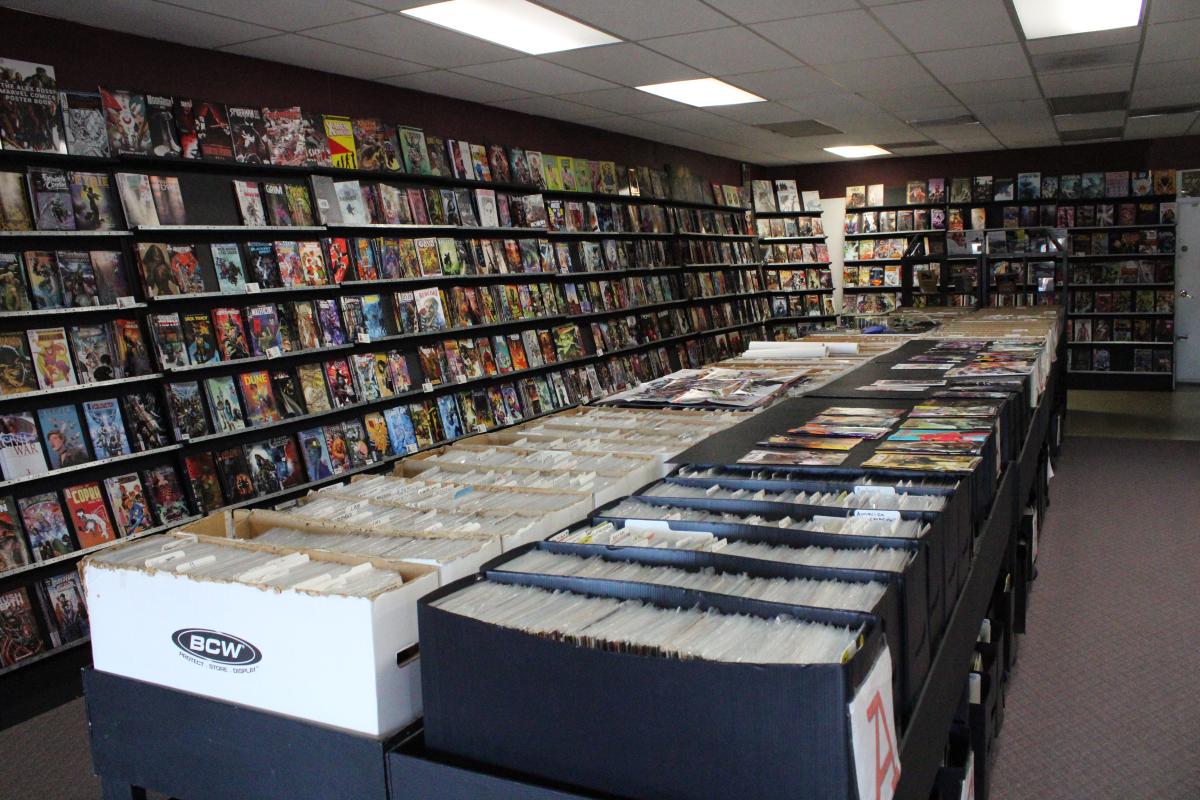
Comics and longboxes on display at JLA Comics.(Photo by Jacob
Peterson)
Independent titles and those outside of the superhero genre have also seen an increased presence on store shelves. Farley of Comics & Collectibles says that while Marvel books still make up the biggest portion of her store’s book sales, independent titles are selling very well.
“There’ve been a couple of new books this month from Image that sold out instantly, ‘White Sky’ and ‘D’Orc,’” Farley says. “It sounds funny, but it came out yesterday, and I went to reorder it, and it had already gone to a second printing the day it came out.”
Beyond selling books and merchandise, Farley, Schwartz and Lopez each say they want to build a community around their stores that feels welcoming to anyone who steps inside.
Related: Pop Culture Cons Fight for Attention in the Capital Region
Farley says that in addition to hosting events, she has also reached out to local schools about donations and fundraisers. “We’ve kind of evolved into a third space for the community, which is something that has been really important to us,” she says. “We love our neighborhood, we grew up here, and want to be a part of and give back to this community.”
This relationship goes two ways as well. When Farley’s late husband was struggling with cancer before his death, she says it meant a lot to both of them when their customers came together to support the couple during the difficult time.
“My husband was always surprised that people were sending him letters,” she says, remembering that he said, “‘I just thought I was the comic book guy.’ He was here six days a week for a million years, and he built a community and he built a legacy.”
Collaborating with creators
Comic book stores also create a place for writers and illustrators of the future to find their path. Manuel Martinez, a freelance illustrator who moved to Sacramento in 2020, says he first realized he could become a professional artist by going to his local comic book shop, Atlantis Fantasyworld in Santa Cruz.
“The guy who owns that spot, Joe Ferrera, I can officially call him a friend,” Martinez says. “Years later, when I wanted to be an artist, that same guy took me around to different editors that he knew because he had been in the business so long.”
Schwartz of Empire’s Comics Vault has also collaborated with various creators who’ve come to his store, publishing comics through his own publishing label, Continuum Press. He says it was after opening the store that he was inspired to pursue creating comics.
“When I finally opened the shop, I met a ton of people, there were local artists and writers,” Schwartz says. “I was like, ‘Why am I not doing this now, why are we not putting this together?’ And so I hooked up with a bunch of writers and artists, and we started building something.”
Related: As Niche Magazines Gain Popularity, Capital Region Publishers See Value in Paper and Ink
The comics industry as a whole goes through its fair share of ups and downs, but for whatever difficulties they face, all three owners also flatly reject the idea that comic books or comic book shops are dead or dying.
“There’s always the doomsayers. ‘Print media is dead,’ I’ve heard it for the last decade,” Schwartz says. “But it’s not, because there’s nothing like holding a book in your hand. There’s so much more than just looking at the picture and reading the words.”
–
Never miss a story: Get Comstock’s weekly newsletter delivered to your inbox.
Recommended For You
Status Check: Comics in the Capital Region
Last year we reported on the growing comic convention scene in the Capital Region (“Level Up” by Bill Romanelli, May 2015). Check out what the comic world has been up to since then:
Pop Culture Cons Fight for Attention in the Capital Region
Interest in pop culture conventions and vendor markets for fans of comic books, games, cartoons, anime and film continues to grow
The owners of events for nerds, geeks and other pop culture fans aren’t worried about competing with each other, but with everything else.
As Niche Magazines Gain Popularity, Capital Region Publishers See Value in Paper and Ink
Meet the small-business magazine publishers who say print isn't dead
Comstock’s is one of the last remaining monthly magazines based in Sacramento, but it’s now part of a trend. Across the region and beyond, niche print magazines are gaining momentum.
Photos: Not Just a Hobby
Amid a surge in card collecting, a few shops still survive in the Capital Region
Card shops have been declining in number the past 20 years, but
there’s a gold rush in the industry today.