


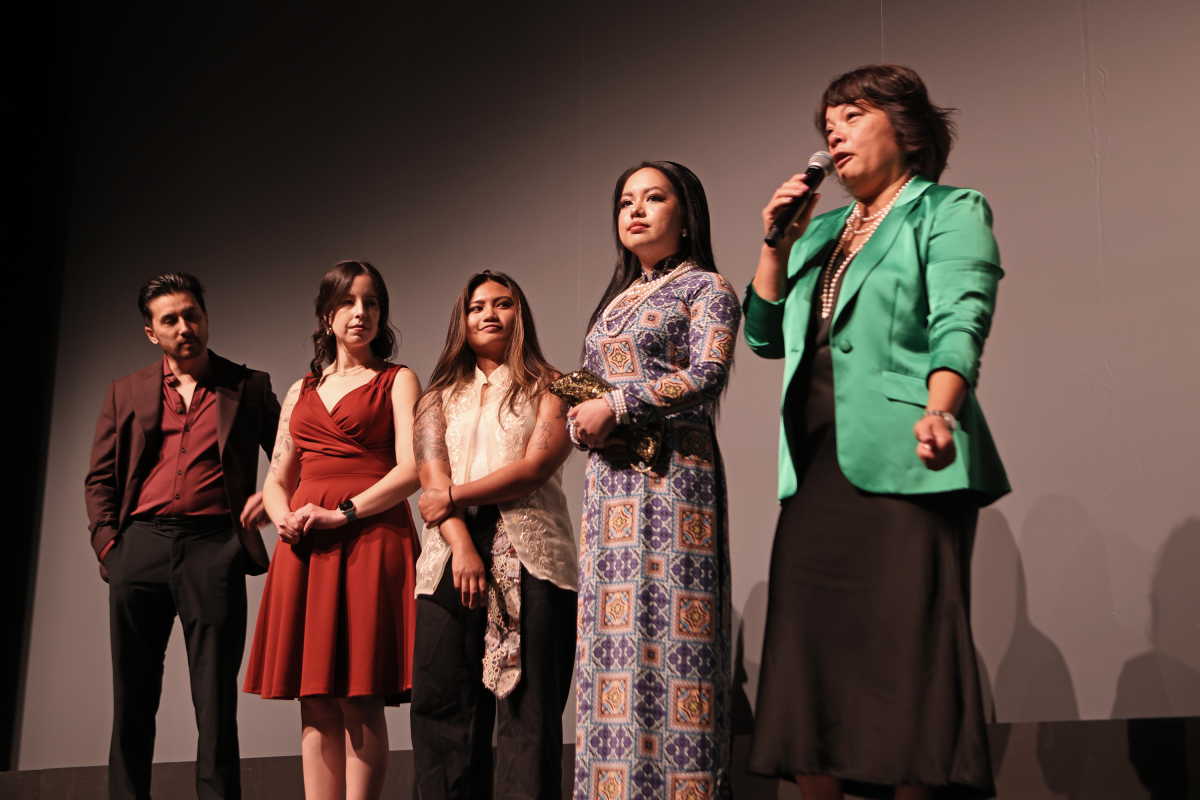
Christine Nguyen has a bearing well-suited to the leader of a nonprofit serving Asian and Pacific Islander survivors of domestic violence. The CEO of My Sister’s House, who has been in her position since July 2025, has a talent for putting people at ease, with a softly waving bob framing a calm but quickly moved face. In a film that premiered at the Sacramento Asian Pacific Film Festival, she revealed another side of herself — and that her connection to the mission of My Sister’s House is not just professional, but personal.
Sacramento City Councilmember Mai Vang, right, introduces the
Sacramento Asian Pacific Film Festival with co-founder Jason
Jong. (Photo by Elmer Javier, courtesy of SAPFF)
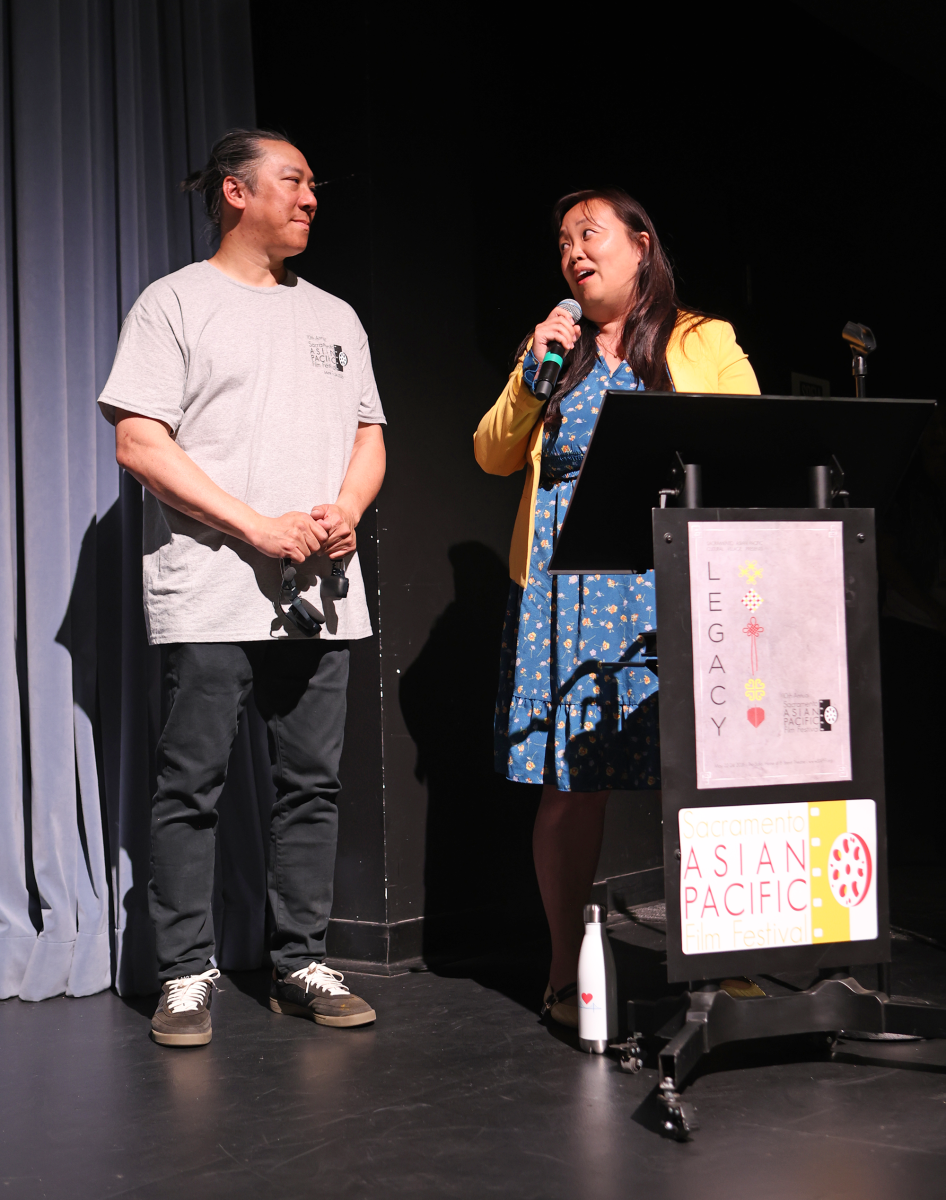
City Councilmember Mai Vang, who is currently running for the U.S. House of Representatives to represent California’s 7th congressional district, made introductory remarks before the film, noting that she wished the film festival had existed when she was growing up in south Sacramento. Seeing that kind of representation on the screen might have helped her and her friends and family avoid “internalizing poverty” — the physical, mental and life outcome consequences of believing one’s poverty is a personal failing.
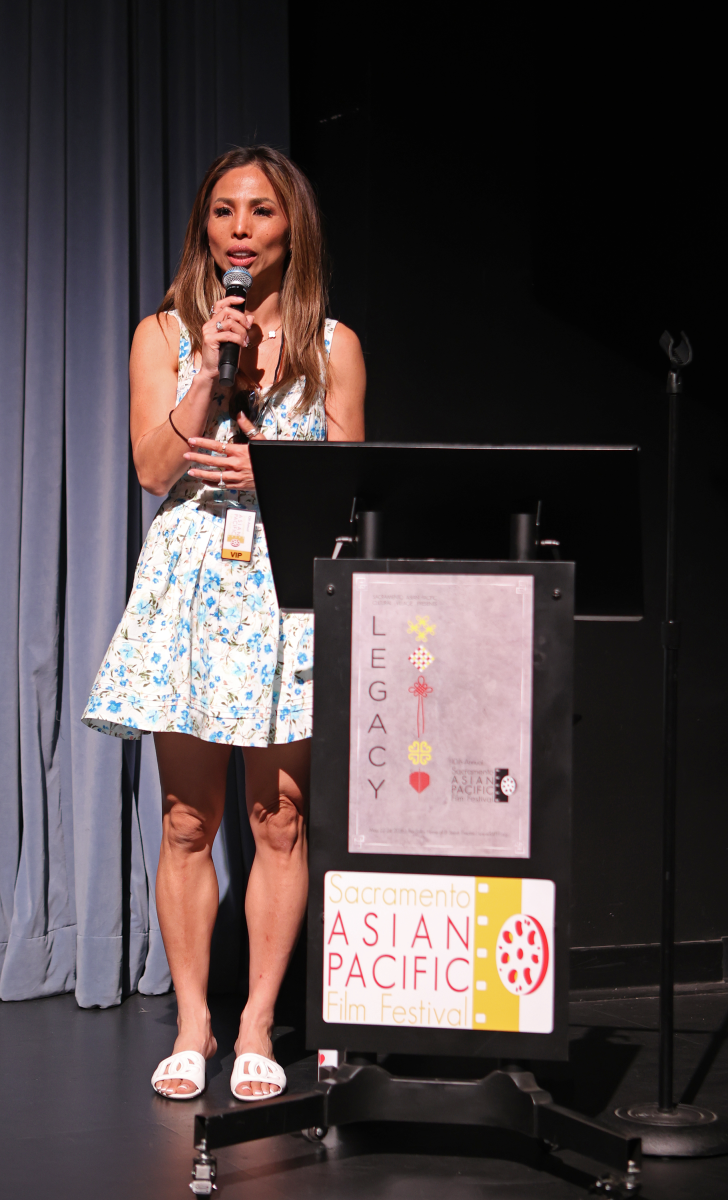
Injury lawyer Anh Phoong, who co-produced “And Then We Rise” with
the nonprofit My Sister’s House, introduces the film at the SAPFF
screening. (Photo by Elmer Javier, courtesy of SAPFF)
Nguyen’s face was shiny with tears under the bright stage lights. “I don’t think there was one minute in the whole film when I wasn’t crying,” she said. She said that she had been carrying her trauma for nearly 40 years but knew she had to share it for the sake of both her children and her organization.
“I made the decision that on the 25th anniversary of My Sister’s House, I would share my story,” she said. “I could not be silent. That would be betraying the mission of My Sister’s House.”
Vu, meanwhile, impeccably dressed in an ao dai borrowed from her mother in Vietnam (so that she could attend the screening in spirit), said she “never cries,” but that making the film encouraged her to face emotions that she had suppressed. “The message is, if you can survive the impossible, you can survive anything,” she said.
The team behind the film “And Then We Rise” pose for photos after
the screening. (Photo by Elmer Javier, courtesy of SAPFF)
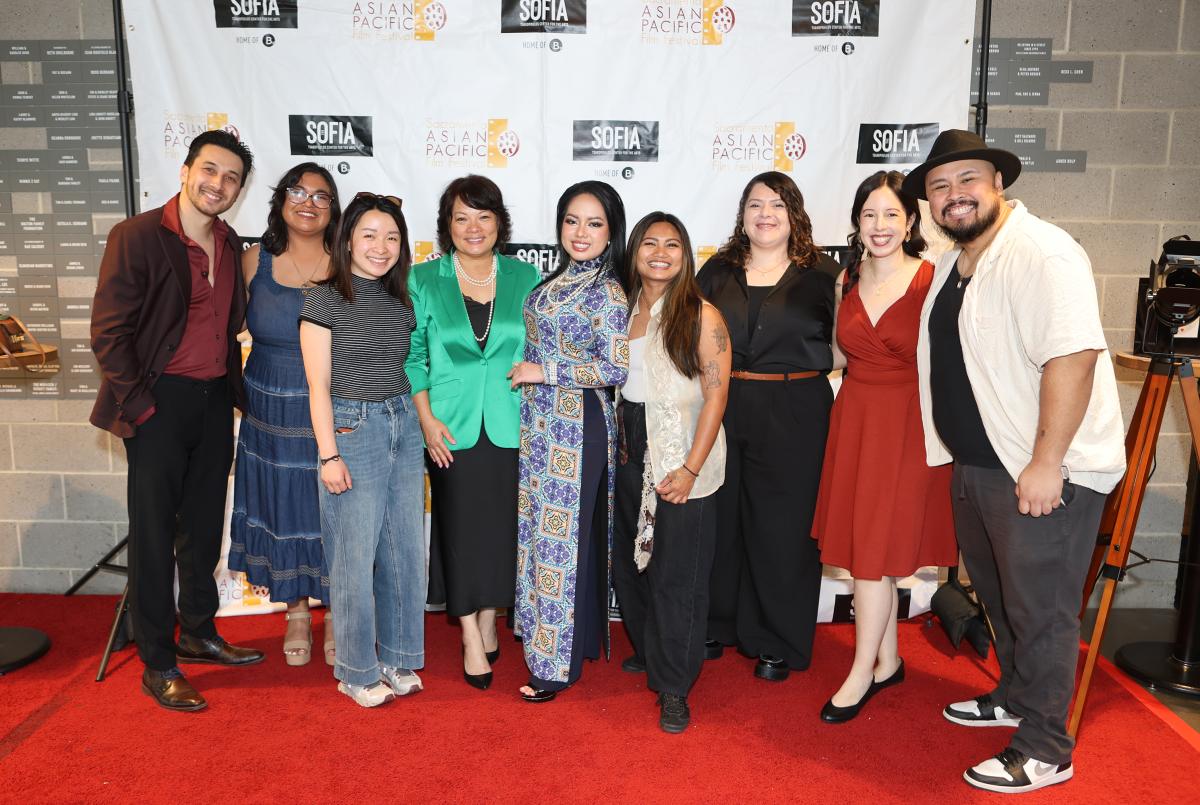
The film discusses both women’s trauma — an attack in 2020 that sent Vu into several years of guilt and depression, and five years of continued abuse in Nguyen’s adolescence — but does not dwell on the details. “I didn’t want to focus on ‘trauma porn’ or exploitation,” said director Pascual. Instead, she wanted the film to allow both women to highlight their own stories and how they have given back to their communities.
That story isn’t over, the film team emphasized. They put together the 22-minute version of the film in just a few weeks in order to meet the film festival’s deadline — which was, generously, right before the showing. Their goal is to raise funding for a feature-length version of the film. Information is available at instagram.com/andthenwerisefilm.
The Sacramento Asian Pacific Film Festival continues through Sunday with films shown in back-to-back blocks. Saturday’s program includes two blocks of films centered around representation and food and farming, respectively, capped off by a special screening of the 2025 film “Rosemead,” starring Lucy Liu as a terminally ill Chinese immigrant in the San Gabriel Valley. Sunday’s films include short documentaries about Asian and Pacific Islander communities around the country, ending with a feature documentary about the Auntie Sewing Squad, a collective formed to sew masks during the COVID-19 pandemic that grew to provide mutual aid and resist systemic inequality. Schedules and tickets are available at 2026.sapff.org.

–
Never miss a story: Get Comstock’s weekly newsletter delivered to your inbox.
Recommended For You
Local Journalist Receives $100,000 Grant to Support Hmong Daily News
Website covers an ethnic community that comprises about 1 percent of the Capital Region’s population
A coalition of funders is trying to save journalism, and one of the first to receive their aid is a little-known website serving a small ethnic community in Sacramento. Eighteen Press Forward grantees were based in California with only one in the Capital Region: Hmong Daily News.
A Japantown Jazz Star Comes Home
1936 film starring Sacramento-born singer Betty Inada is screened in Sacramento
Betty Inada, a Japanese American jazz singer born in Sacramento in 1913, sought fame in Japan in a time when American screens and stages had little space for Asian women.

Film Festivals Take Center Stage in Sacramento
These festivals bring both culture and economic benefits
The general image that comes to mind for most people when describing a film festival are grand events like the Sundance festival in Utah or the Cannes in France, but Sacramento has more than a handful of its own staple events.
Cooking to Catharsis
Capital Region nonprofits empower women through culinary career training
Several local nonprofits are leading women to
self-sufficiency through a holistic approach, with culinary
training programs that arm them with transferable skills.