


For Jim Tabuchi, the history of Sacramento’s Japantown is deeply personal. One of his earliest memories is seeing his grandfather’s department store demolished. “I remember sitting on my mother’s lap in our station wagon across the street from the store and watching this big ball knock into our building and destroy it,” says Tabuchi, facilitator for the grassroots community group Reclaim Sacramento Japantown. “I remember tears coming down my eyes and telling my mom, ‘I’m going to help Daddy rebuild the store.’” He was only 3 or 4 years old.
Sacramento’s Japantown was once a thriving center of Japanese American life, with hundreds of businesses and thousands of residents. According to the Sacramento History Museum, by 1930, Sacramento was the third-largest Japanese American community behind Los Angeles and San Francisco. Its eventual destruction following World War II and postwar redevelopment left a lasting mark on the community, one that continues to resonate across generations.
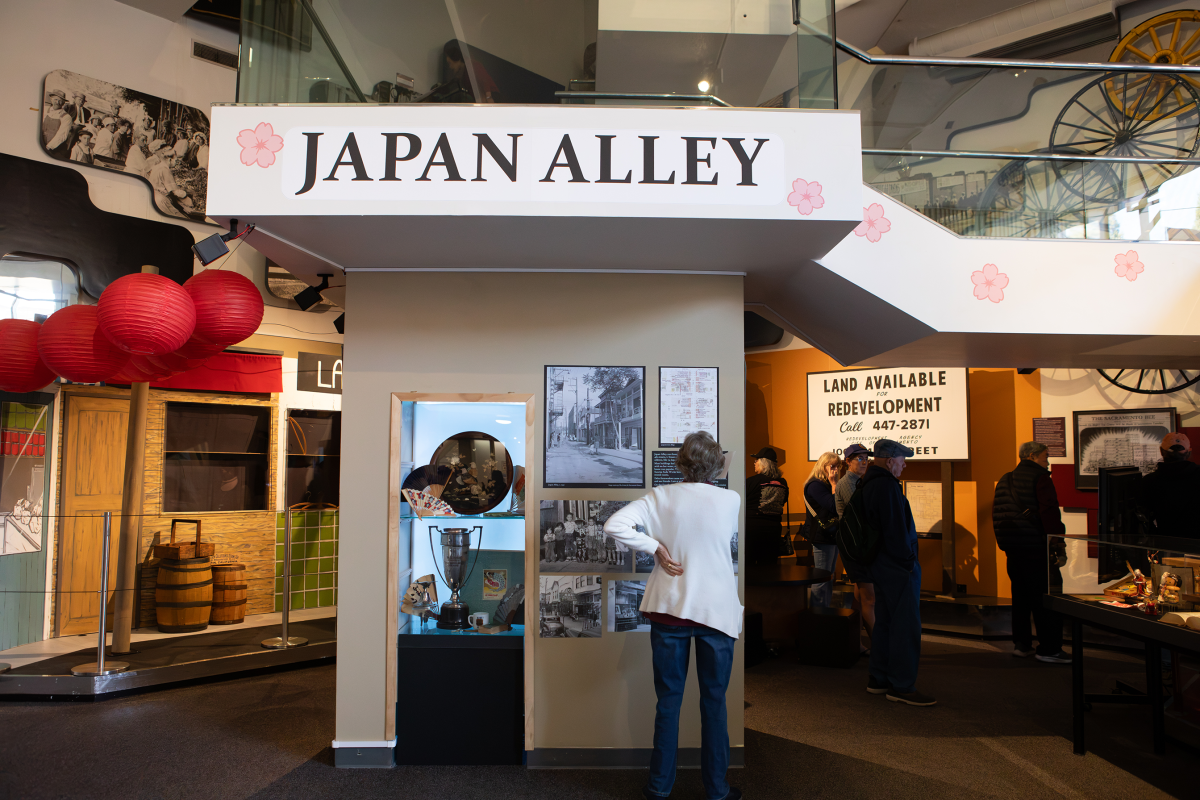
Now, a new exhibit at the Sacramento History Museum, Sacramento Japantown: Destroyed by Design, explores that history through the stories of the people who lived and worked in this diverse, close-knit neighborhood in the early days of the 20th century. Drawing a parallel between the fate of Japantown and his own family’s experience, he says, “That’s the story we want to depict in this museum exhibit.”
Bringing Japantown’s history to life
Destroyed by Design, which opened Nov. 6 and runs until May 24, 2027, sheds light on the history of Sacramento’s West End, a once-thriving multicultural neighborhood in the heart of what is now downtown Sacramento. An accompanying outdoor matsuri(festival) Nov. 7 celebrated the enduring cultural legacy of the people who once called the area home. “Japantown may have disappeared, but the heart of it is in the people, and they’re still here,” says museum executive director and CEO Delta Pick Mello.
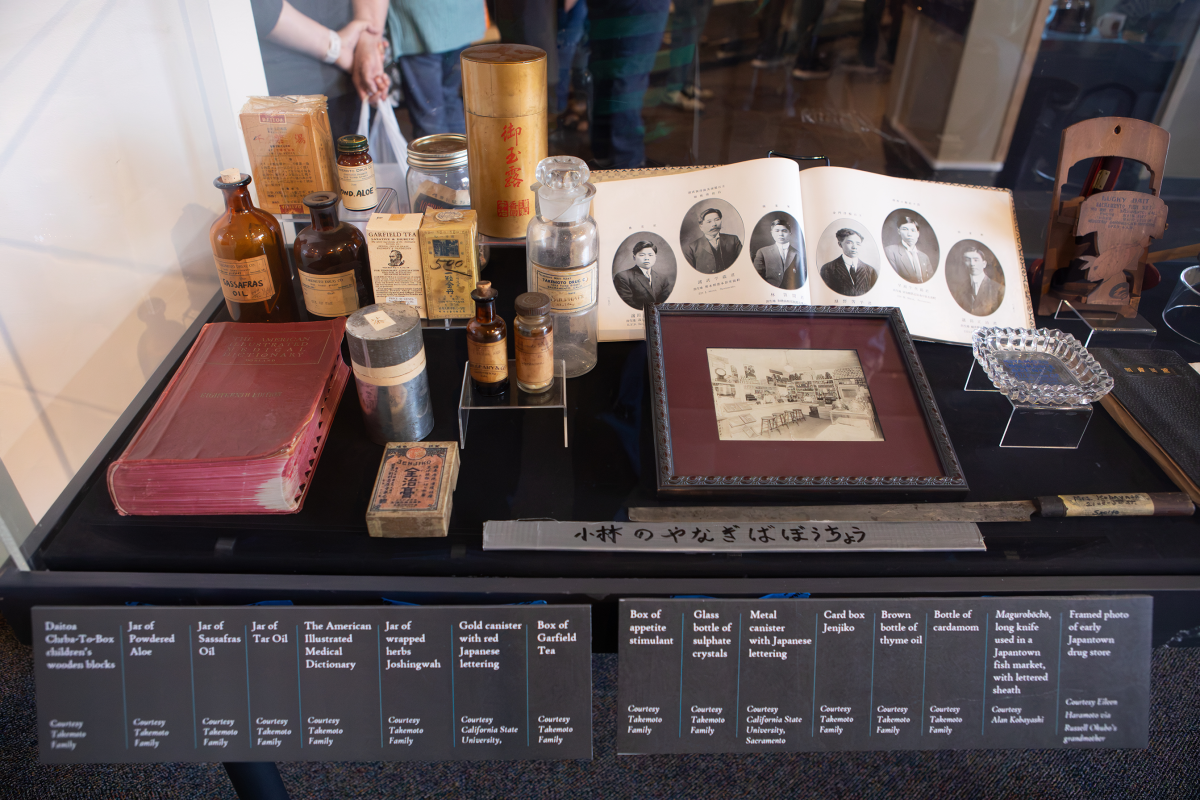
The exhibit includes photos and artifacts shared by families of
people who lived or worked in Japantown.
The exhibit explores the history of Japantown through an immersive display that recreates what it might have been like to walk through a typical Japantown alley during its heyday, when the doors of many businesses opened directly into the alleys, creating a flurry of activity. Artifacts, newspaper clippings, audio recordings, video interviews and stories of those who lived there help bring the era to life.
“Japantown was vast, vibrant and successful,” says Tabuchi, who also serves as a docent at the California Museum where he offers “barrack tours” for their long-term exhibit, Uprooted: An American Story, which focuses on the mass incarceration of Japanese Americans during World War II. “There were over 500 businesses and thousands of people living and working there, and visitors coming from all over the region to eat, shop and stay at local hotels. It was a happening place,” he says.
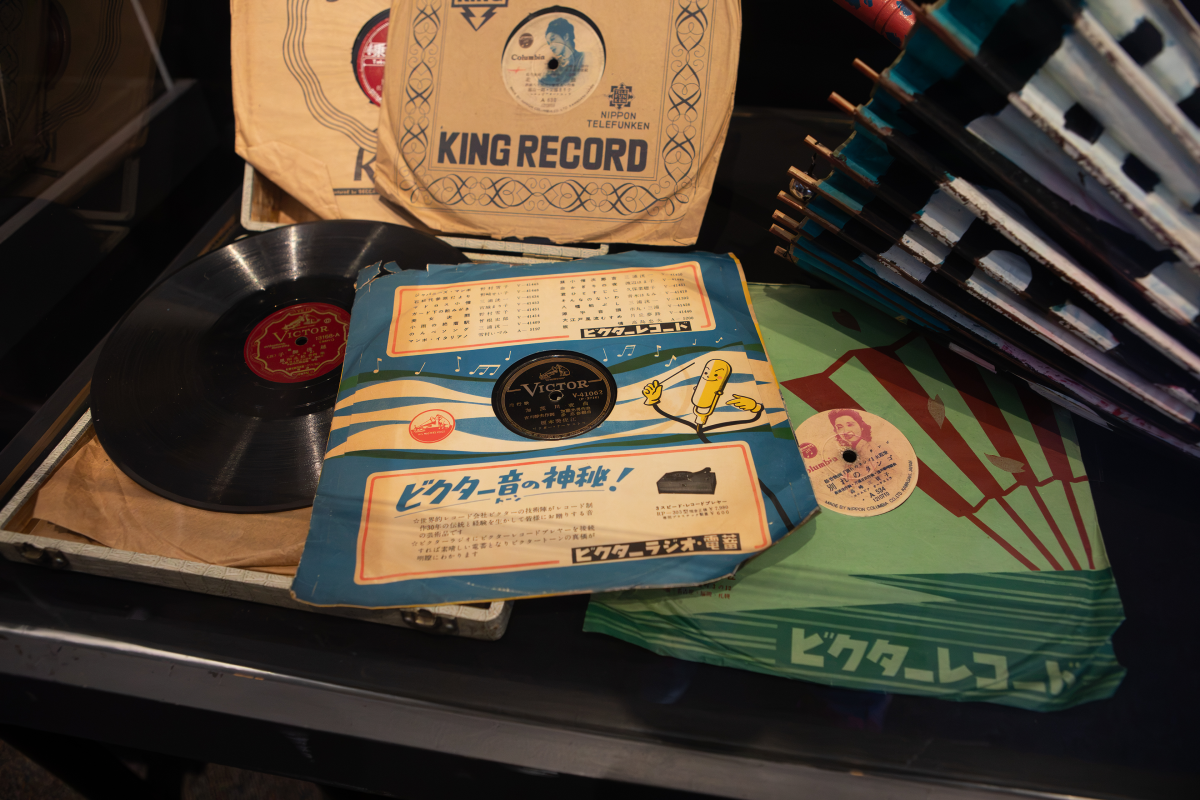
Records by Japanese and Japanese American artists are on display
in the exhibit.
The California Museum, the state’s history museum, has also hosted exhibits on the history of Sacramento Japantown. Its exhibit, Kokoro: The Story of Sacramento’s Lost Japantown, originally opened at the California Museum in 2017, before being adapted into an online experience through Google Arts & Culture in 2020 and then reopening December 2025 to March 2026. The most recent showing of the exhibition was set to a soundtrack by Sacramento-born jazz singer Betty Inada, who found fame after leaving her hometown for Japan.
The grassroots community group Reclaim Sacramento Japantown, which formed in 2022, planned to develop its own exhibit on the neighborhood’s history in conjunction with the Sacramento History Museum. “We were just starting to work on the exhibit when Kokorocame out again, so it pushed us to pivot in a different direction,” said Reclaim Sacramento’s Japantown committee member Michelle Huey. The exhibit featured many rare family photographs and artifacts from the collections of community members.
“Jim came up with the idea to make our exhibit immersive with storefronts and sounds of Japantown,” says Huey. “We also incorporated committee members’ family stories and photos into the exhibit for a personal touch.”
The group Reclaim Sacramento Japantown helped organize the
exhibit and the opening festival.
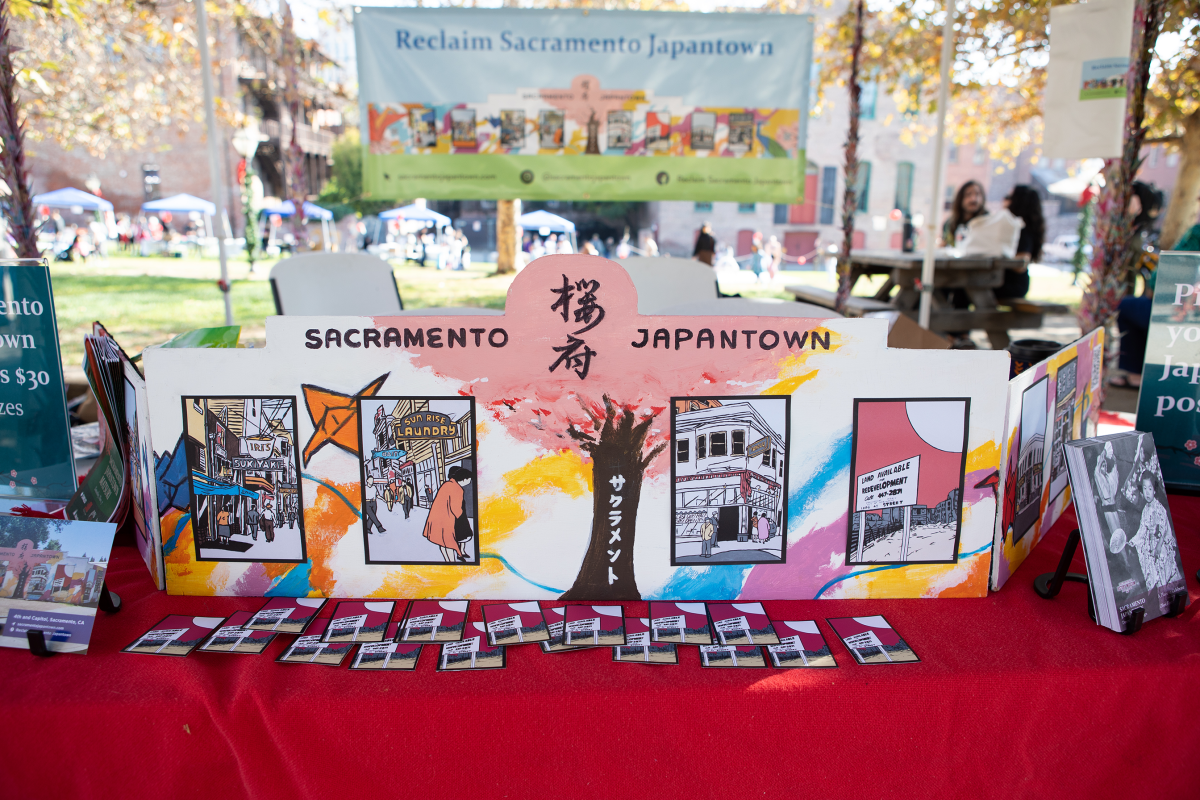
The name “Destroyed by Design” is credited to Huey. “I really wanted to emphasize that deliberate policies destroyed Sacramento’s Japantown. It wasn’t due to decline or the lack of care from the community,” she explains. “It was because the federal, city and finally the state government chose to destroy it.”
Pick Mello says the museum worked with a committee of descendants of Japantown residents and other cultural leaders to bring the project to fruition. “When we work with these community partners, we really emphasize that it is their story to tell,” she explains. “What do they want to say? We are here to help facilitate it.”
One of their first priorities was to capture the vibrancy and energy of Japantown from the 1920s to the 1940s, before showing what happened when the U.S. entered World War II in December 1941 and President Franklin D. Roosevelt signed Executive Order 9066 in February 1942, authorizing military exclusion zones that paved the way for the removal and incarceration of thousands of Japanese Americans.
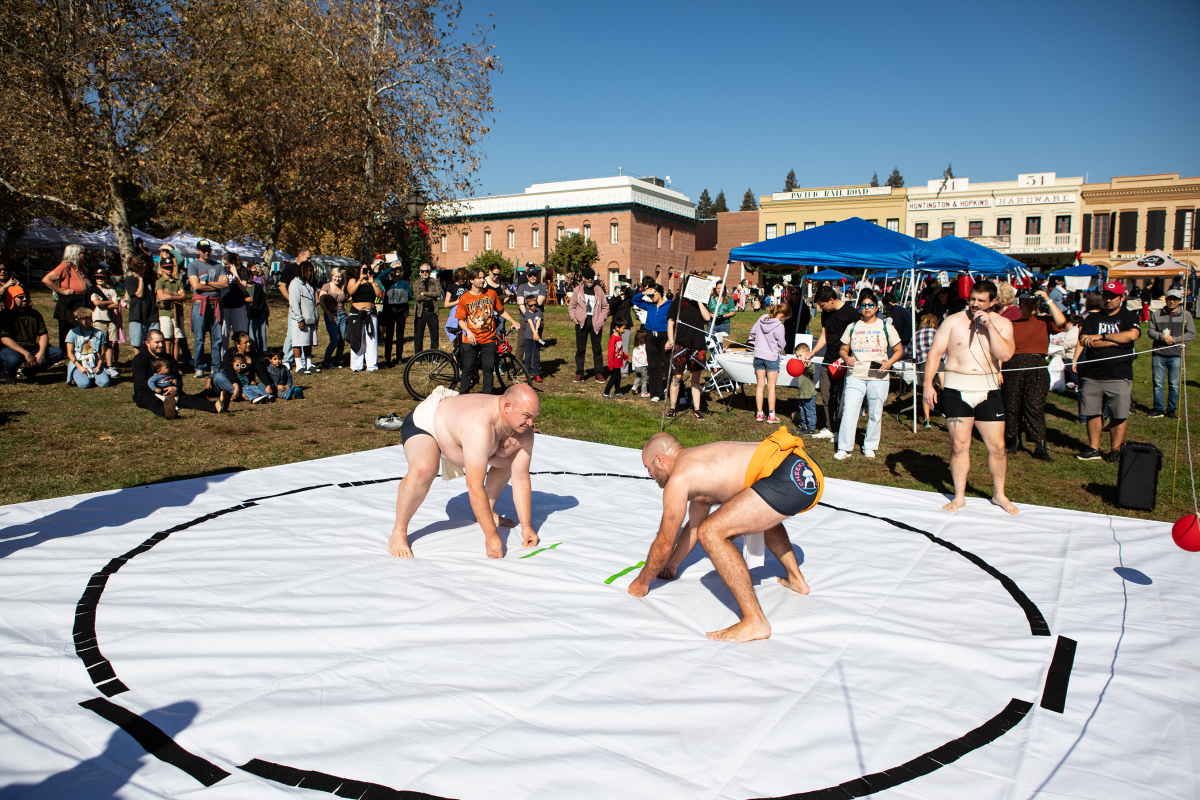
The Black Cat Sumo Club presents a sumo wrestling demonstration.
According to the exhibit, people of Japanese ancestry were given a week to meet at the Memorial Auditorium with only as much as they could carry, before being forcibly removed to the Walerga Assembly Center then taken to Tule Lake and other concentration camps. Hundreds of businesses were shut down at once, leaving the neighborhood nearly deserted. “It really became a ghost town overnight,” says Tabuchi.
Artifacts donated by community members help visitors connect with the people whose lives were forever changed. A trunk hidden behind a false wall and rediscovered years later, and ordinary items like fans, hairbrushes, clothing, makeup, toys and record albums offer glimpses into lives left behind. Signs from neighborhood establishments like Osaka-Ya, a confectionery that is still open today on 10th Street, are reminders of the businesses and gathering places that once filled the streets.
Rebuilding only to be displaced
After the incarceration camps closed, many Japanese Americans returned to Sacramento and began rebuilding their lives despite intense opposition. “You had city, county, state and federal governments all against the Japanese Americans, including the media,” says Tabuchi. Still, despite losing their possessions, businesses and their freedom, they came back to Japantown to rebuild.
But their lives would once again be disrupted. Postwar redevelopment brought the demolition of many of those properties as the city made way for the construction of Interstate 5 and Capitol Mall. The bulldozers came in.
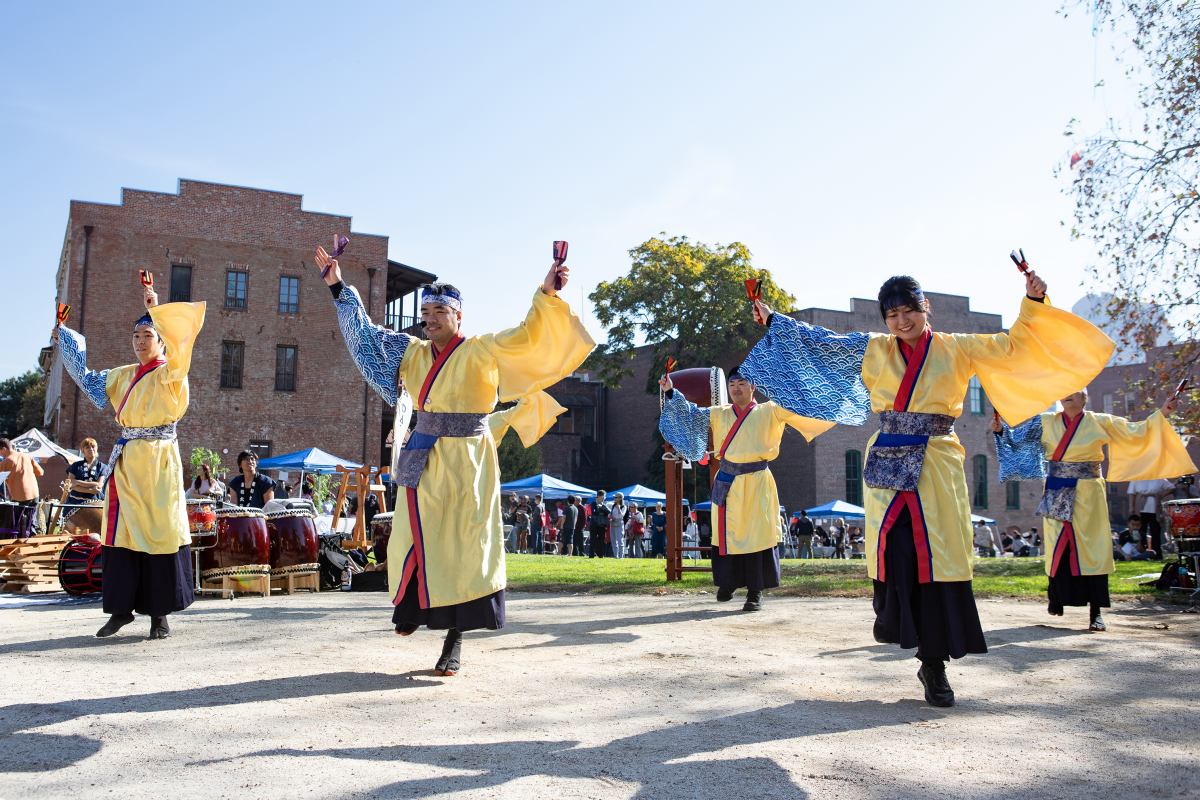
The dance group Ito Yosakoi performs outside the Sacramento
History Museum.
“If you look at where Macy’s was, DOCO and the Golden 1 arena, all of those areas were Sacramento Japantown,” says Tabuchi. The West End was labeled urban blight, and through the use of eminent domain, businesses were leveled and many relocated to other parts of the city, such as Southside Park, where Osaka-Ya still stands.
“But then, you know what happened after that, right?” says Tabuchi. “The WX Freeway came in. Eminent domain knocked them out again,” he says of the elevated stretch of Interstate 80 Business/U.S. Route 50 that parallels W and X streets. “Resilience only goes so far, right? At that point, most of the businesses went under.”
The culture continues
While the exhibit looks back at a community erased, the accompanying matsuri was a reminder that the spirit and the culture of Japantown live on.
For the committee, the festival was a critical part of the exhibit’s opening, says Pick Mello. “When we show a festival filled with vendors, performers and people celebrating Japanese culture, you dispel the myth that they’ve simply disappeared,” she says.
Congresswoman Doris Matsui delivers opening remarks at the
matsui, or festival, to mark the opening of Destroyed by Design.
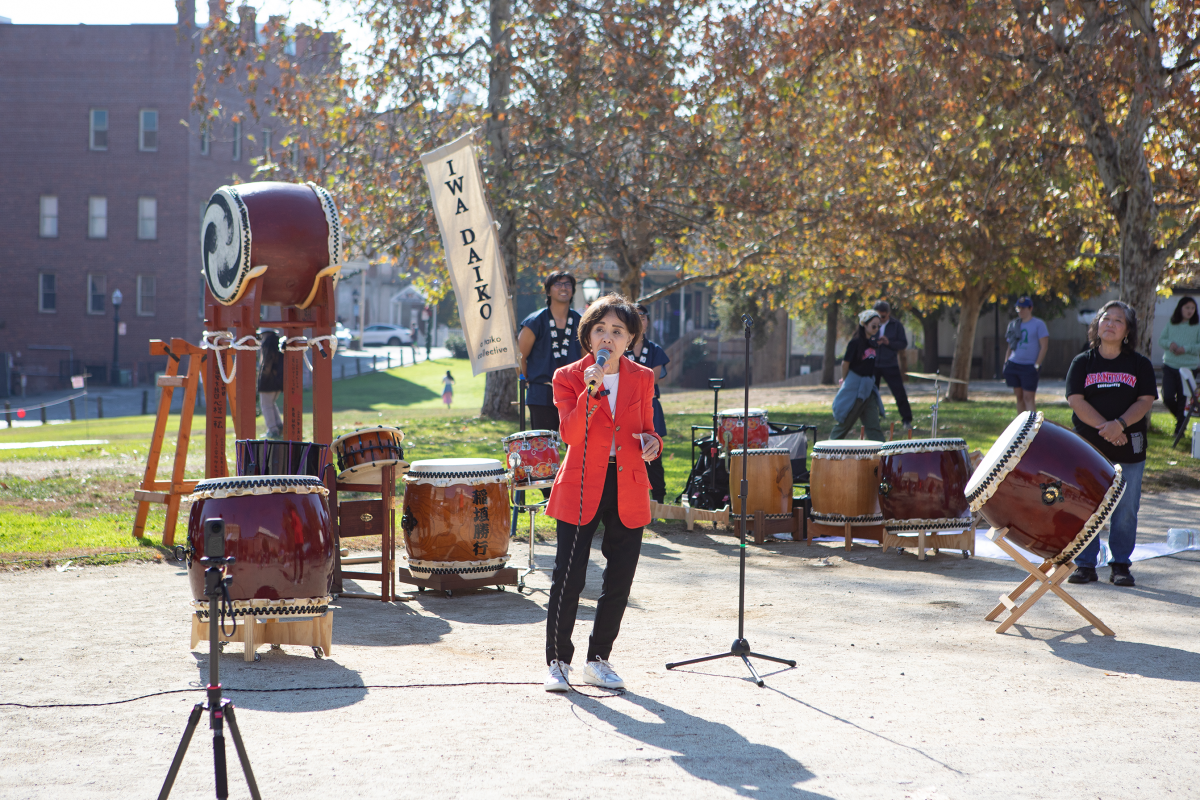
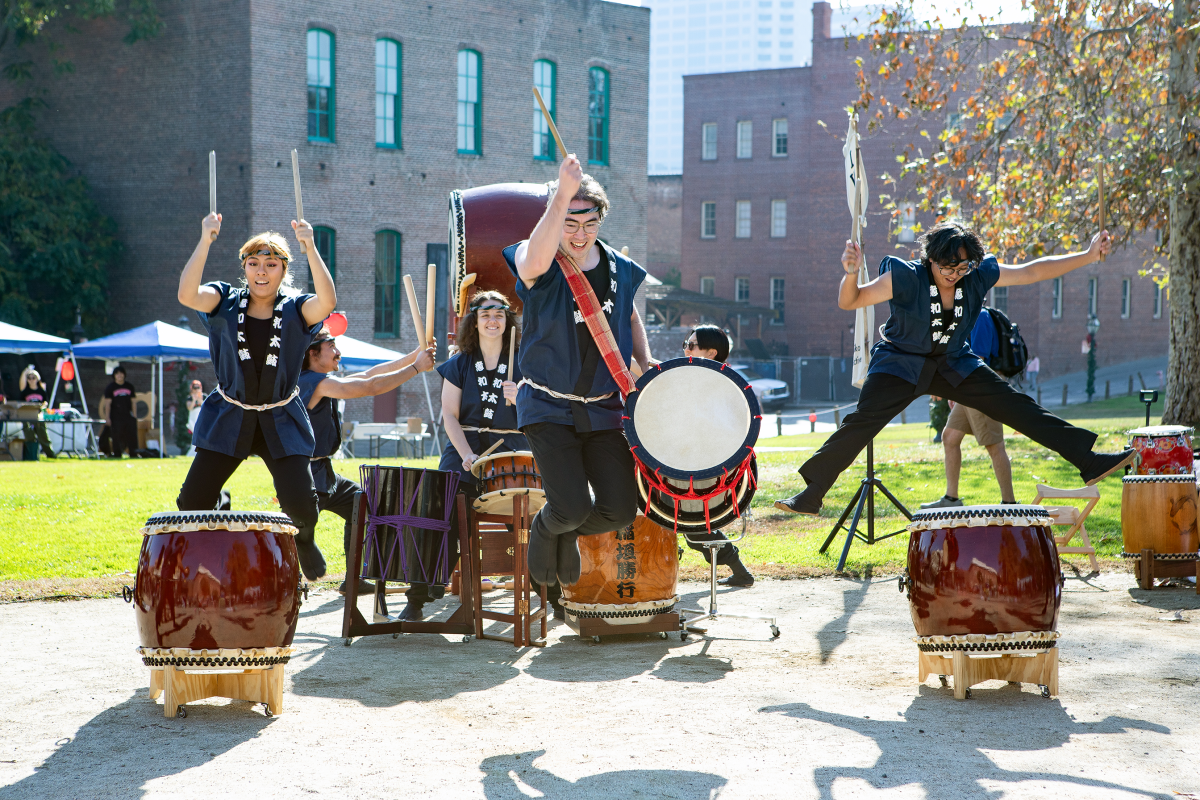
The afternoon included opening remarks by Congresswoman Doris Matsui and performances and demonstrations from the taiko collective Iwa Daiko, the dance group Ito Yosakoi and the Black Cat Sumo Club, as well as an array of handmade arts and crafts and vendor booths.
“Sacramento’s Japantown wasn’t lost to time. It was truly Destroyed by Design, barely a decade after families came home from World War II’s incarceration camps and rebuilt it,” said Congresswoman Matsui. “This exhibit exists because a community refused to let that history fade. It shows what happens when prejudice shapes public policy. That’s a lesson we can’t afford to forget right now. I hope people across our region visit so that this history is preserved and remembered for generations to come.”
The taiko collective Iwa Daiko performs outside the Sacramento
History Museum.
Pick Mello says it’s important to remember that Japantown’s history is the history of the entire West End, where Japanese Americans, Chinese Americans, Filipino Americans, Latinos and African Americans lived and worked in close proximity.
“We live in an extraordinary city with such a diverse history,” she says. “I think it’s important for people to understand who we were so they can appreciate who we are today.”
Tabuchi agrees. “I think it’s important for us to realize that decisions made by our local, state and federal governments make a difference,” he emphasizes. “This hasn’t only happened to Japanese Americans. It has happened to many different cultures,” he says.
“It’s one of those things where we have to remember our history so that we can safeguard what happens in the future,” he explains. “If we do this exhibit right, you will never, for the rest of your life, forget that there was a Japantown and that it went through so many different chapters leading to its destruction. If we have accomplished that through this immersive experience, then we nailed it.”
–
Never miss a story: Get Comstock’s weekly newsletter delivered to your inbox.
Recommended For You
A Food Bazaar Keeps Northern California’s Japanese American Farming Heritage Alive
At the Placer Buddhist Church’s annual festival, traditions connect generations
An annual festival in Penryn serves as a microcosm of a community
that materialized more than a century ago in the foothills.
A Japantown Jazz Star Comes Home
1936 film starring Sacramento-born singer Betty Inada is screened in Sacramento
Betty Inada, a Japanese American jazz singer born in Sacramento in 1913, sought fame in Japan in a time when American screens and stages had little space for Asian women.
‘I Could Not Be Silent’: Sacramento Nonprofit CEO Shares Story of Survival and Healing in New Film
'And Then We Rise' premiers at the Sacramento Asian Pacific Film Festival
The 10th annual SAPFF opened with an Anh Phoong-produced
documentary about two women who turned personal trauma into
advocacy.

Sacramento’s New Cherry Blossom Park Sees Its First Spring
Hanami Line honors the history of Sacramento’s Japanese community
After more than 10 years of planning, Sacramento’s cherry blossom
park, Hanami Line, officially opened June 20 of last year —
making this spring the park’s first bloom.