


A desired feature of a city is its walkability — the ability to get where you need to go from home on foot, whether that’s shops and restaurants, grocery stores, or doctor’s offices and pharmacies. Sacramento has several neighborhoods with high walkability scores, including Midtown, downtown, Curtis Park and Hollywood Park, but it also has another factor that doesn’t make walking all that appealing: one of the highest pedestrian death rates in the state.
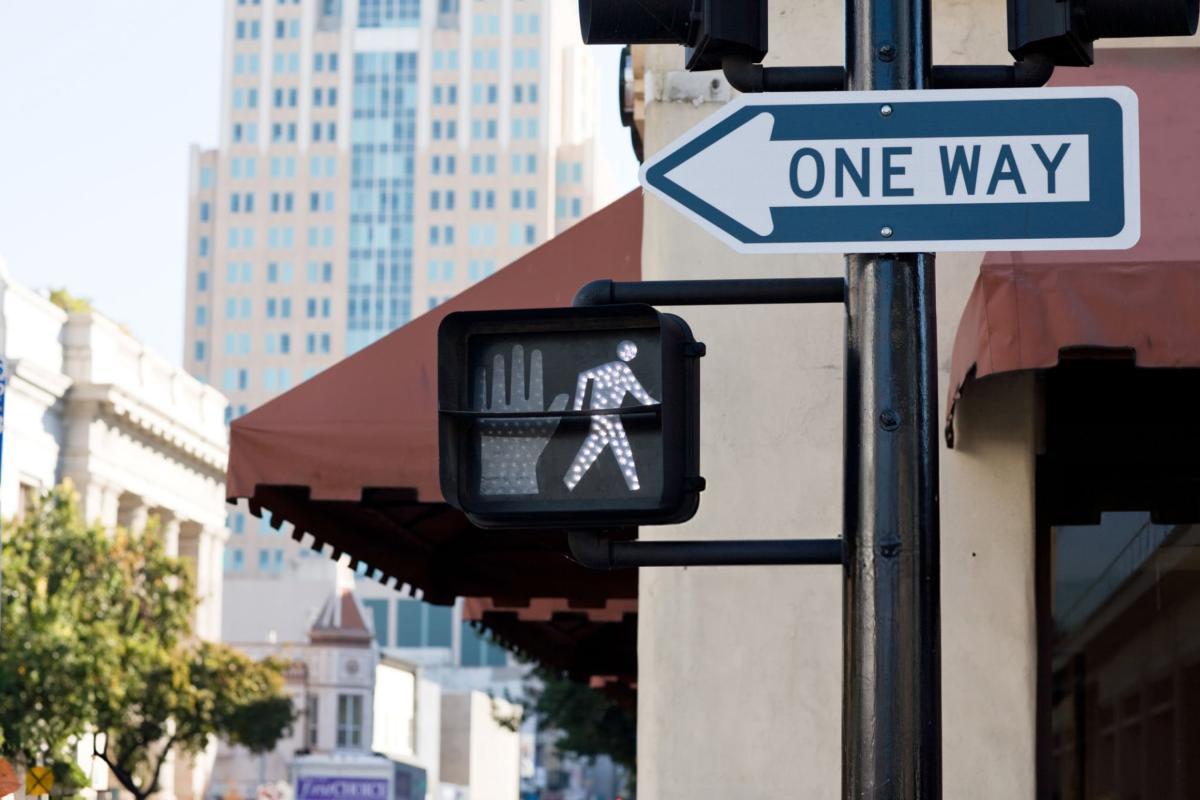
Our streets are flat, with no big hills to navigate like San Francisco, and they offer plenty of room to walk. But we also have many one-way streets, which encourage cars and buses to drive faster, says Jeff Speck, an author and city planner from Boston who spoke at the Downtown Sacramento Partnership’s annual State of Downtown breakfast meeting in February.
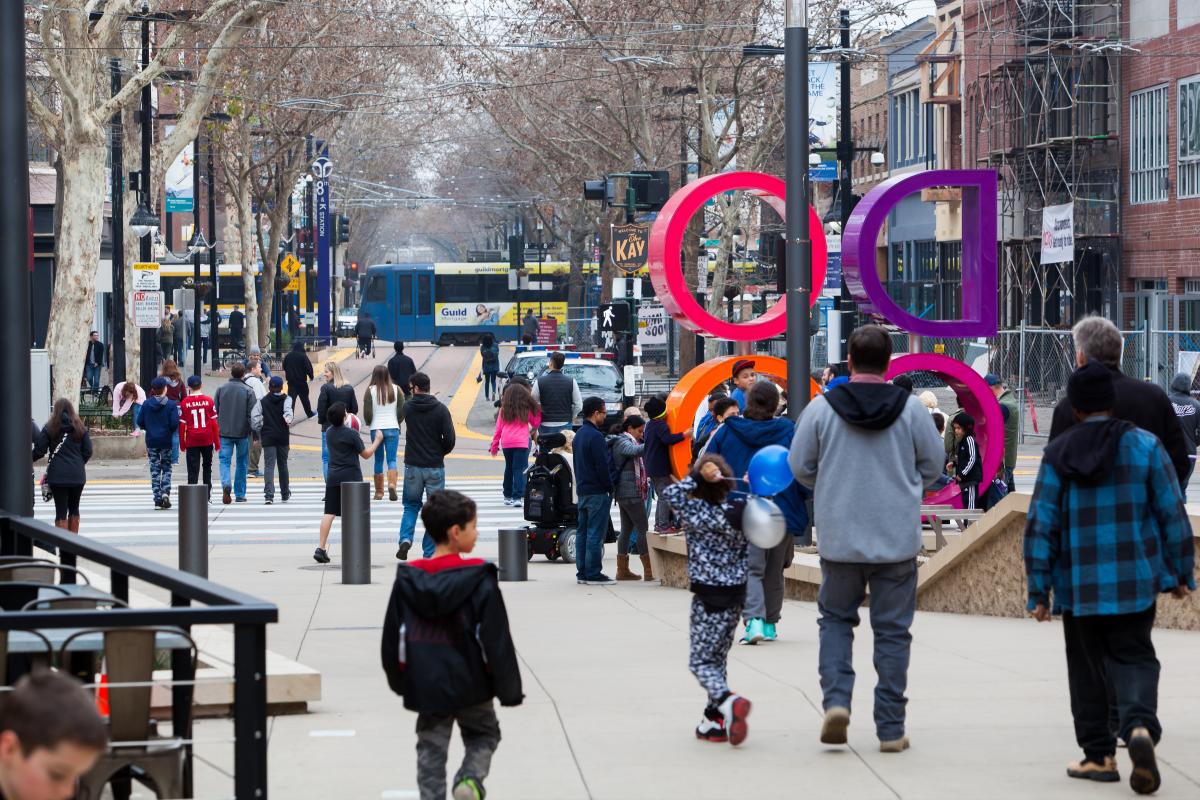
People walk through the Downtown Commons area in Sacramento.
(Shutterstock photo)
“If you look statistically, you need to worry much more about cars than you do about crime,” says Speck, author of “Walkable City: How Downtown Can Save America, One Step at a Time.”
There’s been a 78 percent increase in pedestrian deaths over the past 15 years in the U.S. A 2024 national report from Smart Growth showed there were 377 pedestrian deaths in the Sacramento-Folsom-Roseville area over a five-year period, making it the fifth deadliest metropolitan area in the state (after Bakersfield, Fresno, Stockton and Riverside-San Bernardino-Ontario) and the 20th in the country. “This is a mandate for dramatic change,” he said during his talk.
A lot of this was created decades ago by city planners who redesigned streets to be one-way because they thought it would improve traffic flow. But Speck said vehicles actually go faster on one-way streets, leading to more pedestrians getting hit.
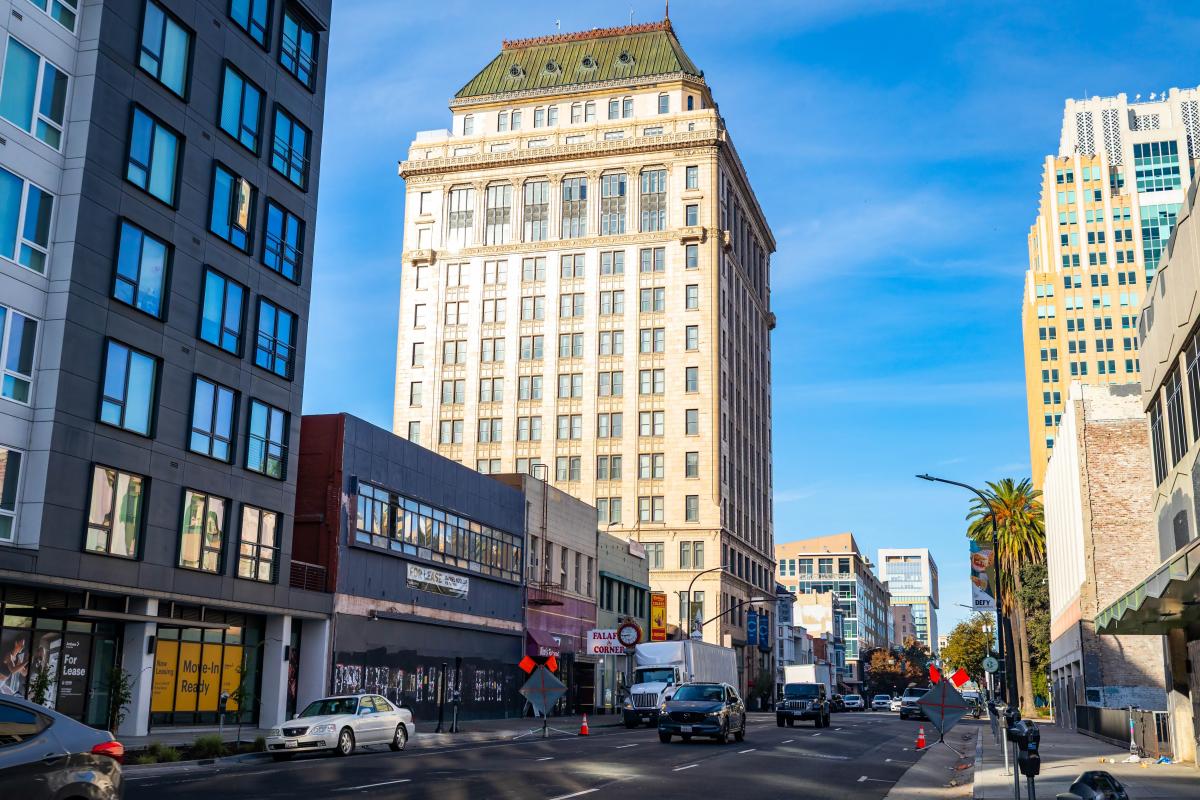
He used a real-life example: While staying at the Citizen Hotel during his visit, Speck watched out his window as both cars and buses sped by at 35 mph or higher on I Street, which is one-way. “It was interesting to see speeds that you simply would not see on a two-lane, two-way street,” he said. And the consequences are harsh. “A car going 35 mph is seven times more likely to kill you than a car going 25 mph.”
Sacramento’s Citizen Hotel overlooks a one-way street.
(Shutterstock photo)
Speck’s suggestion, which has been used successfully in other cities such as Oklahoma City and Louisville, Kentucky, is to convert one-way streets into two-way streets. He said after Louisville reverted some streets back to two-way, pedestrian crashes dropped 48 percent.
Speck also suggested eliminating some traffic signals. While the signals are supposed to improve the flow of traffic, Speck’s research says it actually makes traffic less efficient. A typical signal stop lasts one to two minutes, which can actually be longer because it takes time for traffic to start flowing again after making a complete stop. Meanwhile, a pause at a stop sign is usually just two to three seconds. Speck said traffic flows more smoothly when more stop signs are used. “We are vastly oversignaled in the U.S.,” he said.
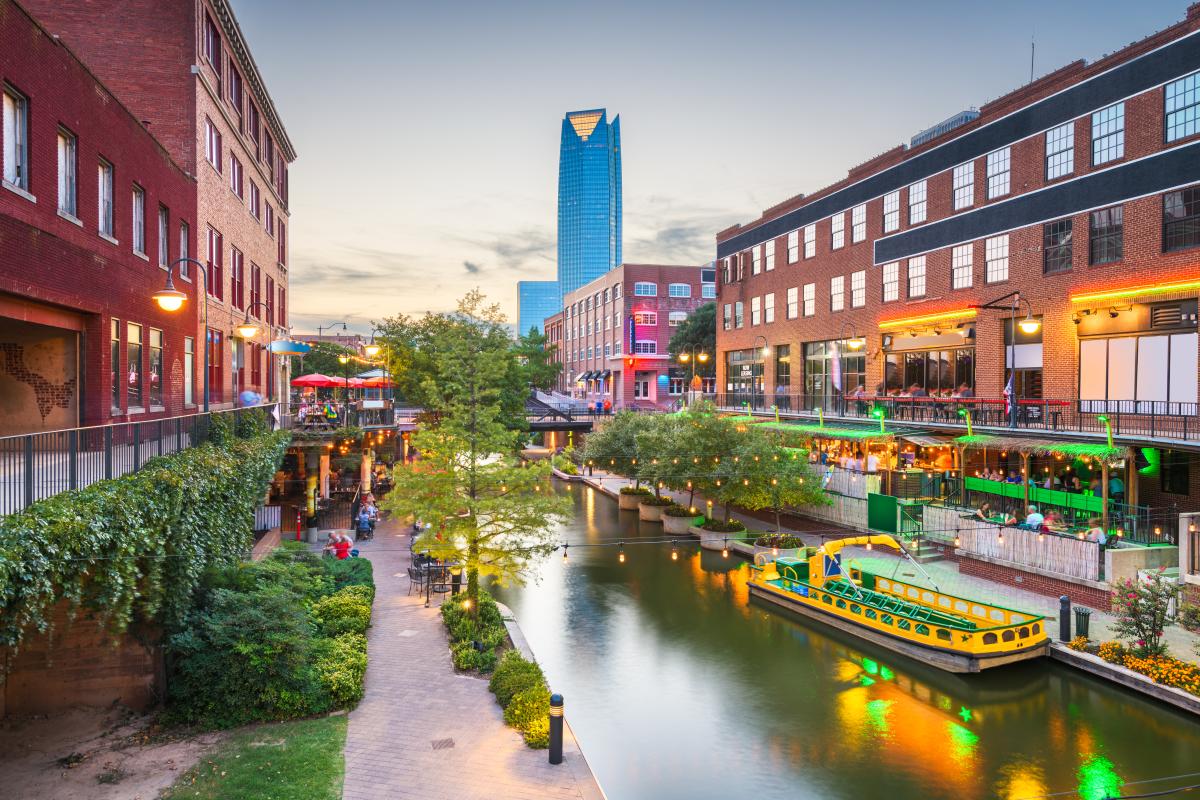
Oklahoma City has recently invested in walkability initiatives
such as converting some streets back to two-way. (Shutterstock
photo)
Another example he cited in favor of more stop signs is that cars speed up to beat a red light, meaning they are traveling even faster than 35 mph, but if you accidentally fail to make a complete stop at a stop sign, you’re only traveling about 5 mph. When traffic signals were changed to stop signs in other cities, drivers initially rebelled until they realized they were actually getting to work faster without the signals.
“That’s the great secret of replacing signals with stop signs, is that you don’t sit and wait at the light. You go slow, you pause. You go slow, you pause. It’s just a much more walkable, healthy downtown,” Speck said in a later interview.
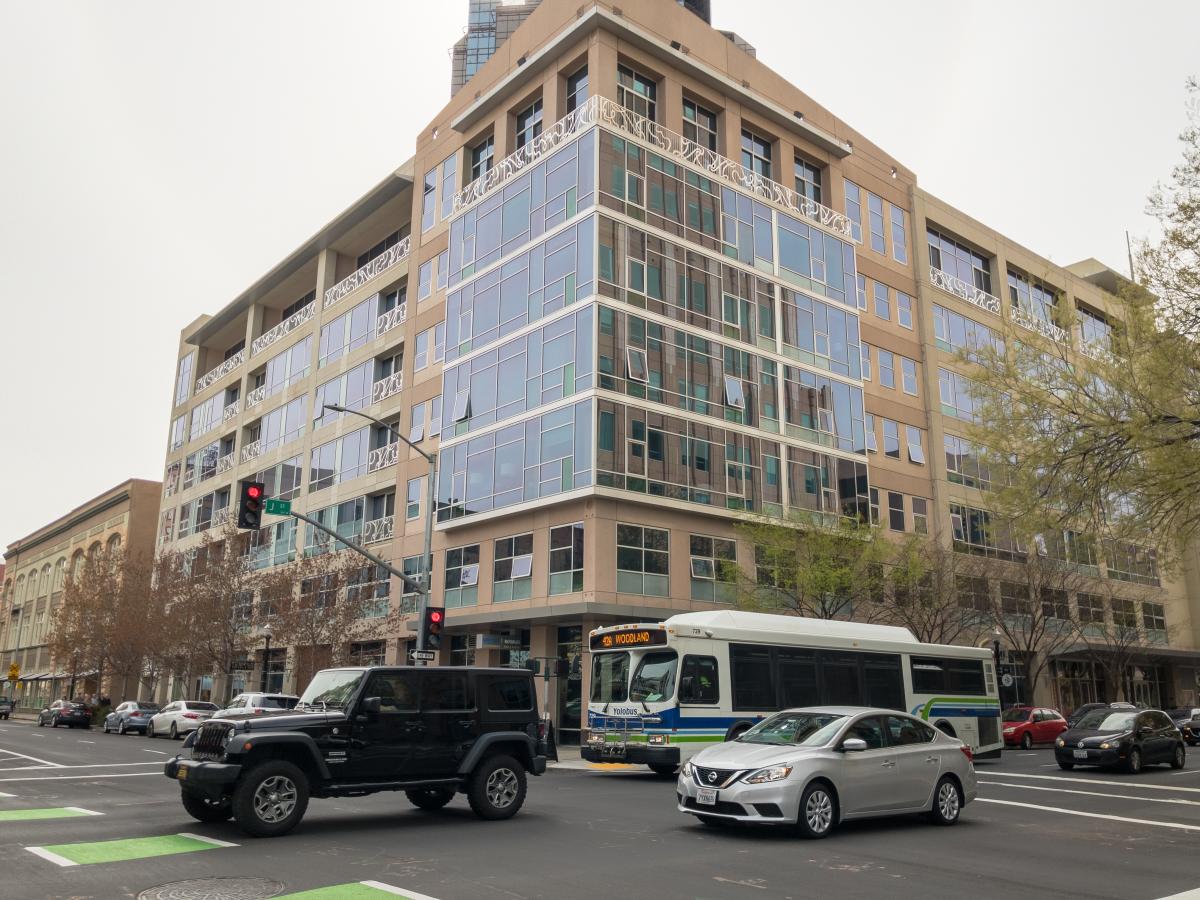
He said I and J streets, which are both one-way, see about 10,000 cars a day. Speck advocates for restriping, not rebuilding, city streets, which is more cost effective. It’s also good for merchants, who see their businesses double in activity when one-way streets are converted to two-way streets.
Sacramento’s J Street is one-way and sees more than 10,000 cars a
day. (Shutterstock photo)
Speck said urban planners drove people out of the city decades ago when they created highways to take them to suburbs. (The suburbanization of America also led to more de facto segregation, as Black families remained in city centers due to a lack of access to home financing.) But downtowns remain valuable assets to a region.
“The downtown is the only part of the city that belongs to everybody,” Speck said. “Walkability is the central feature of what makes downtowns thrive.”
–
Never miss a story: Get Comstock’s weekly newsletter delivered to your inbox.
Recommended For You
Sacramento’s New Strategy to Fight Loneliness Starts Outdoors
One in three Americans feel lonely. Sacramento is building free community spaces to bring people together
From West Sacramento to Natomas, new parks and community projects are tackling one of today’s most urgent public health challenges: isolation.
Share the Road
Can Sacramento become a safe, welcoming place for cyclists?
Despite a surge of cycling participation in the pandemic, focused spending on bike lanes, and geographical advantages, how is it that California’s capital is barely above average when it comes to bike infrastructure?
Will the Central Valley Ever Get High-Speed Rail?
Funding cuts and environmental issues are both holding up the long-stalled project
We looked into the recent history of California’s high-speed rail to understand some of the obstacles preventing it from staying on track.

Free Parking?
How Sacramento is prioritizing housing for people over housing for cars
After decades in thrall to the car, local developers and legislators are beginning to rethink parking and the role it should play in the city.