


This story is part of our March 2026 issue. To read the print version, click here.
There’s a loneliness epidemic in America that is at the forefront of public health and city planning discourse. While busy, transient work lives, screen addiction and other changes carried over from the pandemic are keeping us apart, there is a recognition that rebuilding those connections requires intentional, culturally grounded efforts.
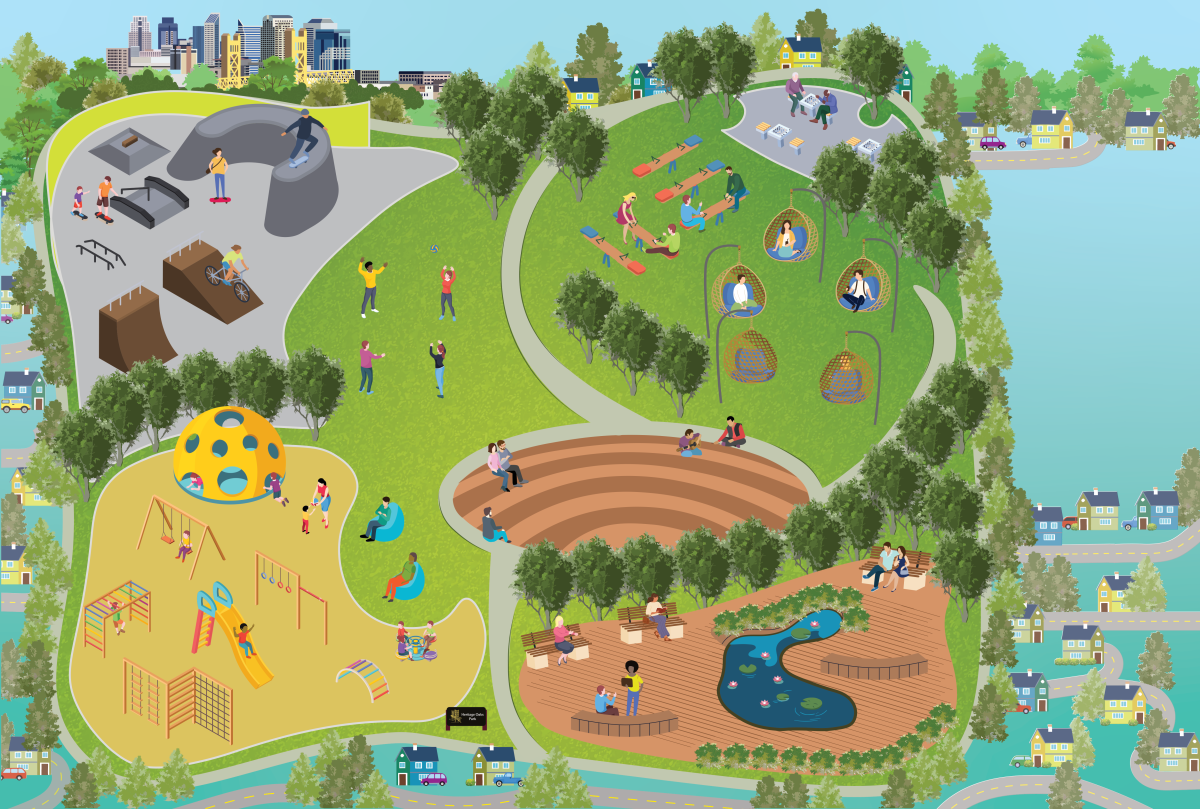
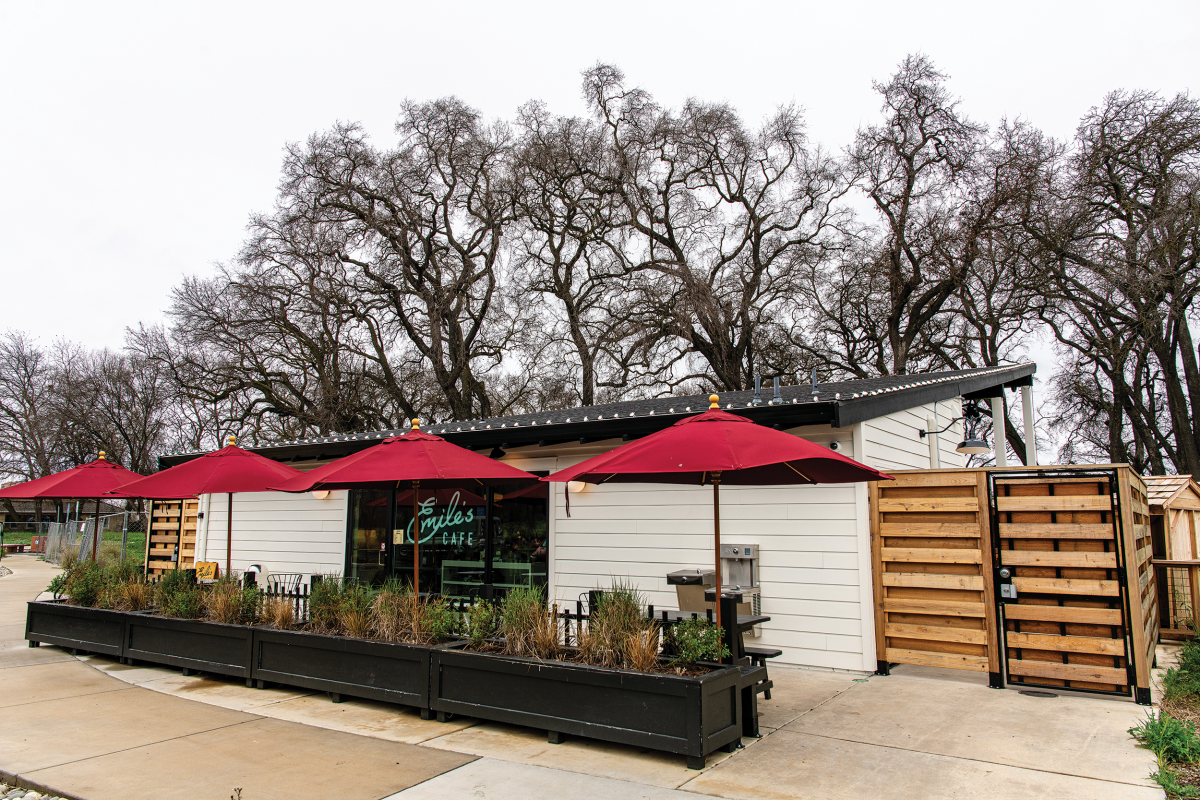
Amid 160 heritage oak trees on ancestral Patwin land, a new gathering place is being born in West Sacramento. Heritage Oaks Park is currently under development and will include an outdoor amphitheater, BMX bike skills course, skate park, fitness stations, walking and running trails and a splash pad, an interactive water play area for children. It will also feature the recently opened Emile’s Cafe, serving coffee, drinks and to-go snacks for park visitors.
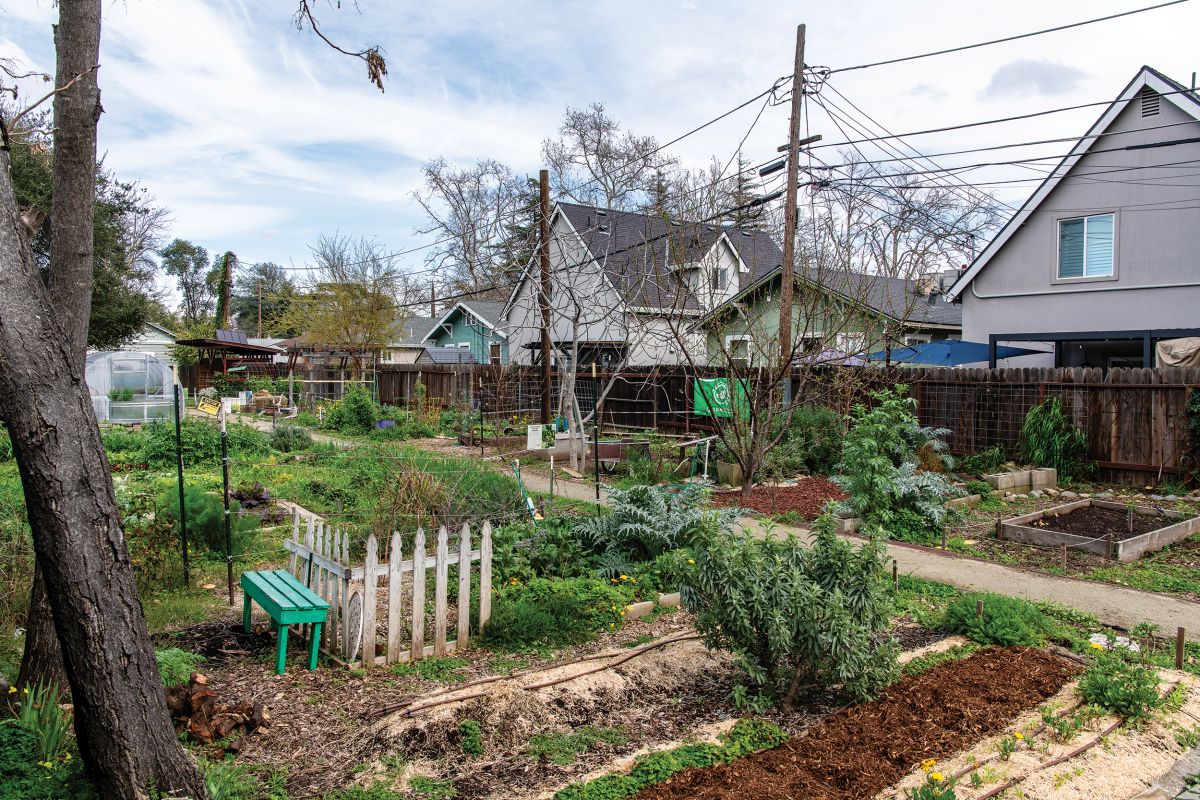
Along Broadway in Sacramento, the Oak Park Sol Community Garden was recently opened with 15 garden plots, an outdoor kitchen, a free pantry and library, children’s play area and a grape arbor “sitting space” designed to build neighborhood connectivity. Meanwhile in Natomas, plans are underway for the Birds and Benches project, where various artists will create 12 unique park benches for people to gather and observe the abundant birds and waterfowl of the Natomas Basin.
The Oak Park Sol Community Garden just reopened with 15 garden
plots, an outdoor kitchen, a free pantry and library and a grape
arbor with a sitting space. (Photo by Debbie Cunningham)
“I’ve seen how powerful shared spaces can be in bringing people together,” says Sacramento District 1 Councilmember Lisa Kaplan. “The Birds and Benches project, created in partnership with the City of Sacramento Art in Public Places Program, helps North Natomas Regional Park become a place of further belonging. These artistic benches invite our diverse community to pause, observe native birds and wildlife, and most importantly, connect with one another.”
These are just some of the projects that communities in the Capital Region are working on to create places for people to come together.
The isolation challenge
We live in isolated pods, work constantly and often find ourselves far from family and the traditional support systems that previous generations took for granted. The pandemic only intensified what had already become a growing crisis of disconnection in American communities. While COVID-19 forced physical separation, it also revealed how fragmented our social infrastructure had become.
Related: Sacramento State professor says lonely employees are hurting your business’ bottom line
About one in three adults in the U.S. reported feeling lonely in 2024, according to the Centers for Disease Control and Prevention, and about one in four reported not having social and emotional support. The health implications are serious: Social isolation and loneliness can increase a person’s risk for heart disease, stroke, type 2 diabetes, depression, anxiety and earlier death.
Sacramento County has recognized social isolation as a critical threat to community well-being. In its 2025-2030 Local Aging and Disability-Friendly Action Plan, the county acknowledged that “social isolation and loneliness remain problems in our communities” and “pose a serious threat to our physical and mental health.” The county’s needs assessment, which included 26 community listening sessions with more than 500 residents between 2022 and 2024, identified “opportunities that decrease isolation and loneliness, and build friendships and support systems” as a top priority under social participation.
“I’ve seen how powerful shared spaces can be in bringing people together.”
— Sacramento Councilmember Lisa Kaplan
In Sacramento, Ernesto Delgado, the restaurateur who owns Mayahuel, La Cosecha and others, is working on his vision of turning Cesar Chavez Plaza into a community meeting place for people to gather, eat, picnic, drink, talk, play chess and maybe even dance — similar to the plazas of Mexico City. Hanami Line, a tree garden inside Robert T. Matsui Waterfront Park along the Sacramento River, will see its second season of pink cherry blossom blooms this year. Fair Oaks Village recently completed a $23 million renovation of its amphitheater and park for people to meet up and have community events. Friends, couples and families can be seen walking around day and night.
Related: Sacramento’s New Cherry Blossom Park Sees Its First Spring
Farmers markets are a perfect example of community gathering places, and the Capital Region is lucky to have an abundance of them. The Midtown Farmers Market, which spans five blocks and 200 vendors, was recognized last year by the American Farmland Trust as No. 1 in California and No. 3 in the U.S. These markets don’t just provide food access, but also cultivate community. A Project for Public Spaces report found that customers experience an average of 15 to 20 social interactions per visit to a farmers market.
Parks and gardens
On Jan. 15, Alchemist Community Development Corporation partnered with Leadership Sacramento to celebrate the revitalization of Oak Park Sol Community Garden, a space that has served the neighborhood for 15 years. The garden was originally created to reclaim a vacant lot in a historically underserved area. Leadership Sacramento spent a year enhancing the space to allow new opportunities for programming, working together, growing food and building relationships around shared purpose.
Related: Are Art Spaces Becoming the New Third Places?
“When the pandemic hit, the community garden model wasn’t working consistently, with individually rented plots and collaborative care for shared spaces,” says Joe Robustelli, director of food access with Alchemist CDC. “We’ve been taking over plots and turning them into community plots where the produce contributes to a free farm stand and supports our Community Food Connections program with Sacramento City Unified School District, where we deliver locally grown food to families in need who don’t have access to healthy food.”
Sacramento city officials are also rethinking how public spaces can foster connection. “We have over 230 parks that are used for recreation and community gathering,” Jason Wiesemann, park planning and development services manager, explains.
Emile’s Cafe in West Sacramento is already open at Heritage Oaks
Park, which is under construction and will feature an outdoor
amphitheater, skate park and BMX skills course. (Photo by Debbie
Cunningham)
“At Muir Park in downtown, plans are proposed to transform an underutilized space into a community hub. The city is proposing a community garden and a futsal court (similar to soccer). The proposed improvements have been supported by members of the community and are set to be voted on at the City Council soon,” he says.
The city is also adding lighting to sports fields and courts. Currently, they are adding lights to the ball fields at North Natomas Regional Park and futsal courts at Tanzanite Community Park. The lighting will allow extended playing hours. They are also updating the electrical system at Southside Park to accommodate larger community events like food truck gatherings and concerts. These improvements aim to activate spaces during different times of day and for different purposes, recognizing that community happens in many forms.
Related: Pickleball Fever: People of all ages in the Capital Region are playing the fastest-growing sport in the U.S.
The Department of Youth, Parks and Community Enrichment has developed the Volunteers in Parks program. The VIP program is the department’s structured approach to engaging community members in the care, activation and stewardship of Sacramento’s parks. VIP was established to help us move beyond one-off volunteer events and toward a more intentionally sustainable volunteer model that supports staff capacity while strengthening community ownership of public spaces. The program creates clear pathways for individuals, families, community groups and partners to participate in park-based volunteer opportunities, including park cleanups, tree planting, beautification projects and ongoing site stewardship.
According to Wiesemann, “The VIP program has been a great success, with over 1,000 registered volunteers. A variety of events are available to all members of the community throughout the year.”
Threads of Belonging
This spring, artists will unveil the city’s first textile mural across the vast wall of Valley Hi-North Laguna Library in south Sacramento. Its plans cast a vibrant picture of textile tradition, which reads left to right, starting with a bright orange floral motif representing the Palestinian poppy set beside an elusive optical whirlpool of blue designed to the measurements of phi. The mural ends with squares of home, with red and green patterns.
This spring, artists will unveil the city’s first textile mural
across the vast wall of Valley Hi-North Laguna Library in south
Sacramento. (Rendering courtesy of Culture Through Cloth)
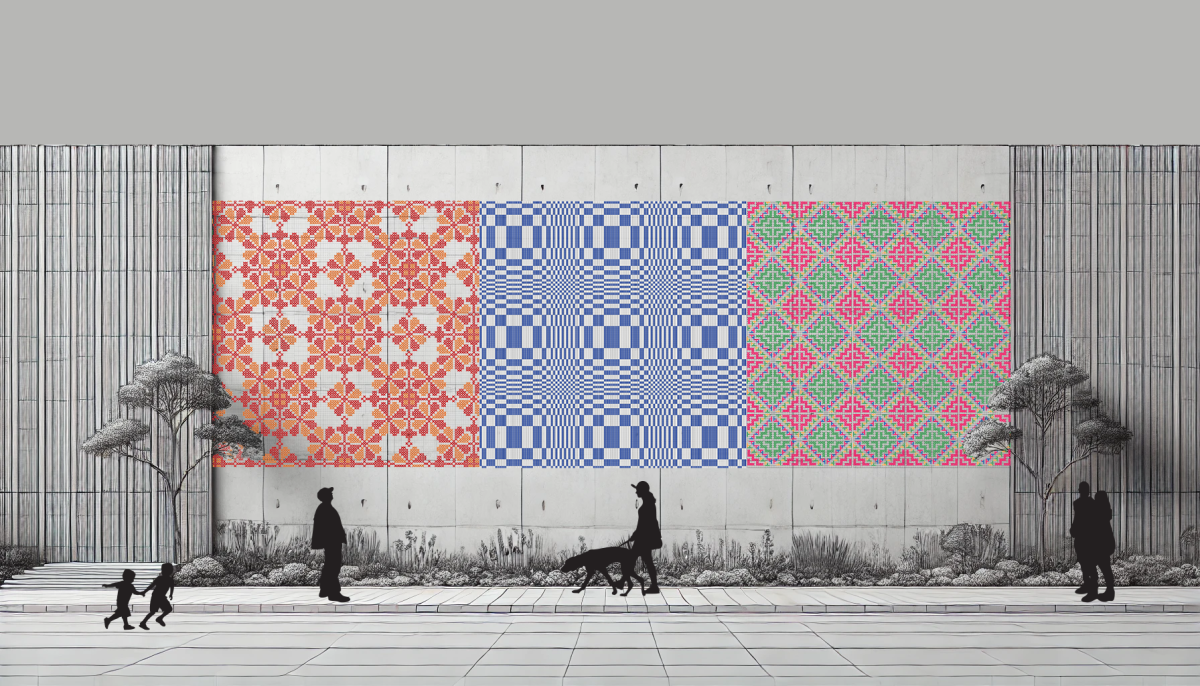
Created by three cultural bearers, Pachia Lucy Vang, Ren Allathkani and Jamie Cardenas, the handwoven mural weaves together the textile traditions of Hmong, Filipino and Palestinian communities. But the real work of Threads of Belonging isn’t just the finished artwork. It’s what happens in the workshops leading up to it, where community members gather to stitch, learn and connect.
Related: How Sacramento Creatives Are Redefining the Arts Economy
“I think that gathering and even community is something that I’m still actively building and learning how to do,” says Vang, a textile artist and lecturer for UC Davis’ design department. Vang’s work centers on Hmong textile traditions. “Growing up, I remember women gathering together to sew and to make and to embroider together, and then finding a sense of relief through being able to talk to someone that they trusted.”
Kathryn Choy, a student at UC Davis, works on the Hmong panel of
the Threads of Belonging installation. (Photo courtesy of Culture
Through Cloth)
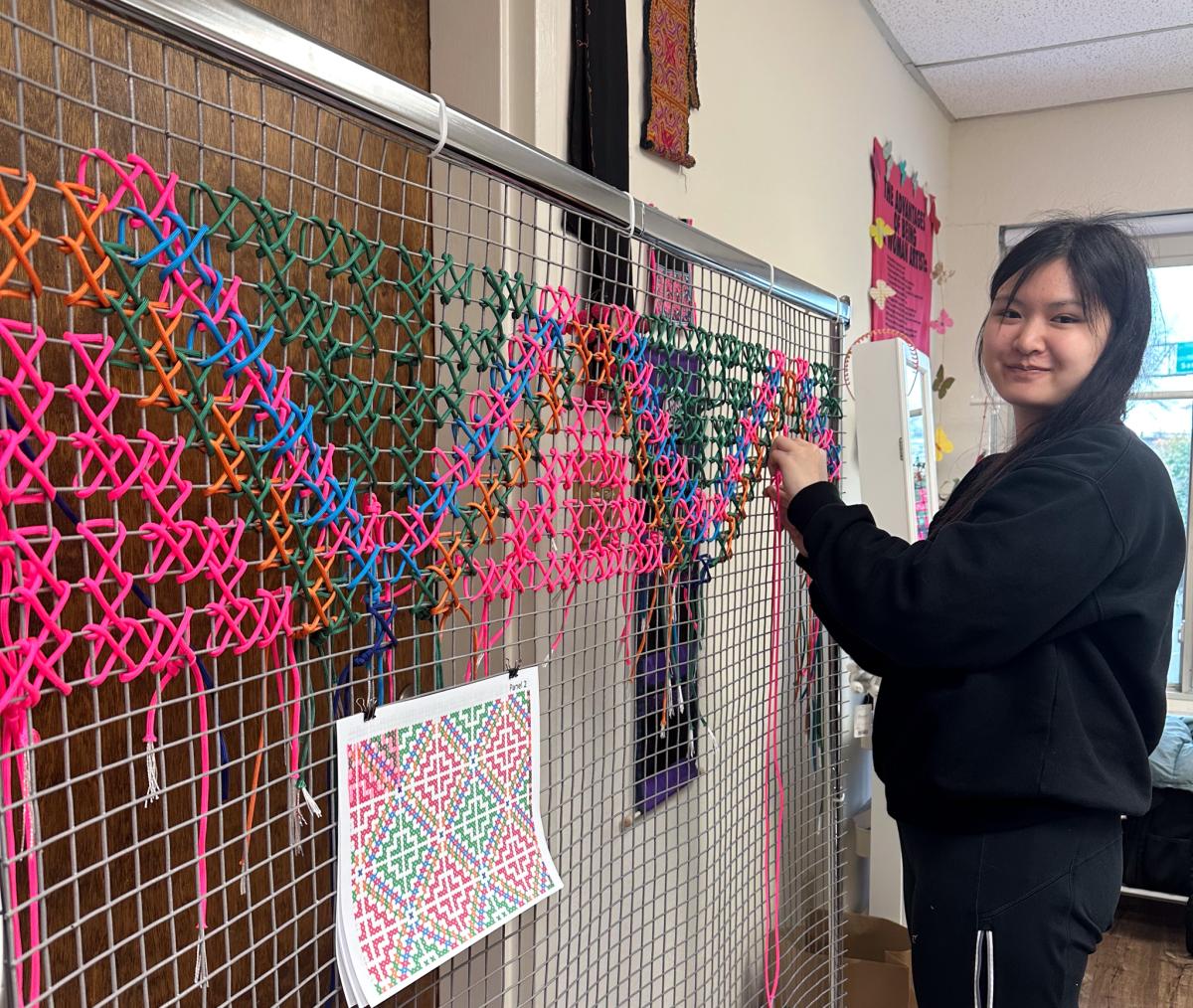
The decision to create Threads of Belonging as a public mural rather than a gallery installation was deliberate. Galleries can be intimidating and inaccessible, Vang notes, while murals carry a history of activism and belonging to communities. The planned location in the heart of south Sacramento, where many Filipino, Hmong and Palestinian families live, will ensure the work reaches the communities it represents.
As Threads of Belonging takes shape over the coming months, Oak Park Sol Community Garden flourishes with new programs, and Heritage Oaks Park and Birds and Benches, the Capital Region is quietly building a model for a post-pandemic community. It’s one that honors traditional ways of being together, while meeting the needs of contemporary urban life.
Comstock’s Editor Judy Farah contributed to this story.
–
Stay up to date on business in the Sacramento region: Subscribe to the Comstock’s newsletter today.
Recommended For You
How Sacramento Creatives Are Redefining the Arts Economy
Local artists are reclaiming control over how cultural work is valued and funded
Across the country, arts funding models are shifting. Where once large institutions absorbed the majority of public and philanthropic support, new approaches are emphasizing direct investment in artists themselves.
In the Age of Isolation
Sacramento State professor says lonely employees are hurting your business’ bottom line
Imagine your boss asking you these questions:
How often do you feel you have nobody to talk to?
How often do you feel shut out and excluded by others?
How often do you feel as if nobody really understands you?
Are Art Spaces Becoming the New Third Places?
As traditional cafes and restaurants vanish, art spaces step up as hubs for culture, connection and creativity
Originally theorized by Ray Oldenburg, a third place is meant to
be a social anchor between home and work. Typically these
communal places are bookstores, salons, coffeeshops, pubs and
restaurants. But across Sacramento, art spaces like Demo, Panama
Pottery and Forma are filling the social gap left by shuttered
cafes and bars.

Sacramento’s New Cherry Blossom Park Sees Its First Spring
Hanami Line honors the history of Sacramento’s Japanese community
After more than 10 years of planning, Sacramento’s cherry blossom
park, Hanami Line, officially opened June 20 of last year —
making this spring the park’s first bloom.