


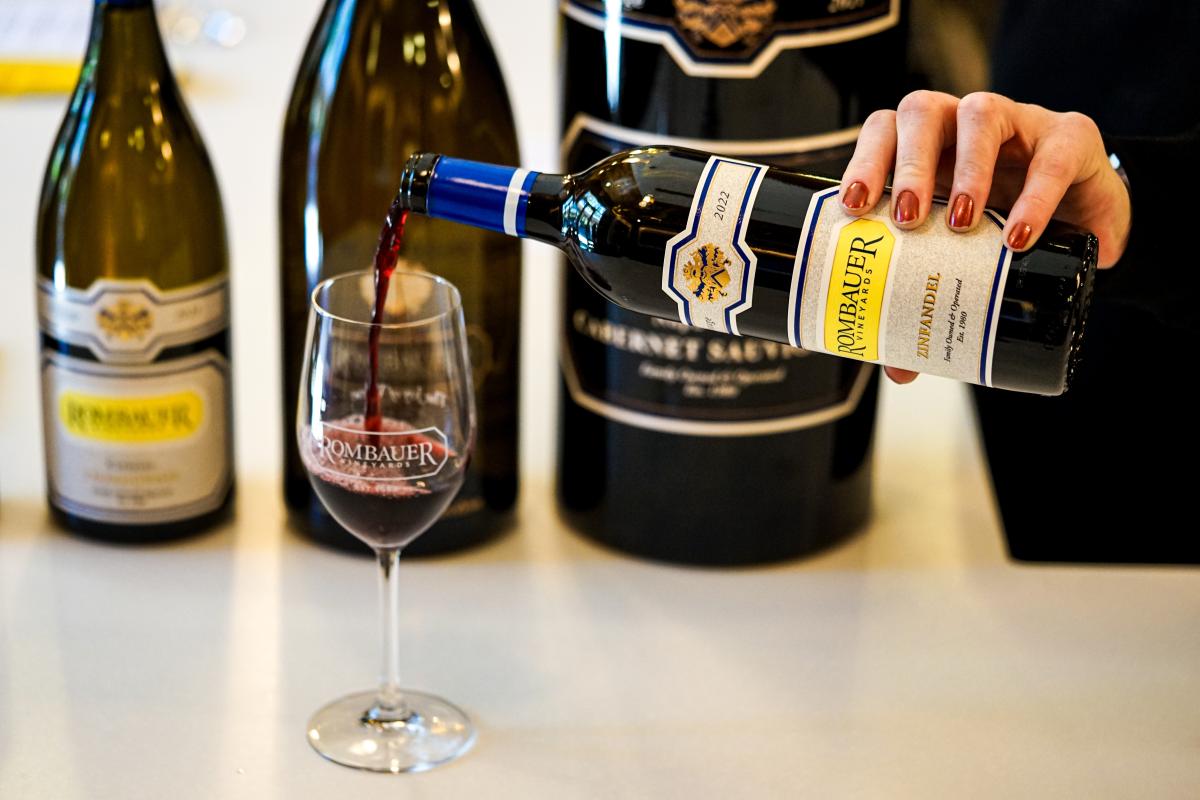
The objection comes up in Amador County tasting rooms often enough that Bobbie Bichel can recite it. A couple finishes a flight, likes what they tasted, buys a bottle and says some version of the same thing: “We don’t drink enough wine to belong to a wine club.”
Bichel, director of hospitality and direct-to-consumer sales at Scott Harvey Wines, says the worst response is an argument. A good host asks what the couple drinks at home, how often they entertain and which of the wines that day they actually liked. “Very often, the conversion happens when the guest realizes we’re not trying to sell them something they don’t need,” she says.
That exchange, repeated across dozens of small tasting rooms between Plymouth and Sutter Creek, carries much of the foothills wine economy. Amador built its reputation on being easy to visit. Tasting fees are low, often waived with a bottle purchase, and the person pouring is frequently the owner or a family member. The low fee brings people in, and the wine club pays the bills.
A cheap fee in an expensive state
Scott Harvey Wines charges $20 for a standard tasting at its Shenandoah Valley tasting room and $15 at its tasting room in Sutter Creek. Both fees are waived with the purchase of a bottle. “We want guests to feel comfortable exploring the wines,” Bichel says.
In Napa Valley, the average standard tasting fee was $79 in 2025, according to Silicon Valley Bank’s 2026 Direct-to-Consumer Wine Report, which surveyed 450 family wineries. Sonoma County averaged $47 after a $7 drop. The national average was $39. About 29 percent of Napa wineries and 30 percent of Sonoma wineries told the bank they lowered fees last year, as visitors set spending limits before they arrived.
Corison Winery, a small family-owned cabernet sauvignon producer in St. Helena, charges close to that average for its entry tasting. Its Discovery Tasting is $75 a guest for three wines, and its five-wine Library Tasting is $125. Both are semi-private and poured by one member of the tasting room team, and both include a short tour of the winery and a walk into the Kronos Vineyard. Justin Boudrie, the winery’s sales manager, says the fees are set relative to the bottle price, among other factors. “We find that most guests who visit are familiar with the price point of our wines,” he says. Corison declined to say how many tasting guests join its wine club.
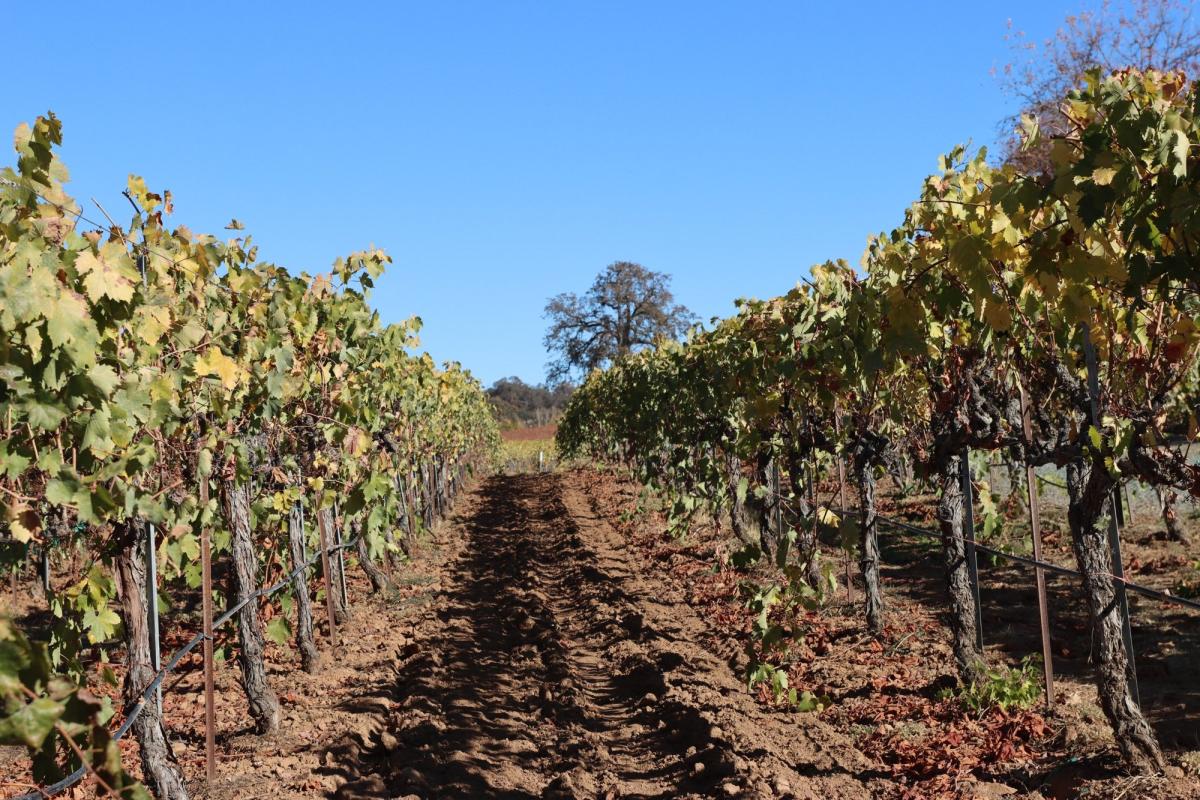
Grapevines grow in an Amador County vineyard. (Photo by Patrick
R. Dunn)
Some of the buyers those fees are aimed at are coming less often. The Napa Valley Wine Study, an ongoing interview project in which researcher Adrienne D.A. Smith talks with people who spend $100 or more a bottle on Napa wine, found that 30 percent of the buyers she interviewed between September 2025 and October 2026 now visit Napa less than they did before 2020. Among them, the reason chosen most often, by 44 percent, was that visiting isn’t as much fun as it used to be. Cost or better value elsewhere came up for 61 percent. One buyer says seated tastings and appointments “took all spontaneity and much of the fun out of it.”
Bichel doesn’t think the gap means Napa delivers four times the experience. “A $60 tasting isn’t automatically three or four times better than a $15 or $20 tasting,” she says. The draw in Amador, she says, is that a guest can still have an unhurried conversation with the people who make the wine.
She also doesn’t think Amador can simply raise prices to catch up. “If every winery simply doubled its tasting fee tomorrow without providing additional value, we’d risk losing part of what makes Amador special,” she says.
Jana Harvey, president of Scott Harvey Wines and the wife of its winemaker and CEO, Scott Harvey, remembers when there was no fee to argue about. When the Harveys opened their Amador tasting room in 2009, she says, she was shocked to find that no one in the county charged one. “When you give something for free, my feeling is it has less value,” she says. “That’s why you want to charge even nominally for a puppy or a kitten.” She believes most Amador wineries now charge $15 to $25. Many do, though not all. Casino Mine Ranch in Plymouth charges $20, waived when each guest buys two bottles, while Jeff Runquist Wines on Shenandoah Road still pours free for parties of five or fewer. Harvey says she has no idea what effect a higher fee has on club membership. “If you increase your tasters, you increase your odds for conversion,” she says.
Where the money is
For a winery of Amador’s typical size, the tasting room and the club are most of the business. In Silicon Valley Bank’s survey, direct-to-consumer sales made up 72 percent of total revenue in 2025. Wine clubs were the largest single piece at 28.6 percent of revenue, with tasting room sales close behind at 27.4 percent.
The club side has been under pressure for three years. Net club membership growth nationally slowed to 2 percent in both 2024 and 2025, down from 13 percent in 2021. In Napa, membership fell 4 percent in 2025, with the average winery losing 524 members and adding 438.
Scott Harvey Wines has moved the other way. Bichel says 5.2 percent of tasting guests joined the club in 2024. That rose to 7.1 percent in 2025 and stands at 9.1 percent so far this year, which works out to nearly one new member for every 10 people who taste. About 94 percent of tasting guests buy wine.
Retention has improved alongside conversion. Over the past 12 months the winery kept 78.8 percent of its members active, and 87.3 percent so far this year, Bichel says. Members who leave tend to cite a move, a tighter household budget, drinking less, or simply having more wine at home than they can finish.
Smith’s study points to a different exit at the top of the market. Of the 141 high-end Napa buyers she interviewed, 85 percent belong to at least one wine club. When they quit, it is seldom over a bad bottle. More often it follows a year of hearing nothing from the winery between shipments, and some drop eight or nine memberships at once.
Another Amador winery has felt the national slowdown more directly. Its director of direct-to-consumer sales, who asked not to be named in discussing the winery’s membership performance, says club membership has declined year over year, though retention is significantly better than in previous years and the numbers are beginning to stabilize. Part of that comes from holds. When a member wants to cancel, the winery offers to pause the membership instead, and hosts mention the option when they first introduce the club to new guests. Members can customize their selections, exchange wines, skip releases and manage the membership online or in the tasting room without a long-term commitment. “Today’s consumers want more control over their memberships without feeling locked into a long-term commitment,” the director says.
A third Amador winery, family owned, runs a smaller club. Its owner shared the club’s figures on the condition that the winery not be named. It has about 500 members, who receive three bottles twice a year for $105 before tax and shipping. This year it signed up 75 new members and lost 82, with eight more on hold. The club brings in less than 10 percent of the winery’s direct-to-consumer revenue, and the owner called its conversion rate low. Visitor numbers are down from last year. The winery is now looking at a more flexible club, including shipments of tasting-room-only wines and assortments by variety or appellation.
Who is pouring on Tuesday?
Part of what moves those numbers is the people in the room, and most foothills wineries staff thin. Scott Harvey Wines has three tasting room hosts in Shenandoah Valley and four in Sutter Creek, plus a tasting room manager who works both locations. Weekdays run lean. Saturdays bring wine club pickups, events and live music, and the winery adds staff to keep up. On a large club pickup weekend, Bichel says, she pours alongside Scott and Jana Harvey and members of the office staff.
The winery recently wrote an onboarding manual. In their first week, new hosts learn the winery’s history, Scott Harvey’s approach to winemaking, the core wines, the point-of-sale system, club benefits and responsible alcohol service. They do not learn a script. “We want conversations with guests to feel genuine,” Bichel says.
The family winery runs leaner still. On weekdays a single employee usually pours, with two or three on Saturdays and usually two on Sundays. When the room gets busy or a large group arrives, the owner steps behind the counter.
Scott Harvey Wines tracks sales and club conversion by tasting room and is starting to look at them host by host. Bichel says the gap between hosts can be real, though the best performers usually aren’t the hardest sellers. “They’re usually the best listeners,” she says.
Asked what she would change with more budget, Bichel says she would spend it on people, both enough staff for peak periods and more training. “When a tasting room gets busy, hospitality can become transactional very quickly,” she says.
The slow shift
Visitor spending in the Sacramento region reached close to $5 billion last year, Comstock’s has reported, with wine country among the draws. The staffing question in Amador’s tasting rooms is the same one facing the region’s restaurants and hotels: who is working the slow shift, and what they were taught before they got there.
Guests like the couple who say they don’t drink enough wine for a club usually leave with a bottle anyway. Bichel counts that as a good afternoon at the counter and treats the membership as something the winery earns over more than one visit. Whether the couple comes back, and who is pouring when they do, decides whether they ever join.
–
Never miss a story: Get Comstock’s weekly newsletter delivered to your inbox.
Recommended For You
What Terra Madre Americas Revealed About the Future of Wine
Winemakers from Mexico, Chile and beyond joined California vintners to celebrate slow wine in a changing world
Here are a few highlights from the Slow Wine Coalition’s panels, and takeaways that may inform the Capital Region’s small winemakers.
Canada’s Wine Ban Is Deepening California Wineries’ Troubles
The U.S.-Canadian trade war keeps turning Northern California’s wine world upside down
After the collapse of the trade talks, we checked in with
Northern California winemakers to see how they were dealing with
the whiplash.
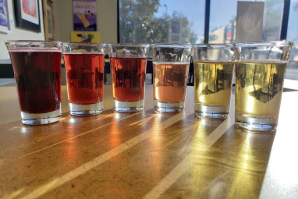
A Medieval Drink Is Making a Comeback in the Sacramento Region
A winery sold out of its first batch in an hour. A Rancho Cordova meadery draws gamers. Three local makers explain what’s bringing people to the ancient honey drink
Mead, an ancient alcoholic
drink fermented from honey and water, has waxed and waned in
popularity over the years but is experiencing a
resurgence.

The Industry Is Struggling, but Regional Vintners Think Wine Can Still Win
How lower demand, generational shifts in alcohol and potential Trump tariffs are affecting winemakers
After three decades of growth, the industry has seen three years of negative sales. Grape farmers are being severely undercut by cheaper bulk wine from abroad. Sudden, unpredictable tariff shock is knocking exports and profit margins off kilter. And there’s been studies of late suggesting that Gen Z, those born between 1997 to 2012, is abandoning the wine life and maybe even alcohol altogether. But local growers are optimistic nevertheless.