



Leah Skinner, Ed.D., is a certified dyslexia therapist and
certified special education advocate based in Sacramento.
(Courtesy photo)
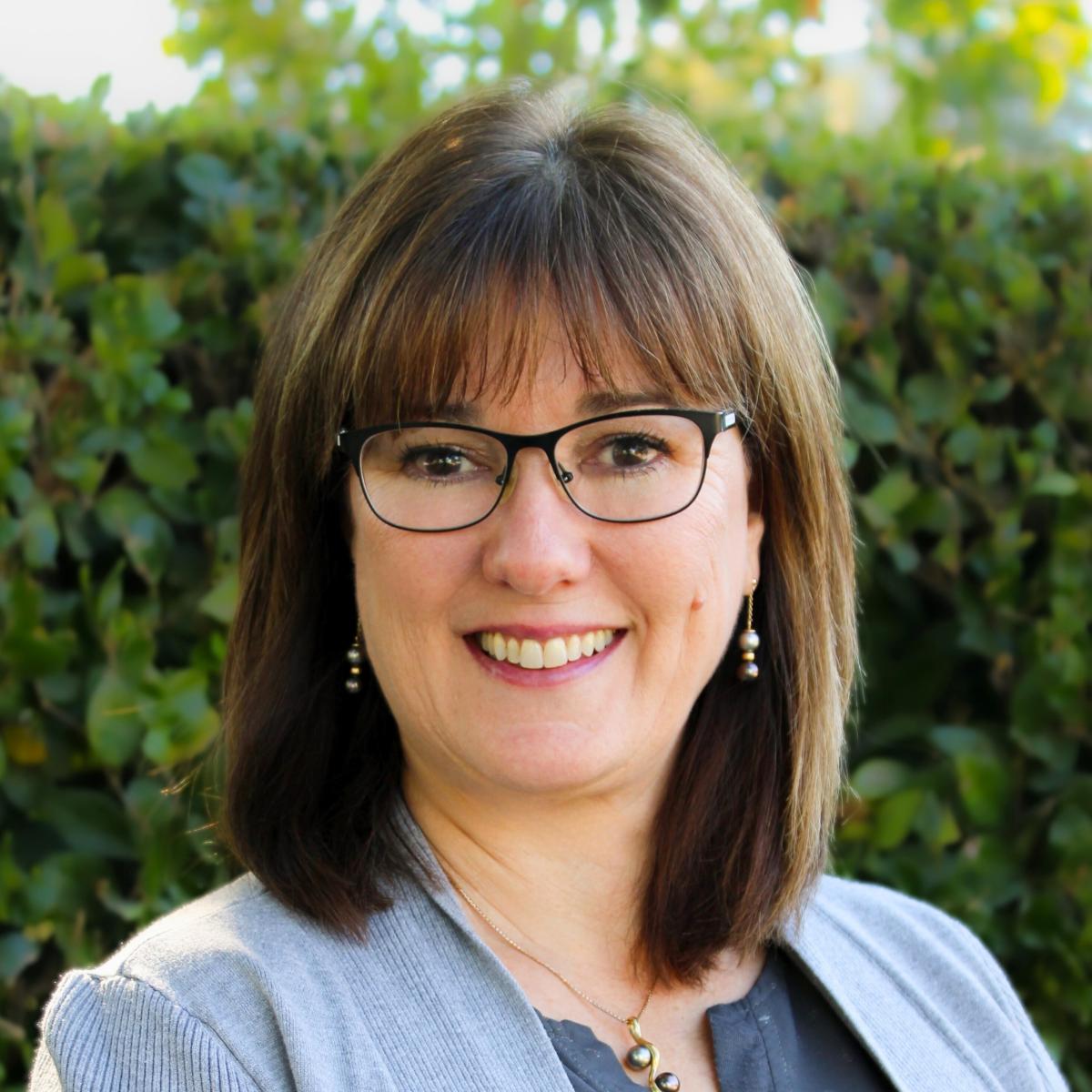
My name is Leah Skinner, Ed.D., and for me, it has always been about the children. I’ve made it my life’s work fighting for children to get the education they deserve.
I am a certified dyslexia therapist and a certified special education advocate, and I hold a master’s degree specializing in dyslexia and a doctorate in reading literacy assessment.
And I am here to tell you plainly: The Sacramento public school system is failing.
It failed my children first. I am the mother of five neurodiverse sons, four of whom have dyslexia. Fifteen years ago, my son was in third grade and couldn’t read the worksheets put in front of him. His teacher suggested testing him for ADHD. But paying attention was never the problem. He couldn’t read because of the way he was being taught. If I hadn’t intervened and gone back to school to learn how to save my own sons, they would have been a product of the same system that’s been failing Sacramento families for decades.
The numbers prove it.
In 2025, six out of 10 third graders in the Sacramento City Unified School District failed California’s required reading test. Four out of 10 scored in the state’s lowest category. You can’t score any lower. Statewide, on the 2024 national reading assessment, 21 out of 30 fourth graders fell short of the proficient benchmark. That is not a few kids falling through the cracks. That is the floor giving way.
I work with families every week, and I can tell you what not reading does to a child long before a test score can. The child always knows first. When other kids can read, and they can’t, the questions start creeping in. What is wrong with me? Am I stupid? Some stop raising their hands. Others start acting out, and some just silently give up. And that shame doesn’t disappear with age. It just gets easier for them to hide.
Third grade is where the problem snowballs. Struggling readers move into fourth grade still needing help, while another wave comes in right behind them. Then another. Every year, more kids move along without the intervention they need.
We are watching the same literacy crisis move from childhood into adulthood.
The Sacramento Public Library’s adult literacy program reports that roughly 23 to 28 percent of Sacramento County adults, including native English speakers, do not read and write well above a third-grade level. The child who can’t read becomes the adult who struggles to fill out a job application or help their own child with homework.
What makes this unforgivable is that we already know how to teach reading. In 2000, the National Reading Panel confirmed what effective reading instruction requires: phonemic awareness, phonics, fluency, vocabulary and comprehension.
When you ignore what works for a quarter-century, literacy failure stops being an accident. It becomes a failure by design.
Children who cannot read proficiently by the end of third grade are four times more likely not to finish high school on time. In 2025, full-time workers without a diploma earned a median of $770 a week, compared with $1,578 for college graduates.
And far too often, the bottom of
that pipeline is a prison cell. Sixty percent of inmates tested
in California prisons in 2023 meet the federal criteria for being
considered as functionally illiterate. Federal law defines functional
literacy as reading
and doing math at or below an eighth-grade level.
According to the
Public Policy Institute of
California, 60 percent
of inmates only scored at a sixth-grade reading level or below.
One in four scored at third grade or below. Struggling to read
doesn’t mean your child will grow up to be a criminal, but it can
chip away at their future before they even turn ten.
This isn’t about teachers failing our kids. It’s about a system that’s stretched so thin that failure stops being treated as an emergency. It becomes normal. And that’s the part we should have refused to accept decades ago.
An overwhelmed public school system doesn’t take away a child’s legal rights.
Reading is not a privilege. It is a right.
Under the Individuals with Disabilities Education Act, every qualifying child is entitled to a Free Appropriate Public Education, or FAPE.
Schools can’t use staff shortages as an excuse to deny children the help they’re legally entitled to. And they can’t just keep passing struggling readers to the next grade without addressing the problem. When public schools fail to provide FAPE, families have the legal right to force the district’s hand and pursue reimbursement for appropriate private-school placement that will teach their child.
Every child deserves to be taught
the way their brain actually learns. Sacramento is watching one
generation of struggling readers stack on top of the next, paying
the bill in dead-end wages, in children who believe they are
stupid, and in prison cells.
The public school system may have accepted this failure, but
parents don’t have to. Fight for your children’s future. They are
worth it.
Leah Skinner, Ed.D., is a certified dyslexia therapist and certified special education advocate based in Sacramento, with more than 20 years in structured literacy and dyslexia intervention. She is the mother of five sons, four of whom are dyslexic, and in May 2026 she earned her doctor of education in reading, literacy, and assessment from Walden University. She is founder and administrator of READ Academy of Sacramento and founder and program director of READ Learning Center.
–
Stay up to date on business in the Capital Region: Subscribe to the Comstock’s newsletter today.
Recommended For You

Literacy Was Optional for Rysa. It Shouldn’t Have Been. | Opinion
A Sacramento teacher offers solutions for teaching literacy skills to disabled students
The assumption beneath it all is rarely spoken aloud but deeply
entrenched: If a child cannot speak fluently, she cannot read
meaningfully. Yet that assumption is wrong. Here is what we need
to do to make sure students learn to read.
How Educators Are Preparing Students for a Future Dominated by AI
Schools and universities aim to teach students to use AI with ethics
As the artificial intelligence revolution picks up speed, schools and universities around the Capital Region are racing to use AI as a tool to prepare their students for a workforce in which AI plays an increasingly prominent role.
Families for Early Autism Treatment
Mission
Providing best-outcome education, advocacy and support for the Northern California autism community
Executive
Kathleen Berry, Vice President
Contact
916-303-7405
Annual revenue
$62,000

What the State Is Doing to Help Education
Efforts by California’s government to help students recover from the pandemic go back to its earliest days, with the state investing more than $36 billion to deal with pandemic impacts. The funding has gone to Learning Recovery Emergency Block Grants, expanded teacher recruitment, literacy specialists and much more.