


This story is part of our September 2026 issue. To read the print version, click here.
Since we live in a country that thrives on capitalism, not having any idea how the system works means always having to play catch-up.
Only 46 percent of U.S. adults have enough emergency savings to cover three months of expenses, according to Bankrate’s Emergency Savings Report. Meanwhile, young adults say they’re postponing a major life event, such as owning a home or having a child, due to insufficient funds, according to a Northwestern Mutual 2026 report.
We’re learning that younger adults rely heavily on their parents for financial assistance. A staggering 72 percent of Gen Z, who are ages 18 to 29, and 53 percent of millennials, ages 30 to 45, say they’re financially dependent on their parents, also from the Northwestern report.
There are new state and federal programs I’ll discuss in a moment that may very well address this problem at long last. But before I do that, let me take you on a brief time-travel experience.
When I was very young, my grandma was a huge influence on me. She was a widow, needed to support herself and got into real estate. Ultimately, through careful planning and saving, she purchased a number of homes and rented them out, making a good deal of money in the process.
She taught me the importance of saving, not spending. As a direct reflection of her influence on me, I remember that I wouldn’t spend any of my hard-earned money in my teens until I saved enough to do something special. For example, when the cost of going to the movies jumped radically from 15 cents to a quarter, I was angry and declared, “I’ll never go to another movie again!” And I didn’t for a very long time.
When I was 15-and-a-half years old, I used my savings to buy my first car, a used 1955 Ford. For a couple of years, I had saved everything I earned as a car-hop at the A&W root beer stand, as well as from a few other jobs, because I had a goal. (And yes, for a while in various states — including California, where I grew up — a responsible young person of that age could be granted a license, not just a learner’s permit.)
Financial literacy is important, and parents should be the first ones to ensure their kids understand money. It should start when the kids are young and are given an allowance to use, manage, save, whatever. Parents should be good stewards of their own finances and be good role models for their kids. My own parents lived hand to mouth for many years, but generally speaking they managed the money they had well. They never bought things needlessly.
Many young people today don’t seem to realize the value of money, how to grow it and how to invest it because they’ve not been taught anything about it. The work that Junior Achievement is doing in this arena is great, but they only touch so many young people. Financial literacy needs to be taught in schools.
More than 30 states are mandating personal finance education in high schools. Here in California, thanks to a bill by Sacramento Mayor Kevin McCarty when he was an assemblymember, high schools will start offering personal finance courses in the 2027–28 school year — and by the school year 2030, it will be a graduation requirement. The courses will cover how to budget and manage expenses, how to understand interest rates, how credit works, how to avoid interest fees and the ABCs of planning for retirement. Bravo!
McCarty worked with Next Gen Personal Finance, which has successfully placed financial literacy courses in 26 states in the U.S. The course teaches banking, budgeting, investing, taxes, how to manage a credit card, how to pay for college and other financial issues.
On the federal level, the new Trump Accounts may offer a stop-gap solution. Its target is American kids under 18 years of age. The administration is calling these “tax-advantaged investment accounts” (a vehicle to reduce your tax burden via tax-deductible contributions, tax-deferred growth or tax-free withdrawals under certain circumstances). A U.S. citizen born between 2025 and 2028 receives a $1,000 government-funded seed “investment,” to which families can contribute up to $5,000 a year. The funds are automatically invested in low-cost, U.S. stock market index funds (such as S&P 500 trackers). Parents, relatives, friends and employers can contribute up to $5,000 per child each year, if they wish.
The assets are locked until the child reaches age 18, when the fund turns into a traditional Individual Retirement Account. Just as with an IRA, a withdrawal can be taxed as income — but it can still be used, without penalty, for college tuition, or for a down payment on a first home, or even to start a business. And here’s the best part: Teaching! An app that’s part of the program features 15 interactive sessions of financial education.
I think Grandma would approve. What do you think?
Winnie Comstock-Carlson
President and Publisher

–
Stay up to date on business in the Capital Region: Subscribe to the Comstock’s newsletter today.
Recommended For You
California Students Are Now Required to Take a Money Course; Some Are Already Taking It to Great Success
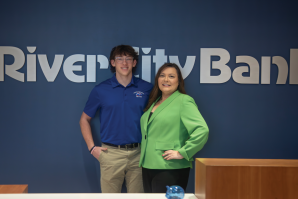
Despite polls showing overwhelming public support for teaching financial literacy skills to school students, prior to the passage of McCarty’s bill California had no statewide requirements around financial literacy courses in the schools. As a result, the infrastructure that does exist around this has largely been developed through the initiatives of a few banks and some forward-looking schools.
How to Avoid Passing Financial Fears to Kids
Even if you're a financial avoidant, you can help kids build financial skills and literacy
When it comes to helping kids become good with money, fear and silence are not our friends.

Let’s Keep the Main Thing the Main Thing | Opinion
FROM THE PUBLISHER: What is Sacramento's 'main thing'?
Sometimes it’s not a bad idea for an entire region to get in touch with itself — and for that, I turn to a favorite quote from the late educator and writer Stephen Covey, whose simple but direct point for businesses and individuals was to focus on “the main thing.”

Some Important Bedfellows: Financial Literacy, Art, Reading and Writing
Comstock’s President and Publisher Winnie Comstock-Carlson examines the shortcomings of California’s public school system.