


This story is part of our February 2026 issue. To read the print version, click here.
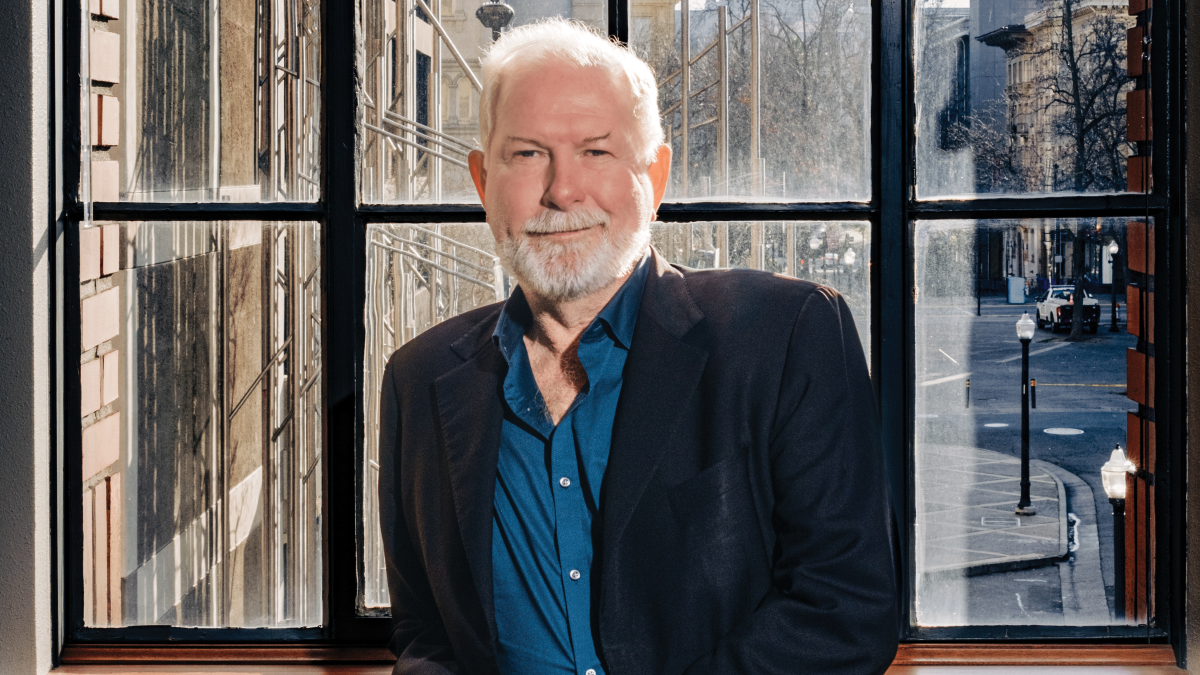
For the past few decades, Steve Ayers has managed to be both a prolific and stealth developer, affiliated with about two dozen companies. “I’ve been involved in more than 2,000 projects in my career — so far,” he says. “I intend to continue to go down this path: to create great jobs — make that great, high-paying jobs — and dedicate myself, as I’ve always tried to do, to putting people first.”
“You can raise plenty of capital,” he says, “and have all the other resources at your command. But it’s the people you surround yourself with that count. The most important thing about my work is assembling a team and having that team deliver ahead of schedule and under budget. I tell my people, ‘Do this right and do it in a timely way. Don’t worry about putting in overtime. If we do our jobs, there’ll be plenty of other jobs coming our way, and you’ll get to spend your weekends at home with your families instead of trying to earn a few more dollars.’”
He owns or has sold dozens of buildings in Sacramento and says he’s “only just begun.”
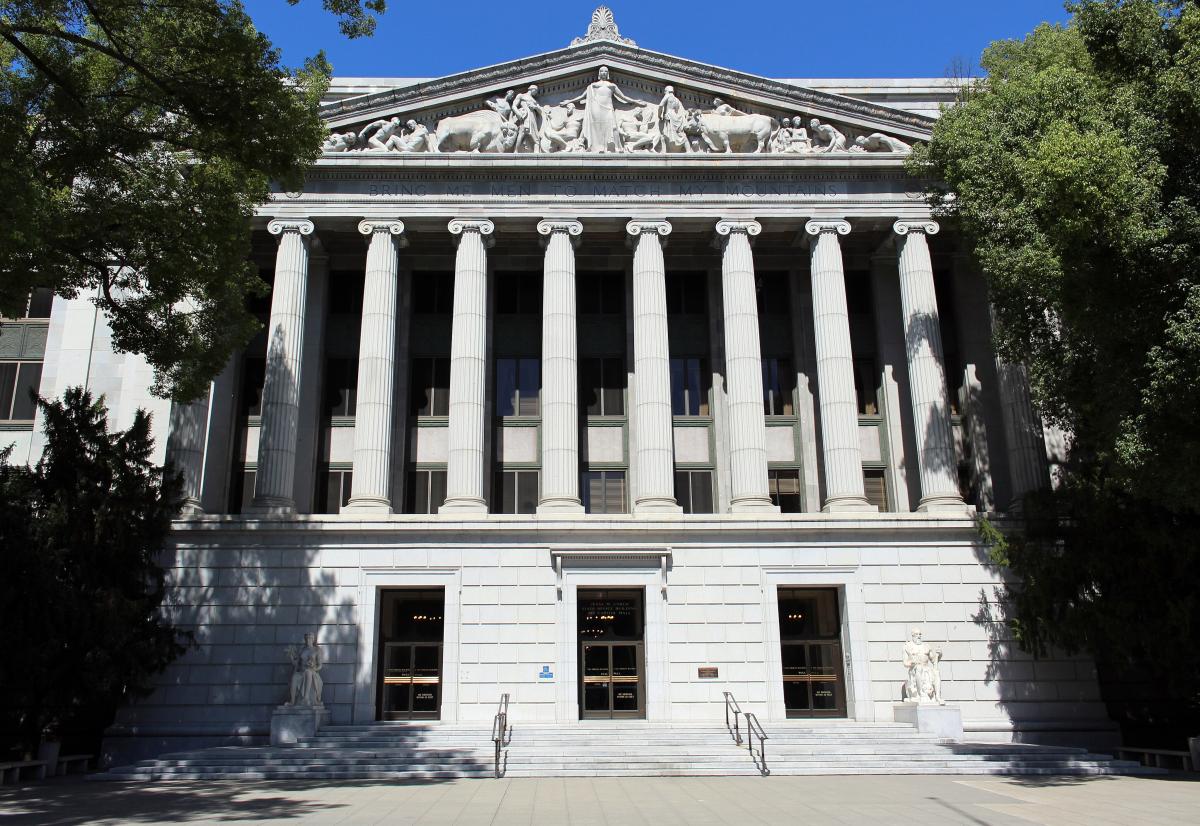
Steve Ayers was involved in a retrofit for the Jesse Unruh
building at 915 Capitol Mall. (Photo by Coolcaesar via Wikimedia
Commons, licensed under CC BY-SA 4.0)
Yet if you mention his name in some social circles — or even some business circles — responses can vary from “Isn’t that the River District guy?” to a complete blank. Ayers kind of likes it that way. “I’m just an independent businessman looking to eke out a living,” he says with almost breathtaking understatement — and perhaps his tongue inserted ironically in his cheek.
Ayers, 65, was born in Chicago. But since his family moved from there to Las Vegas when Ayers was 2 years old, “Don’t look to me for memories of what life in the Midwest was like back then,” he says, deadpan. While he’s been in the development business for several decades, he says his mantra and favorite question are the same word: “Next.” It’s sometimes followed by a question mark. “I like to be surprised by opportunities that come along,” he clarifies.
For six years, Ayers was the head of the River District, a PBID (pronounced PEE-bid, it’s the acronym for a property business improvement district). It’s a more than 800-acre, mostly industrial area whose borders are the American River to the north, Sacramento River to the west, North B, C and D streets to the south and 27th Street to the east. With its waterfront properties, its future has been the source of much speculation, some of which Ayers responds to shortly.
Sacramento’s Elks Tower in 2019. (Shutterstock photo)
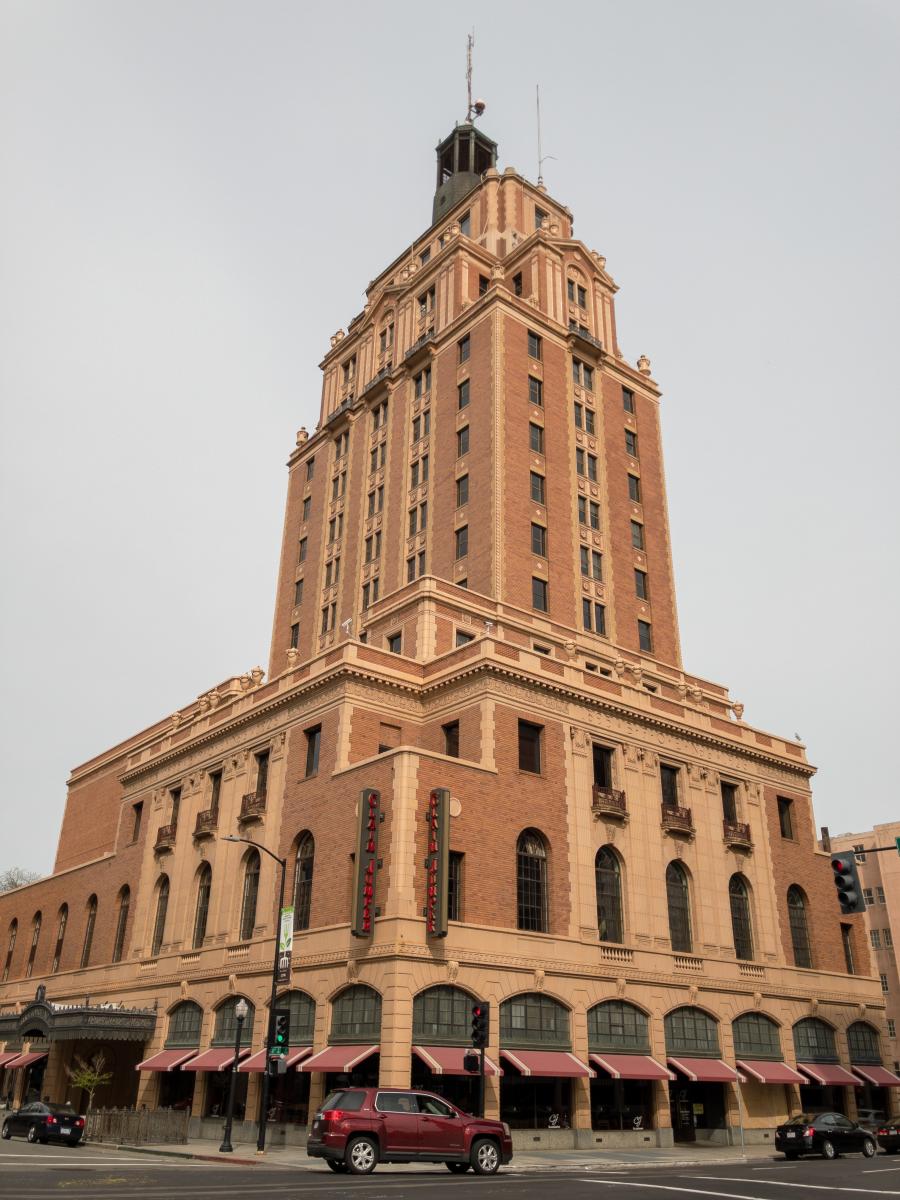
“We’re going to do tours of the tower in March, April and May, then celebrate its centennial in June,” Ayers says. On the phone and in person, he has a youthful voice which may be hereditary or reflective of his seemingly limitless enthusiasm for his job, family, life and, significantly, the hundreds and hundreds of employees he’s had (and continues to have).
Ayers met his wife, Penny, when he was 18 years old. She is a retired legal analyst for the State of California. Together now for 47 years, the couple has two daughters, Katharine and Kristine, the latter of whom is working in the family business.
Ayers takes pride in still being agile enough to climb out on girders. “I have zero fear of heights,” he says. “I’ve been an iron worker since I was 25 years old. I’m in my prime, man!” That seems like an apt segue into our chat.
COMSTOCK’S: You seem to be a perfect example of a plate juggler.
AYERS: (Nods.) I like to work on about five projects at a time and always have. It keeps me interested and my perspective fresh. What I mean is, except for some very large projects which require me to be on the job, if not onsite, every day, I like that every day feels different, every challenge new. Not many people can say that after being in the steel and construction industries for four decades.
COMSTOCK’S: One of the larger projects you’re about to unveil has people guessing. It involves the old Rusty Duck restaurant. Care to fill in the blanks? We’ll sign a non-disclosure agreement if you’d like.
The closed Rusty Duck restaurant in 2018. (Photo by Jeff
Hitchcock, licensed under CC BY 2.0)
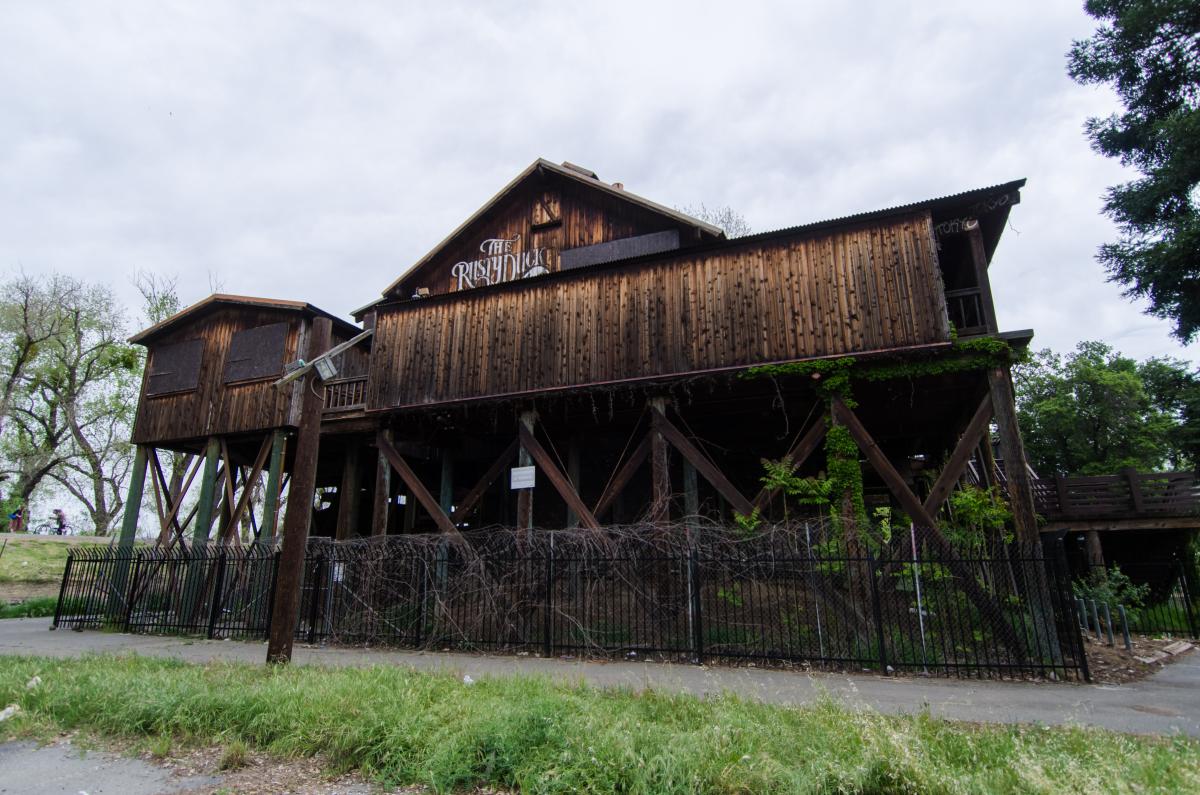
AYERS: (Laughs.) That won’t be necessary. People know it’s happening. Here’s what I’m doing at that location, as well as the lot next door, which used to be the home of a Hungry Tiger restaurant and bar. I intend to build a 700-foot, 200-unit building, which will be called American River One. All of the approvals have been granted. It’s shovel-ready. I’m just securing the equity and development partners.
COMSTOCK’S: That’s a spectacular location.
AYERS: Tell me about it!
COMSTOCK’S: Will those 200 units be apartments or condos?
AYERS: We’ll be building them so they can be apartments easily converted into condos, if that’s the desire. It’ll be a combination of affordable and market-rate units. And the views ought to be, as you say, pretty spectacular.
COMSTOCK’S: A quick question about the name, American River One. It implies this could be the first of other similar developments. Do you agree?
AYERS: (Smiles.) Let’s just see how this goes.
COMSTOCK’S: Of all the projects you’ve tackled, can you name a few favorites?
The Stanley Mosk Library and Courts building in 2016. (Photo by
Tony Webster via Wikimedia Commons, licensed under CC BY-SA 2.0)

AYERS: Well, the Music Circus at 15th and H, where the tent was. We did the superstructure work on it — the steel frame. Another would be the Library Courts Building on Capitol Mall. That was a seismic upgrade (of the California State Library and the California Supreme Court and Court of Appeal). That was a long and tough job because we worked on it from 8 p.m. to 4:30 a.m. each day. The challenge was to get the sheets of metal into the buildings — through windows, doors and any way we could get in. We also did a retrofit for the Jesse Unruh building at 915 Capitol Mall.
COMSTOCK’S: Iconic buildings. Didn’t your Armour Steel company also work on the Wells Fargo building downtown, the place with the Il Fornaio restaurant on the first floor?
Il Fornaio in the Wells Fargo building in 2016. (Photo by Bob
Glennan, licensed under CC BY-NC-ND 2.0)
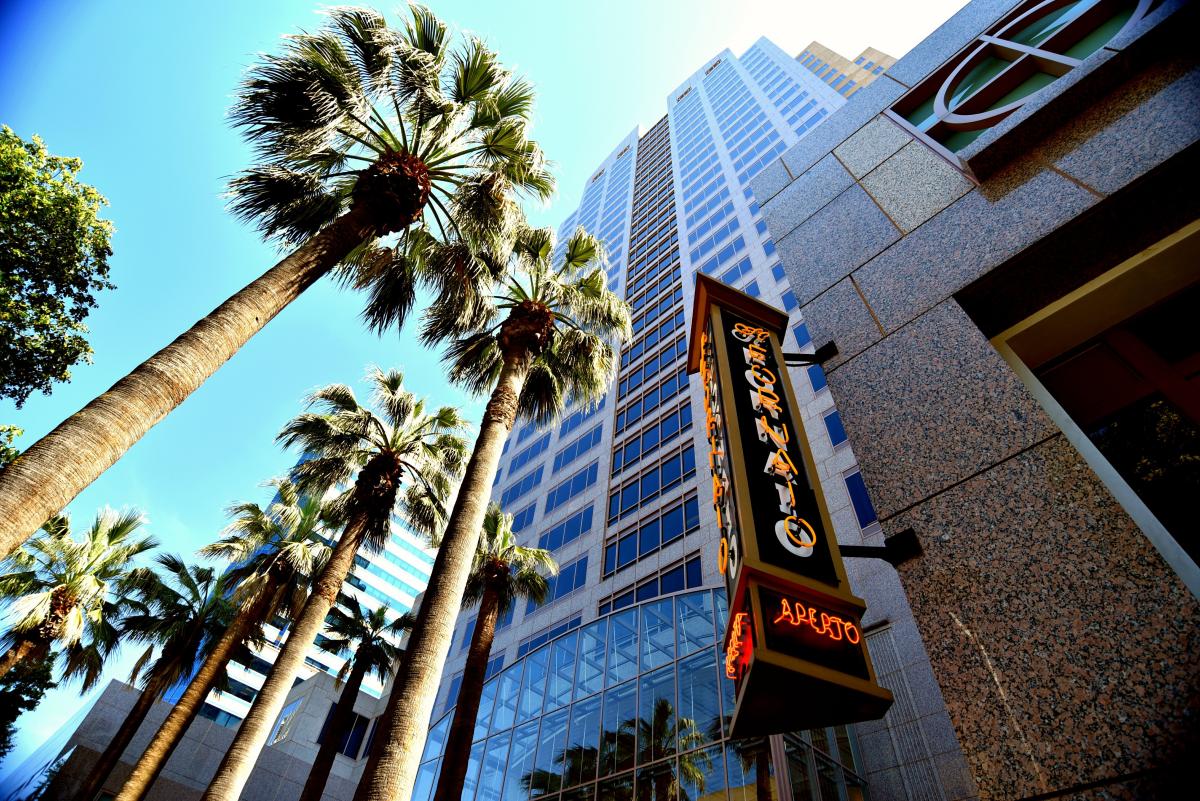
AYERS: Exactly, and that was an interesting job. We had to reinforce multiple floors in the building because the load weights had changed.
COMSTOCK’S: Because…?
AYERS: The tenants were mainly law firms, and law firms have very heavy file cabinets — and a lot of them. We had to enter each office from the office below it so we could put in steel supports to protect that office below. That job easily took a year.
COMSTOCK’S: You were bought out of your last company, Iron Mechanical, reportedly for a very large amount of money.
AYERS: I wouldn’t deny that.
COMSTOCK’S: And yet, we’ve heard that you’re about to found a new company, Victor Mechanical, which will do just about the same kind of work. May we ask why you wanted to leave?
AYERS: I don’t want to dwell on reasons for anything, but it might help you to know that my goal with the new company, as it is with almost everything I do, is to donate 10 percent of our profits to nonprofits and charities.
COMSTOCK’S: A goal not shared by your previous partners, we gather? The 10 percent is the same figure used for religious tithing, isn’t it?
AYERS: Yes. Let’s just put it this way: I want to dedicate the rest of my time here to investing in new businesses but also to charitable giving and local political issues, like seriously addressing homelessness and affordability of practically everything. I’ve opened dozens of businesses, grew them from scratch. But I always want that 10 percent of all the net profits to go to charities and nonprofits. I’m always surprised when I see those photos of someone holding a posterboard-sized check to announce they just got a big donation from someone. The donor is also in those pictures most of the time. I’d rather write the check anonymously. And when I die, I want the last check I write … (He pauses and grins.) … to bounce!
–
Correction Feb. 4, 2026: A previous version of this article misidentified Ayers’ wife, Penny, and her position.
Stay up to date on business in the Capital Region: Subscribe to the Comstock’s newsletter today.
Recommended For You
A New Era of Library Architecture Is Taking Shape in Northern California
From Truckee to Davis, the Capital Region's newest libraries foster community and a sense of place
We profile several libraries in the Capital Region and the
architects who designed them to reveal just how radically these
institutions have changed — and why they matter more than ever in
a digital age.
A Once Financially Submerged City Resurfaces in Style
The Back Story: Mountain House’s startling comeback is the stuff of suburban legend
It sounds like an urban legend, or maybe a suburban one: A town in San Joaquin County is declared “the most underwater” municipality in the United States. But in little more than a decade, the town has become not only California’s newest incorporated city but also a thriving community with elegant homes, neighborhood schools and three varieties of local parks.
Young Professionals: Charanjeet “Charlie” Kaur Tiwana-Purewal
Meet the rising stars who are leading the Capital Region from the heart
Charanjeet “Charlie” Kaur Tiwana-Purewal was studying for the LSAT when her older sister pointedly asked her, “Why do you want to be a lawyer?” When she couldn’t come up with a good answer, Tiwana-Purewal decided against law school.