


This story is part of our August 2026 issue. To read the print version, click here.
Imagine you’re house hunting. You’ve just found a historic Queen Anne Victorian with lots of potential in a great location — and it’s a steal. You Google the address and learn why: It was once the home and hunting grounds of one of America’s most notorious serial killers.
Would you buy it?
For pop culture and true crime buffs Barbara Holmes and Tom Williams, the answer was an emphatic “yes.”
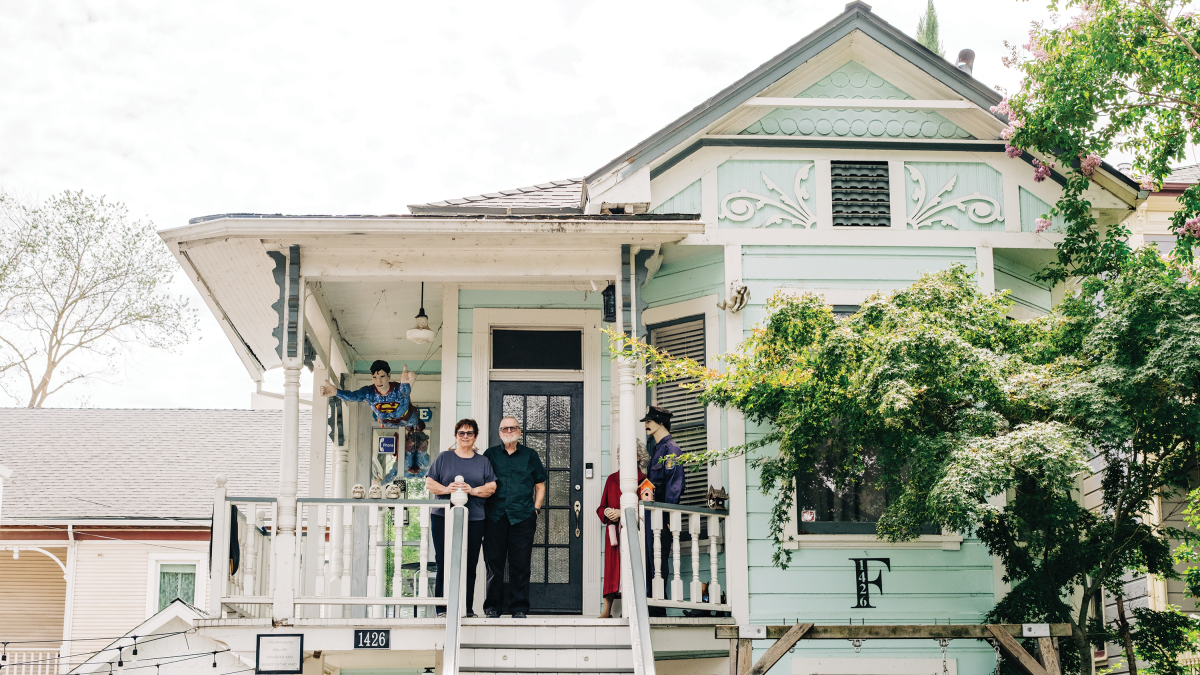
“You couldn’t have stopped me from buying it,” recalls Williams. Relocating from El Dorado County, the couple, who met on Match.com and were married in 2005, had just shuttered their bookstore in Placerville and planned to start fresh in Midtown Sacramento. They wanted to be closer to the action, with added living quarters for Holmes’ mother. “It just met our needs — and it was cheap!” says Holmes. They purchased 1426 F Street, a two-unit home in the Old Washington School Historic District, for $226,000 at a foreclosure auction. “We wanted it so bad, I bid against myself,” Williams quips.
That was in 2010.
In the late 1980s, it was unthinkable that the house could serve as anything but a grim reminder of its most infamous resident. For years, Dorothea Montalvo Puente committed her crimes here, under the guise of feeble age and hospitality. She was entrusted with the room and board of vulnerable individuals, but instead exploited them to the worst degree. Charged with drugging and murdering nine people and stealing their Social Security checks between 1979 and 1988, Puente was ultimately convicted of killing three. Seven victims were found buried in the house’s front and side yard.
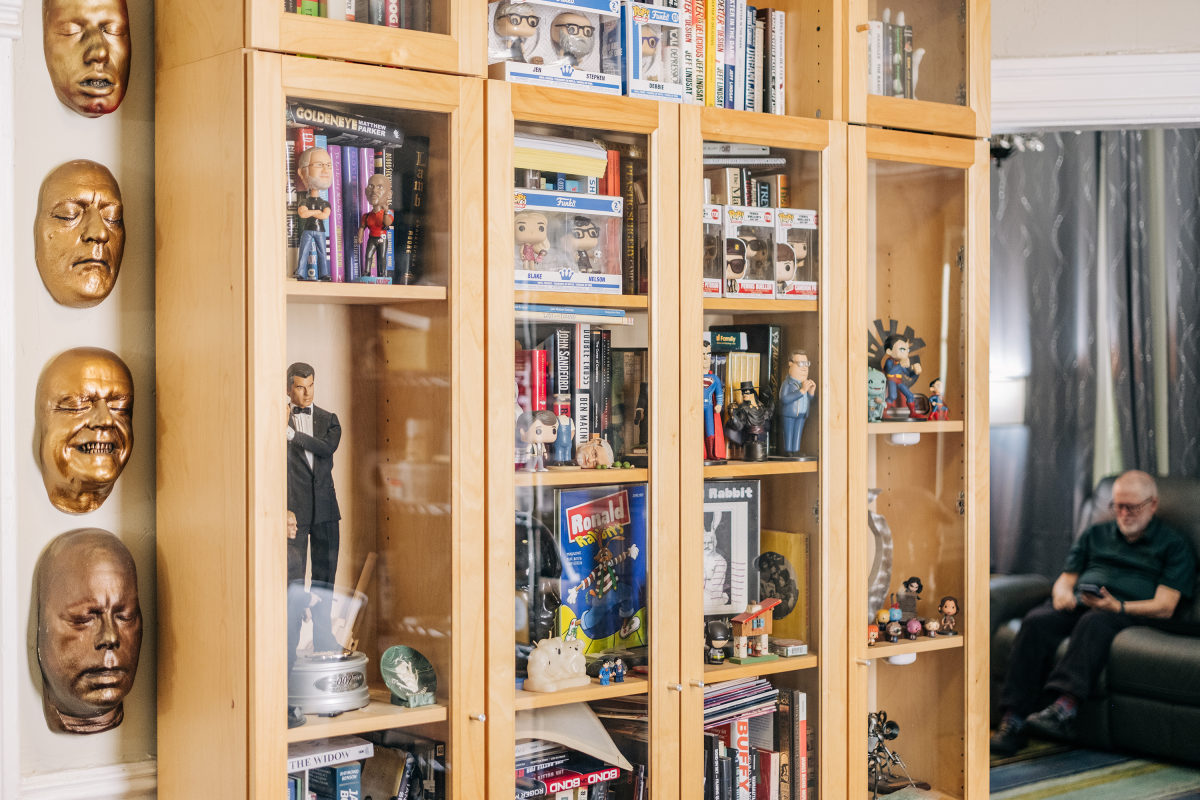
Display cases show an array of movie, TV and pop culture
memorabilia. To the left hang the “life masks” of some famous
actors.
The house’s notoriety is undeniable. In November 1988, news of the crimes, though in the pre-internet era, spread like wildfire. Sacramento writer and Comstock’s contributor Steve Martarano, then the crime reporter for the now-defunct Sacramento Union, was first on the scene when the news broke. When he arrived on Friday, November 11, Sacramento Police Detective John Cabrera told him they had found a body and showed him around the property where they planned to dig the next day. By Monday, they had found five bodies.
“It became this huge, massive story. People were coming in from all over. I remember there were reporters from Australia, there were people in the trees. It was just crazy,” Martarano says.
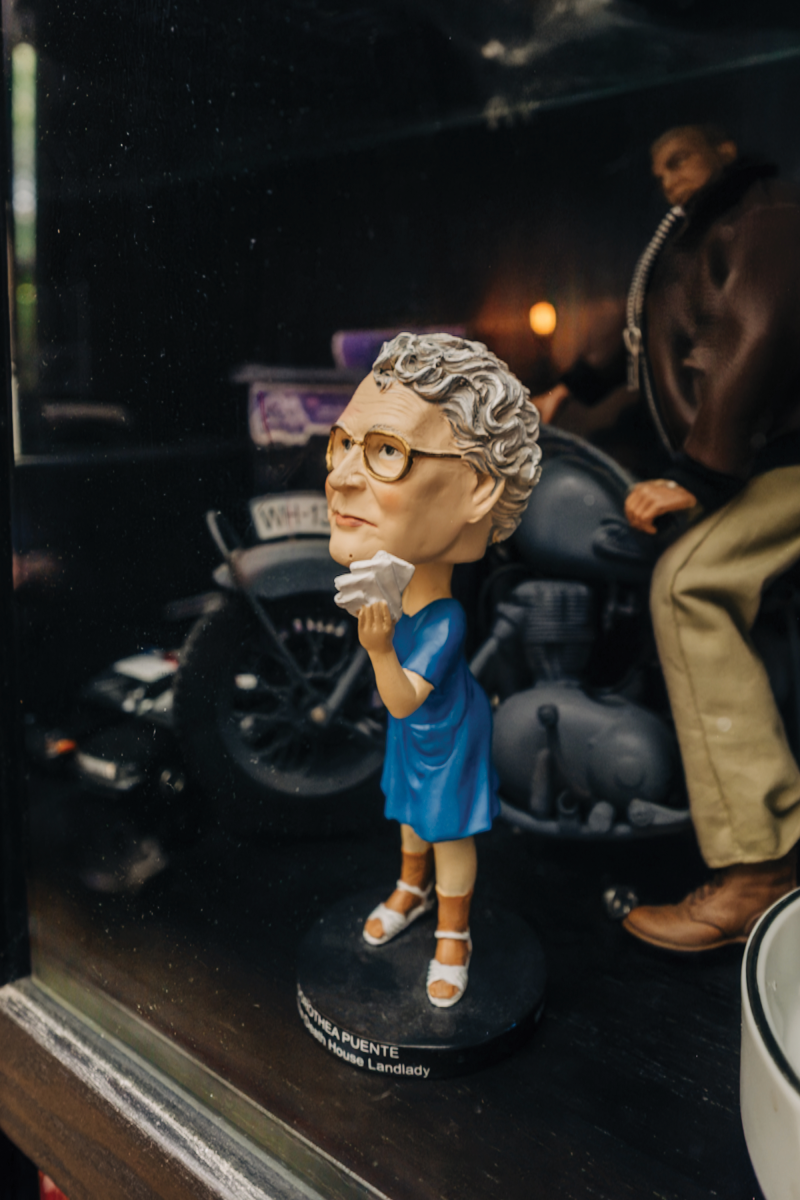
A Puente bobblehead is included in the couple’s collection of
memorabilia.
‘The house is innocent’
Puente had leased the house, which contains four bedrooms and two bathrooms between the two units, from her friend Ricardo Ordorica. When she left, he kept the house for another 14 years. It then sold three times in quick succession, with the last owner letting the house go after spending $560,000 five years earlier.
Holmes and Williams found the place in decent shape, with no sign of the previous crimes. Upgrades were needed, however, and the couple immediately began renovating. They slept on an air mattress upstairs while they removed a wall to open the small kitchen to the dining room and closed another opening to make a proper bedroom. They painted, remodeled kitchens upstairs and down, and added a new roof, HVAC, solar and plumbing.
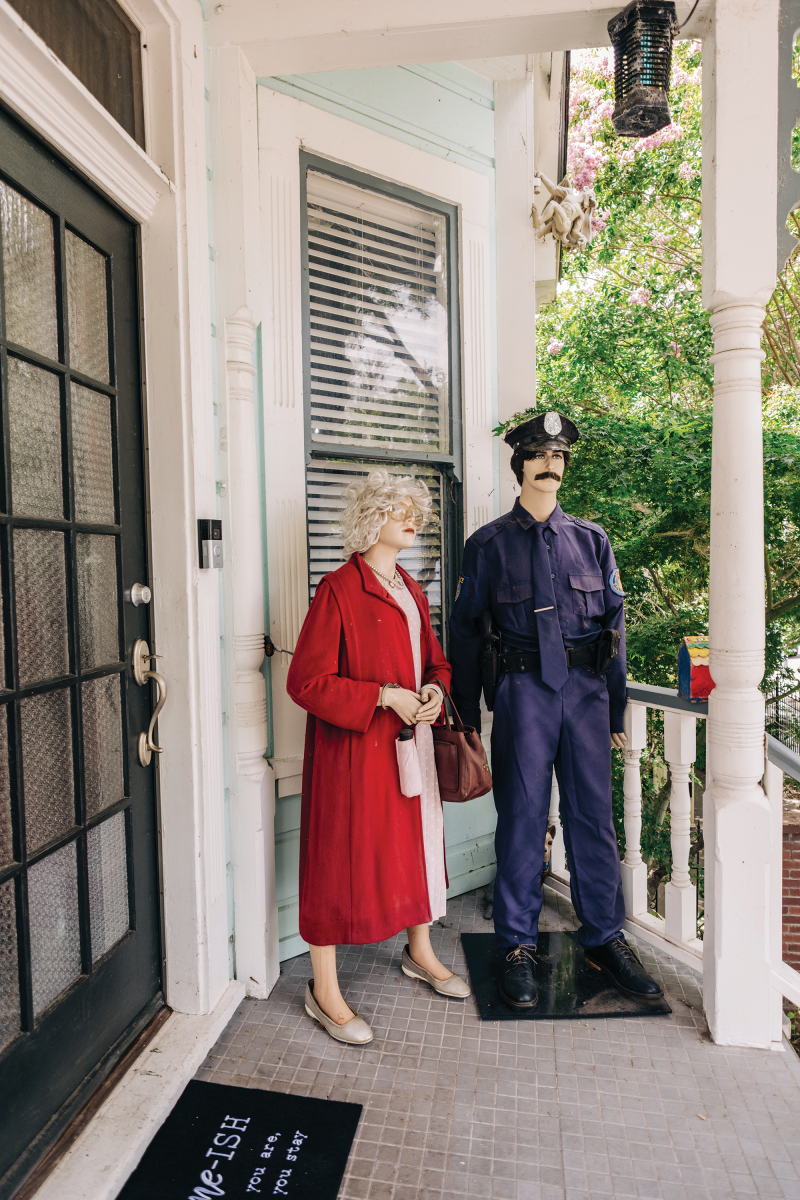
Williams’ mannequin tableau depicting Puente’s 1988 arrest has
become a fixture in Midtown Sacramento. The display was restored
by popular demand after Williams removed it, fearing it was
“tacky.”
The house, built in 1893, retains its original flooring and many period details, especially on the exterior. “We tried to do as much as we could ourselves,” says Holmes, who had prior renovation experience. All told, the couple spent well over $100,000 on improvements.
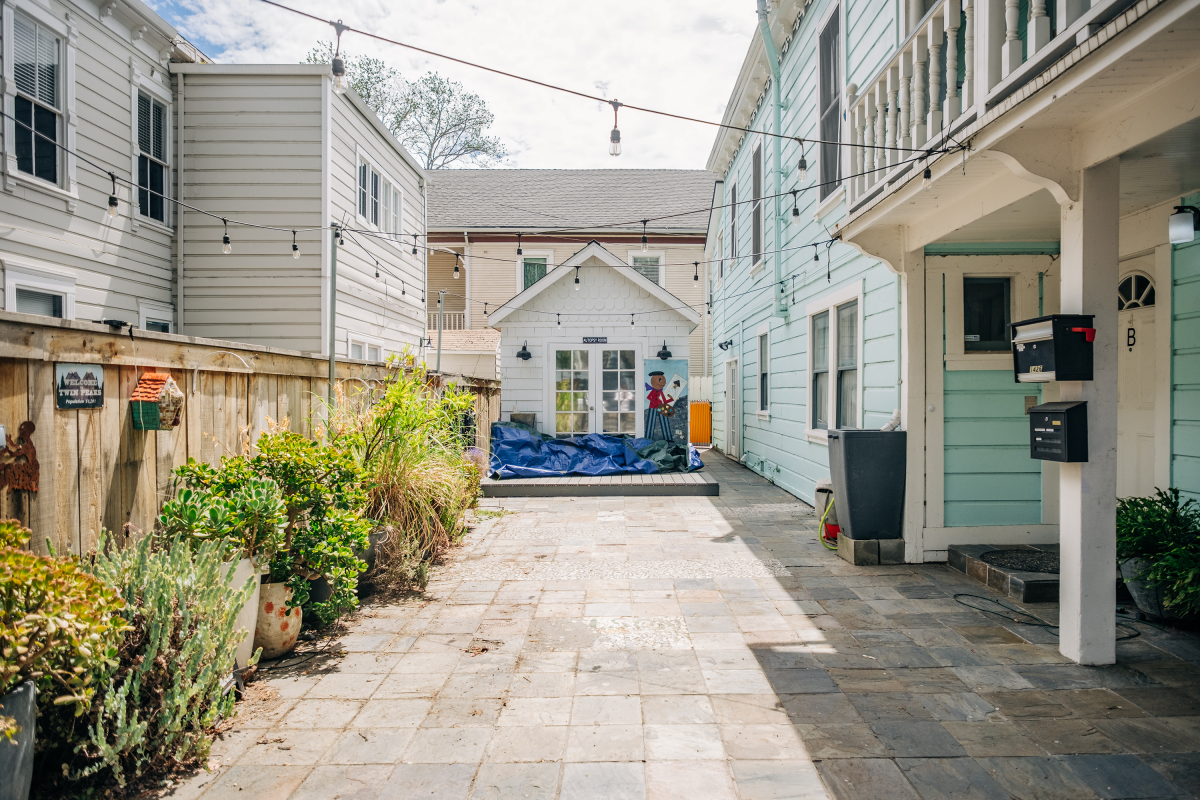
The small yard is flanked by other tall Victorians, with windows looking directly into the yard. How Puente pulled off the burials remains a mystery. Williams muses, “What’s amazing to me, and to everybody, was there was a reporter living right up there, and nobody saw anything.” The yard has long since been cemented over, most likely by previous owner Ordorica. Rather than removing the 8-inch-thick slab, the couple chose to top it with slate. Later, they added two small outbuildings to use as an office and storage.
Holmes and Williams, both 76, are a warm and engaging couple with a sparkling sense of humor. As intrigued as they were by the house, they could not have foreseen how their lives would be altered by it and, in turn, how the trajectory of the house would be altered by them.
The home’s yard was paved following Puente’s arrest, likely an
attempt to change the image of the former burial site, which was
swarmed by police in 1988.
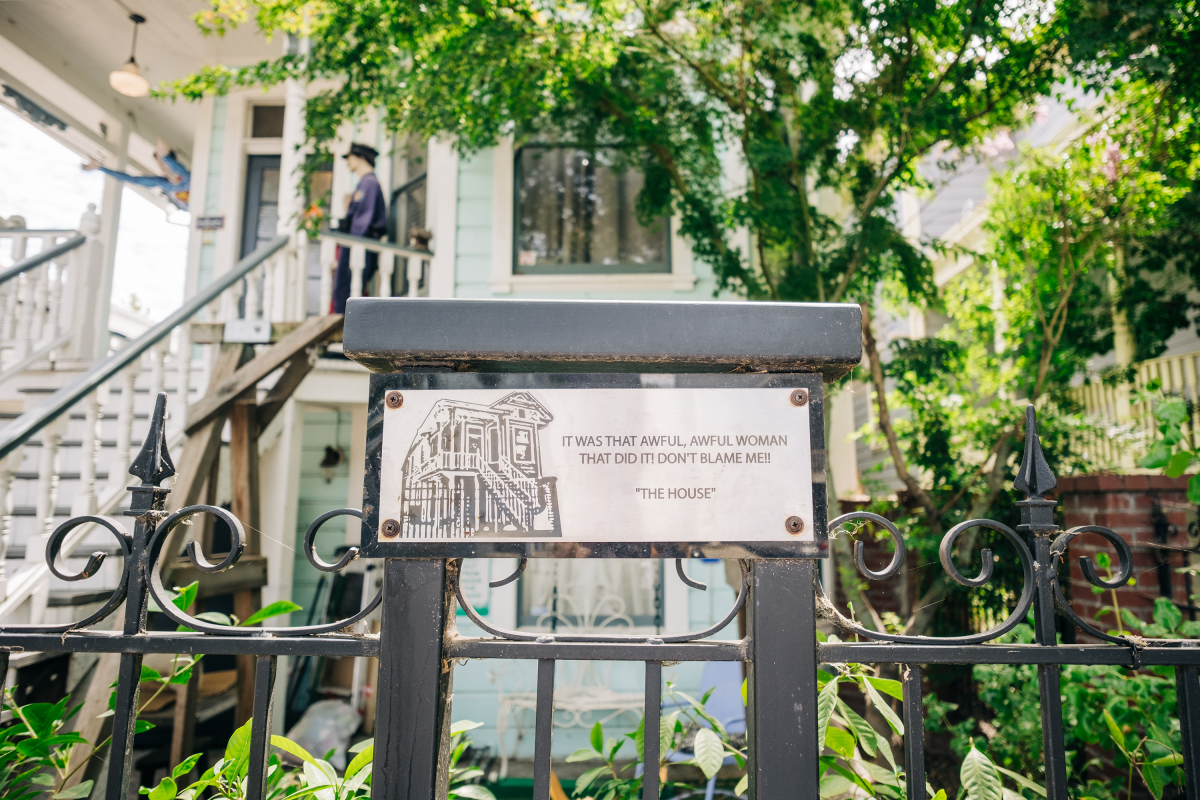
Williams recalls the negativity surrounding the house when they first moved in. “The whole vibe was awful. People hated the house, like it was the house’s fault. That’s when I started playing with it. I put out a sign in front that said, ‘It was that awful, awful woman that did it! Don’t blame me!! — The House.’ People started smiling and laughing at that.”
Other signs followed: “Keep Out from Under the Grass” and the crowd favorite, “Trespassers will be drugged and buried in the yard.” Later, Williams added the property’s most distinctive feature: a life-sized tableau of a mannequin police officer arresting a mannequin Puente, immediately recognizable to true crime buffs by her iconic red coat. After some time, Williams had second thoughts. “I got to a point where I thought the mannequins were just tacky. They were just wrong. And so, I took them down. And people complained, and so we put them back.”
Indoors, the couple leaned into the theme along with their penchant for pop art. The foyer and parlor have a museum-like quality. Collected memorabilia includes a Puente bobblehead, a T-shirt designed during the media frenzy, matches from a bar Puente frequented and her handwritten bean salad recipe from the book “Cooking with a Serial Killer” by Shane Bugbee, which Puente co-wrote in prison a few years before she died in 2011. The book features recipes Puente made for her tenants. “Barbara has made a couple of them, and they are just awful,” says Williams.
There are photos given to them by John Cabrera, the homicide detective on the Puente case, who has been featured in countless documentaries over the years. “John is forever tied to this house,” says Holmes. “We’re good friends with him.”
Williams is a fan of James Bond and Buffy the Vampire Slayer, and themed collectibles are prominently displayed alongside plaster cast life masks of famous actors. Holmes is a mosaic artist whose works are in shops and a local gallery and are displayed throughout the home. She created the glittering Superman figure that hangs over the front porch.
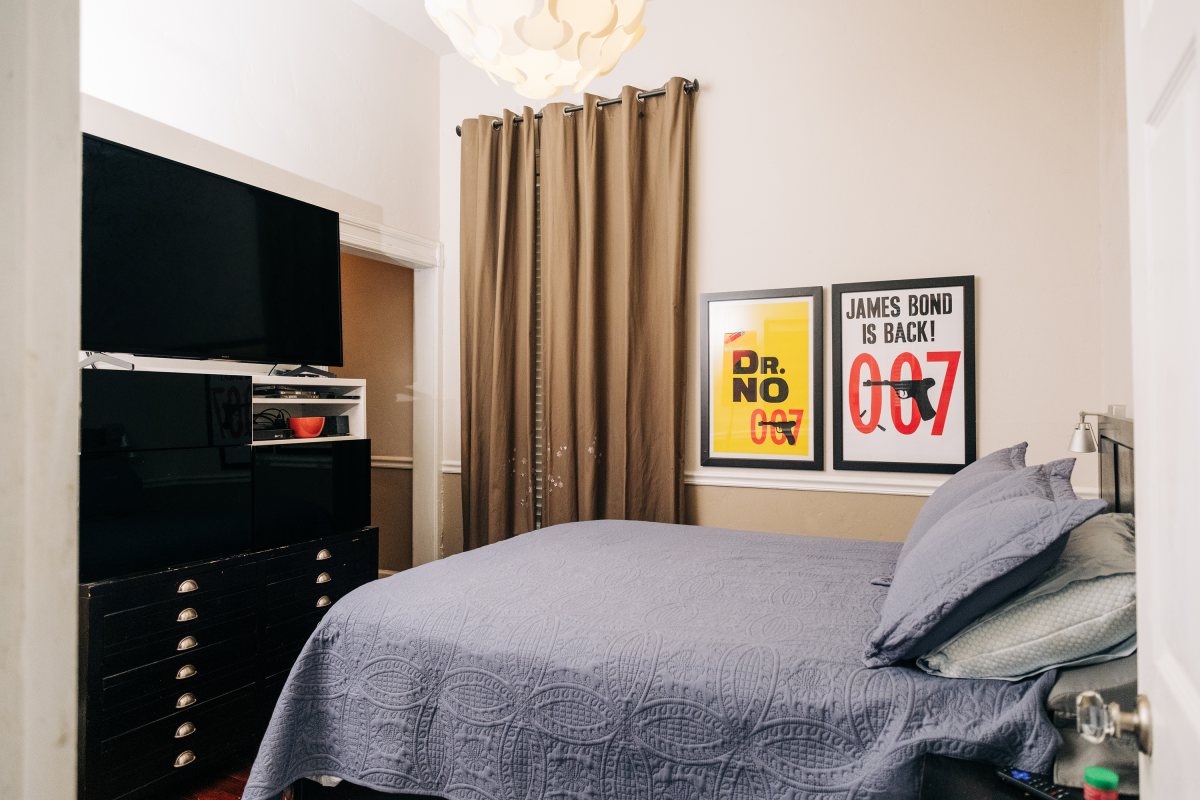
The room where Puente laid out her victims now serves as the couple’s bedroom. So much has been written about this so-called “death room,” but there are no traces of its grisly past. Says Williams, “It never bothered us a bit. People come by all the time asking about ghosts. This house has been cleansed many times over if there ever were ghosts.”
Holmes’ late mother, who lived in the downstairs unit, had a different experience. She declared that Puente appeared next to her bed one night. “She was very spiritual, and she believed in ghosts,” Holmes says.
In 2015, Holmes and Williams were the subject of the multi-award-winning documentary short, “The House Is Innocent,” directed and produced by Nicholas Coles (who has also become a good friend to the couple). The film was an upbeat portrayal of how the congenial couple has managed to take the sting out of an unspeakable tragedy. “Humor is great for healing,” Williams says in the film.
The documentary premiered at the Tribeca Film Festival in New York, where the couple walked the red carpet and viewed it for the first time. It was a resounding success and a crowd favorite. The film went on to appear in over 90 film festivals internationally and was reportedly considered for an Oscar nomination.
If the house was an attraction before the film, attention increased exponentially after its release. The filmmaker suggested a sign with a QR code to promote the film and track visits to the house, and thousands have been logged in the last two years alone. The house has been spotlighted on nearly every paranormal TV series and many true crime documentaries.
Occasionally, people try to enter the house, prompting the couple to add an alarm to their front gate. Most are respectful, however. Williams, a self-professed introvert, nevertheless enjoys talking to people when he’s outside. Holmes adds, “We knew what we were getting into, because we would be interested, too.”
HBO recently announced it’s developing a true crime drama series in which Geena Davis will play Puente, and Holmes reveals that other plans are in the works for a full-length film. “God help us if and when a feature film does come out,” she laughs.
The home’s primary bedroom is where Puente concealed the bodies
of her victims before burying them in the yard.
The couple is determined never to profit from the house’s tragic story. But they have gained rich experiences and lifelong friendships because of it. “We’ve had a ball,” says Holmes.
A controversial attraction
Holmes and Williams have only occasionally opened their home to the public, once for the benefit of a local homeless shelter and twice for the Preservation Sacramento Historic Home Tour. The house first appeared on the tour in 2013 and will be featured again on the upcoming 50th annual Historic Home Tour on Sunday, September 20.
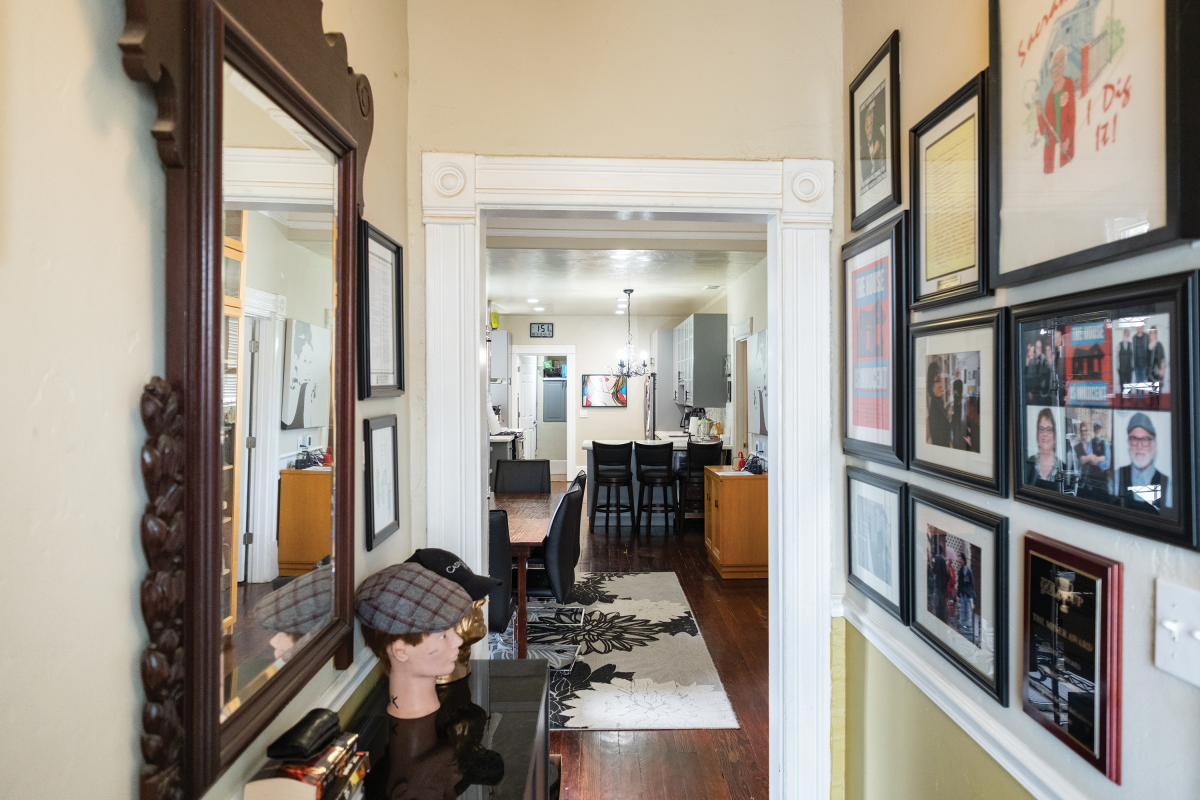
Artifacts from the Puente case line the entry hallway. The
renovated kitchen bears little resemblance to the one where
Puente cooked for her boarders, as a wall was removed to connect
it to the dining room.
It’s not unusual for infamous crime scenes, when they aren’t demolished, to draw curious crowds, and there’s no single approach to dealing with that attention. The “Amityville Horror” house in New York, the site of six murders, underwent an address change to ward off unwanted visitors, while the Massachusetts home of axe-killing suspect Lizzie Borden is now a bed-and-breakfast and museum.
Some don’t understand the fascination. Nine lives were taken in the house on F Street, and its inclusion on the home tour has stirred up controversy and headlines in the local press.
Preservation Sacramento representative Catherine Turrill Lupi, an art historian and professor emerita at Sac State, said in an email, “We always like to have at least one high-profile property on the tour. For good or ill, 1426 F is a famous house.”
She added that the house is among the oldest in Sacramento. Acknowledging the morbid curiosity over the crime scene, she said, “There is something ghoulish about that.”
Passersby often stop to stare at the house and its assortment of
“warning” signs.
“That nine-year occupation does not define the house,” Turrill Lupi said of Puente’s relatively brief stint. Built for $3,000 in 1893, the house was advertised as a furnished rental for $30 a month in 1916. Previous residents include M.A. Carpenter, who ran a detective agency in the 1920s, and the Maraska family, who owned the house for 39 years.
While the current owners’ decor and the upcoming tour acknowledge the property’s infamy, those who step inside may be surprised to find a house redeemed — a home. Inspired by the documentary about the couple who have added their colorful stamp to the house’s ongoing narrative, the property will be listed as “The Innocent House” on the tour pamphlet.
Holmes and Williams have no plans to sell, but their approach to the home has set the tone for future occupants, absolving it in a way that allows it to endure. “It’s a beautiful house,” says Holmes. “There is nothing bad here.”
Managing Editor Dakota Morlan contributed to this article.
–
Stay up to date on business in the Capital Region: Subscribe to the Comstock’s newsletter today.
Recommended For You
Tycoon’s Sacramento Mansion Tells the Story of California’s Rise to Economic Power
Secrets of the Gold Rush, the transcontinental railroad and a great flood are buried in its walls
Tucked amid modern steel-and-glass towers in downtown Sacramento sits a striking survivor from the Gilded Age.
Take a Look Inside Sacramento’s Grooviest House
Interior designer and vintage dealer lives in Technicolor dream home
Inside an unpretentious ranch-style house in South Land Park lies a hidden utopia of Mod design. Boldly colored statement chairs placed in front of the tasteful charcoal-grey exterior are the only clue to the astonishing display of vintage treasures found within.
This Little House With Big Heart Is a West Coast Anomaly
Renters are called to the tiny Victorian with a touch of Southern comfort in Sacramento
The “Little House” is the last remaining of four that once stood in a row on 22nd Street. It is a rare West Coast example of a “shotgun house,” reflecting the idea that a bullet could travel through the front and out the back door without hitting anything.
This Architectural Treasure in Nevada County Was Nearly Lost to Time
Now volunteers are restoring it to its former glory — and sharing its pioneering history with the world
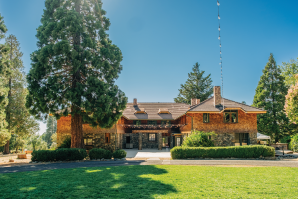
North Star House, designed by renowned 20th-century architect Julia Morgan and owned by North Star Historic Conservancy, has undergone a painstaking transformation.