


This story is part of our February 2026 issue. To read the print version, click here.
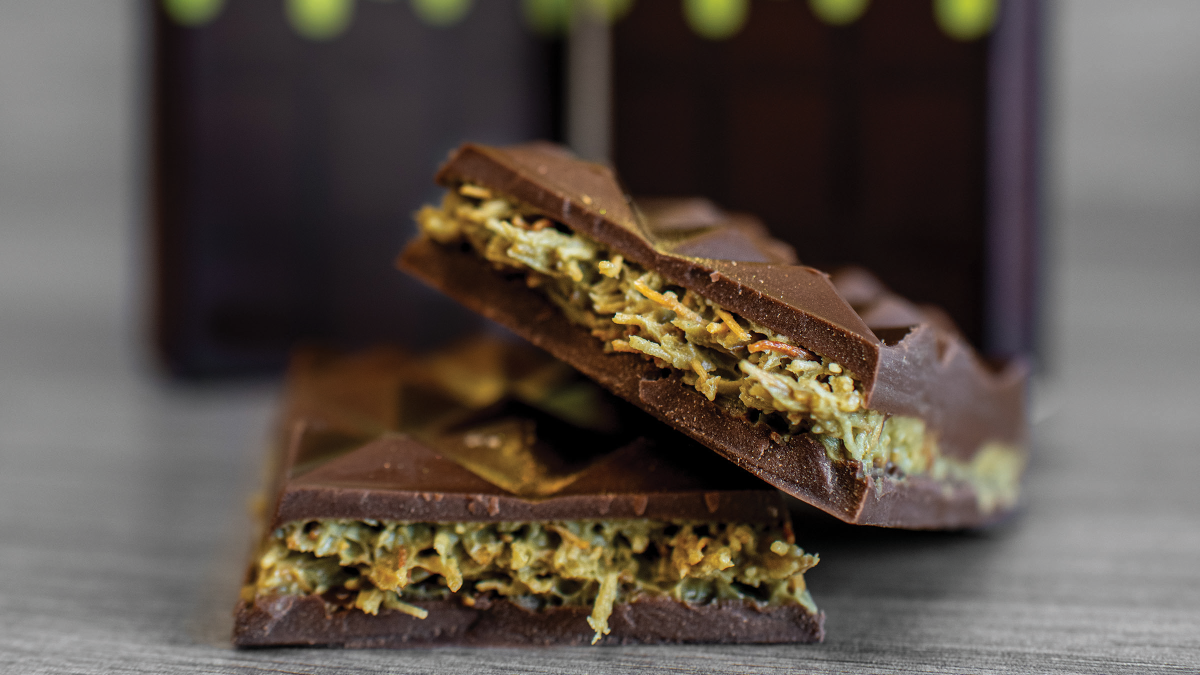
Dubai chocolate was made for our image-obsessed social media culture. A thick chocolate shell breaks open to reveal a bright green pistachio filling, threaded with crunchy strands of kataifi, a shredded phyllo dough traditionally used in Middle Eastern and Mediterranean desserts. The dramatic reveal became central to how the chocolate spread on social media, with creators searching their own cities for places to try it.
The chocolate bar reportedly began as a pregnancy craving in the mind of Dubai-based, British-Egyptian entrepreneur Sarah Hamouda. Filipino chef Nouel Catis Omamalin helped her translate her vision into reality. After videos of the bar circulated on TikTok, it quickly gained international attention, inspiring countless imitations and variations.
In the Capital Region, home to California’s massive pistachio industry, the trend quickly took root and spread. At farmers markets, customers began asking for it by name. In bakeries and dessert shops, the same pistachio-and-kataifi combination appeared in other forms, like cheesecakes, brownies, strawberries and coffee drinks.
To understand how the trend is playing out locally, Comstock’s visited bakeries and cafes across the region and spoke with the people behind the counters.
Local twists on a global trend
Tina Haddad, the baker behind Dubai Chocolate Obsession, first encountered Dubai chocolate on TikTok. When she started looking into how it was made, the ingredient lists on store-bought pistachio creams gave her pause.
“When I looked at the pistachio cream in the store, pistachio was barely in there,” she says. “It was maybe 17 percent pistachio. The rest was syrup.”
Dubai Chocolate Obsession offers a variety of Dubai
chocolate-inspired cakes and sweets, like this cheesecake.
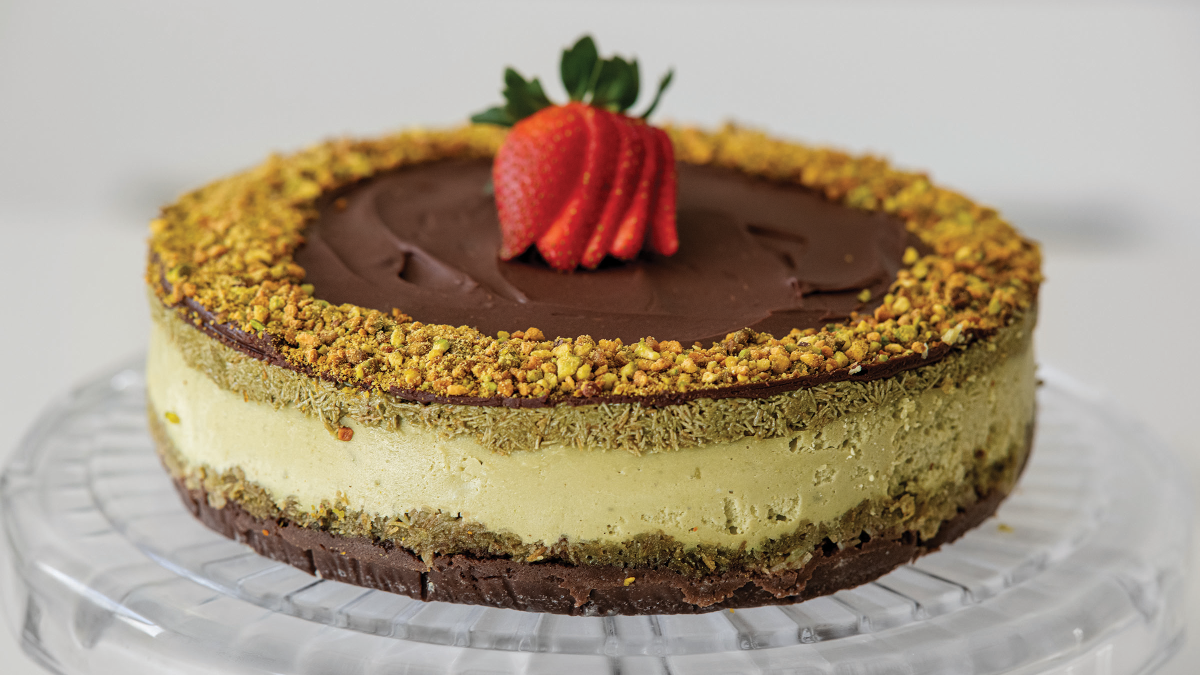
With a background in catering and baking in the Bay Area, Haddad decided to make her own version from scratch, building a pistachio butter that relied on clean ingredients like coconut oil and plenty of the nut itself. “My Dubai chocolate cheesecake is the one people ask for the most,” she says. “I also do a Biscoff version because I know not everyone can have nuts.”
Haddad primarily sells through Instagram and supplies desserts to cafes across the region, including Mochi Café in Sacramento and Teaspoon in El Dorado Hills. Early exposure came through farmers markets, where chocolate bar samples introduced new customers to the flavors.
One of those market appearances led to an unexpected boost. After sampling her Dubai Chocolate, a producer from Good Day Sacramento invited Haddad to appear on the show.
“They came to my house to film,” she says. “That day, I got so many orders.” Social media continues to drive discovery, but much of her business now comes from repeat customers. “I thought it was going to be a trend,” she says, “but it’s the same people coming back every week.”
Talgat Kazakbaev, who goes by TJ, was operating Chokberry out of a trailer parked near the Westfield Galleria in Roseville when videos of his pistachio-and-kataifi desserts began circulating on TikTok. Demand escalated quickly. At the height of the surge, customers waited up to two hours in line.
“After our second TikTok hit over a million views, everything changed,” Kazakbaev says. “We were selling out every day.”
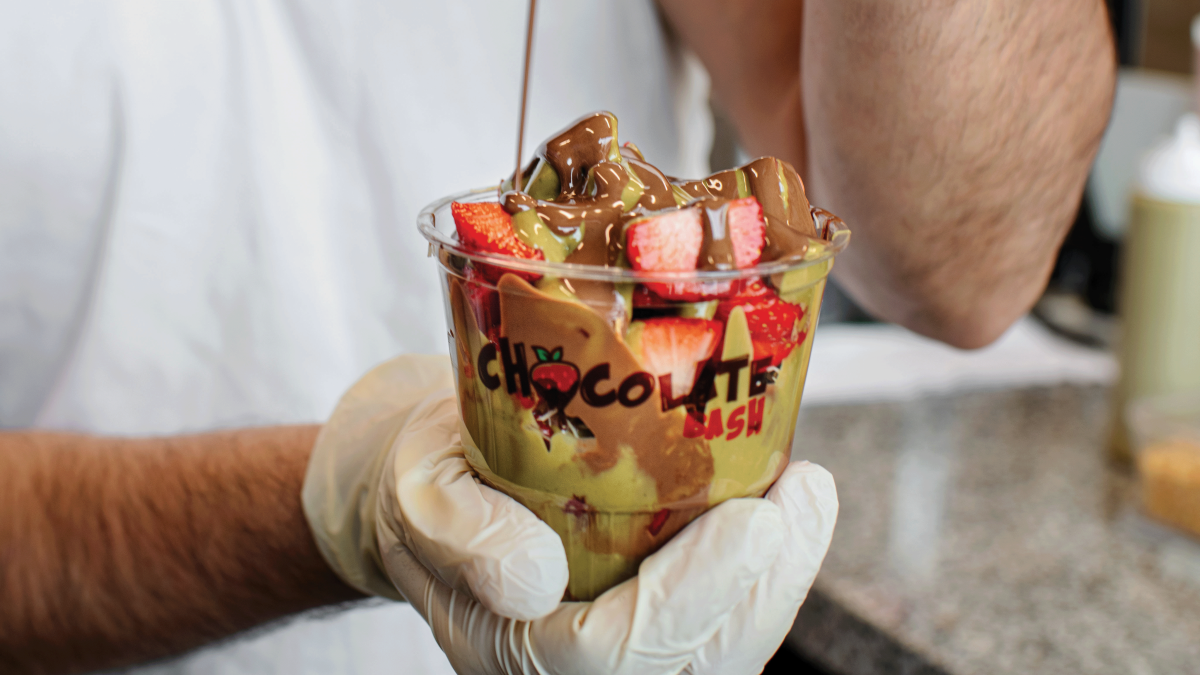
One of the trailer’s most ordered items is the strawberry Dubai cup. Creamy chocolate spills over the rim, strawberries soak it up, and the whole thing plays well on camera. It is easy to see why people were willing to wait in line for it.
The trailer became a destination, driven almost entirely by online visibility. The demand was intense enough that Kazakbaev opened a permanent Chokberry storefront inside the Galleria. The original trailer continues to operate and has since expanded its offerings to include loaded baked potatoes alongside desserts.
From bars to beverages
Owner Abdul Aziz spent years developing his coffee shop, Qisa Coffee, before opening the brick-and-mortar space in Curtis Park. The cafe draws inspiration from Yemeni and Peshawar coffee traditions and from a neighborhood he describes as deeply community-oriented.
Pistachio was already a prominent part of the menu, so when the Dubai chocolate trend emerged, the flavor combination fit naturally. Aziz translated those elements into drinks. Dubai chocolate-inspired pistachio matcha and coffee drinks were first introduced through Qisa’s monthly membership program, which offers points and discounts.
Later, the drinks became available to regular customers and remain on Qisa’s secret menu. The matcha version uses pistachio cream, chocolate and cold foam, rotating in and out as ingredients and demand allow.
“The chocolate is expensive, and our menu changes often,” he says. “So we pay attention to what people keep coming back for.”
While Qisa quietly introduced Dubai chocolate, Sweet Oven Bakery in Arden took a more visible approach.
The bakery makes desserts that catch your eye, but the appeal goes beyond looks. Owner Mindy Le makes everything from scratch, and the flavors reflect that hands-on approach. Sweet Oven is known for playful drinks like a tiramisu latte finished with a full slice of tiramisu perched on top, along with the viral burnt marshmallow hot chocolate.
When Dubai chocolate entered the picture, Le created her own version and produced it all in-house. “It started with the macaron,” she says. “And surprisingly, it’s still one of our best sellers.” Dubai chocolate also appears in matcha and lattes, but many customers specifically ask for the Dubai chocolate strawberries.
Mindy limits those to when the fruit is at its peak. “In the summer, the strawberries are sweeter and bigger,” she says. “That’s when we bring it back.” This choice mirrors how many Sacramento businesses approach trends, with seasonality setting the boundaries.
Feda Faizi, owner of Chocolate Bash at Delta Shores, pours
chocolate on a Dubai strawberry cup, one of many reimaginings of
the Dubai chocolate bar that are available around Sacramento.
Chocolate Bash is a franchise with multiple locations across California. In Sacramento, it sits in Delta Shores, tucked into the shopping complex in a hidden spot that makes it feel almost like a secret. Desserts rotate frequently, but items include a Bash Burger, four fluffy pancakes piled high with three fruits and your choice of drizzle.
And, of course, the Dubai chocolate craze is firmly part of the mix. The shop carries its core offerings while letting the trend spill into mini pancakes and milkshakes, giving customers more than one way to satisfy their flavor obsession.
“Once people liked the flavor, they wanted it on everything,” says owner Feda Faizi.
Faizi doesn’t run the shop based on predictions about which trends will last. Some desserts flare up and disappear quickly. Others stick around longer than expected. What stays is decided in real time, shaped by repeat orders and by how often people return for the same item. When asked what trends he’s watching for in 2026, he laughs and refuses to give anything away. “Top secret,” he says. “You’ll have to come see.”
What’s the next Dubai chocolate?
Dubai chocolate is one example of how international, social media-driven food trends now move through the country. A single post can change the trajectory of a food business overnight. A video circulates, the algorithm picks it up, and suddenly, a dessert that existed quietly the week before is drawing lines, selling out, or forcing owners to get creative.
For Maddy Edmunds, a Sacramento-based influencer who tracks emerging food and drink trends, that repeat behavior is the tell. “When I start seeing the same thing pop up across multiple platforms from creators or food accounts I trust, that’s usually when I pay attention,” she says. “What really sparks my interest is when local spots start putting their own spin on it.”
Looking toward 2026, Edmunds expects fewer trends built purely around shock value and more that reflect how people are eating now. She points to the continued rise of low-ABV and nonalcoholic drinks, along with plant-forward and gluten-free options becoming more integrated into everyday menus rather than treated as alternatives.
As dining out gets more expensive, more food trends are being shaped by what content creators are making at home, ideas that feel approachable, affordable and easy to recreate. Social media may spark the idea, but what lasts in Sacramento is whatever fits into real life and what keeps people coming back for more.
–
Stay up to date on business in the Capital Region: Subscribe to the Comstock’s newsletter today.
Recommended For You
This Valentine’s, Fall in Love With an Underrated California Wine Destination
Out of Office: Just 45 minutes from Sacramento, it’s an easy Valentine’s Day getaway
There’s nothing better than the stillness of a pastoral view as you sink into your chair and breathe the fresh Sierra Nevada foothills air, a glass of wine in one hand and the other interlaced with your Valentine’s.
After Setbacks and Restarts, a Beloved Sacramento Sushi Chef Is Back on His Own Terms
Lou’s Sushi, the Sacramento favorite that closed in 2017, is back with a focus on hand rolls (not pizzas)
Lou’s Sushi is back as a solo effort from chef Lou Valente, following years of resets, pop-ups and rebuilding.
The Chinese Art of Tea Takes Hold in the Sacramento Region
Practitioners say gongfu cha encourages mindfulness and presence
Gongfu cha, which means making tea with effort in Chinese, is a method of preparing and appreciating high-quality tea in small amounts, through repeated pours. Many are turning to the art form as another way to find balance and harmony.
This Davis Brewer Will Give Out Free Beer ‘When Iran Is Free’
Persian-inspired beer brand Rostam36 wants to help rebuild Iran’s economy
There are bottles and kegs of dark, saffron-tinged beer behind the counters of Persian restaurants in Sacramento, waiting to be opened and poured freely when Iran’s current government falls.

A Seat at the Bar: A Southern Food Surprise in … Roseville?
Chef Q brings California modern comfort food to his restaurant Q1227
The Seat at the Bar diner explores a restaurant visited by
luminaries including Snoop Dogg, Ryan Coogler and the
Timberwolves in an unlikely location — a busy shopping
mall.