


This story is part of our January 2026 issue. To read the print version, click here.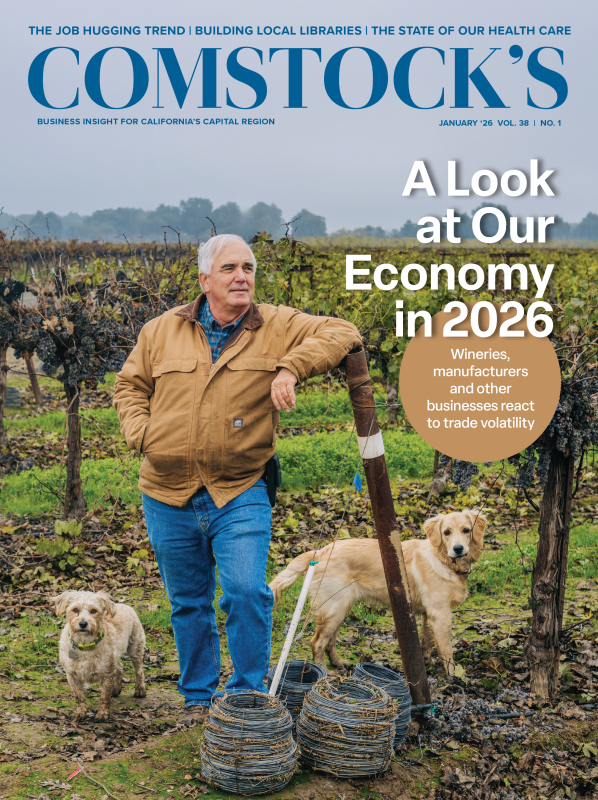
Comstock’s contributor Steven Yoder discusses his January cover story on how tariffs are affecting local businesses and why they aren’t necessarily the biggest factor shaping the economy in 2026.
For more on this topic, you can read our web-only story on how tariffs are affecting manufacturers in the region.
For past and future episodes, follow us wherever you listen to podcasts, including Apple Podcasts, iHeart, and PocketCasts.
Transcript:
Dakota Morlan: So I’m here with Steven Yoder, who wrote the cover story for January about tariffs and how they’re impacting our local economy here in the Capital Region. Steven, I can’t believe it was a year ago exactly since we last did a podcast together, when you were doing this last year, the economic forecast for 2025. So it’s good to have you back.
Steven Yoder: Thanks a lot, Dakota, it’s nice to be back. Year goes fast.
Dakota Morlan: Yeah. So last year, I remember we talked about how the forecast overall was pretty positive for the beginning of the year, and this year we’re entering a very different environment. So we have tariffs, which are a whole new beast. And you wrote specifically about tariffs and certain businesses in the region and how they’ve been affected thus far. So I wanted to ask you how, as a journalist, were you able to identify which industries to talk to, and specifically which businesses to talk to? How are you able to zoom in on those?
Steven Yoder: Yeah, as always, I’m always grateful when businesses talk to me. And so I started by just calling around and seeing who’s been affected, you know, emailing folks, trying to network a little bit to figure out who this is impacting. So and I, you know, I really wanted to get businesses that because, like, tariffs impact companies in different ways, and sort of like in this story, I will say they fell roughly into three buckets.
One is companies that benefited. One’s companies that they hurt, pretty dramatically in a couple of cases. And then the other is companies that were supposed to be or sectors that were supposed to be walloped, hurt by these tariffs, that weren’t. I mean, there’s a fourth bucket, which is like all of the companies that weren’t affected at all, because they don’t really, aren’t really exposed to the import-export market. But we didn’t cover those. So it’s really like those three buckets.
Dakota Morlan: Yeah. And in your story, you covered pretty heavily the wine industry, what’s going on with them. You covered a little bit on builders, which I think were predicted to be pretty heavily affected. And I think we were surprised to find that at least regionally, they haven’t been so much. And then you talk to, specifically, one business, Sparks, which makes lithium batteries and has a factory in Metro Air Park, and they’ve actually benefited quite a bit because of their competition with China. So were there any other — well, first of all, did every business that you wanted to talk to agree to talk? Because I know this is an inherently political issue. People might not be so candid about it. So did you have any issues with getting people to talk?
Steven Yoder: Almost everybody agreed. Actually, I was shocked. I mean, like, I mean, now, I will say, I did contact a number of farms in the area. Actually. I will say the farms, the folks are running farms, were sort of the hardest to get to respond, you know. But it could be not refusal to talk. It just could be people don’t reply for a whole bunch of reasons. You know, they’re busy. And it was over the a lot of, you know, I was doing a lot of this reporting over the holidays and Thanksgiving too, so.
Dakota Morlan: That can be hard.
Steven Yoder: It can be hard.
Dakota Morlan: Yeah, and one business we didn’t mention that I forgot to mention was the fishing supplier. And that business, specifically, I remember he said that a lot of his clientele are Trump supporters. And I was wondering, was there anything that surprised you with people saying that they still supported this administration, either because of the tariffs or in spite of them, or conversely, have the tariffs changed any minds in people who previously supported the administration?
Steven Yoder: In that specific case, um – You know, and actually Dakota, I should back up and say, I think it might be helpful for folks if you want, just to explain, sort of the mechanics of tariffs too, because we talk about them a lot, and I must say, I didn’t have a full grasp of how this worked.
Dakota Morlan: Absolutely.
Steven Yoder: Yeah. So like, you know, tariffs are taxes on imports. So you know, let’s say you’re I talked to a company that manufactures tabletop games. A lot of the product, it’s manufacturing in China. So like, your product, his product, Price Johnson in Rocklin, his tabletop games arrive at Port of Oakland. They declare a price. The company, his company, declares the price of that game, what it’s worth. And then Customs and Border Protection comes in and says, OK, 30 percent tariff on stuff from China, manufactured in China. So you owe us. It’s a $100 game, give us $30. That money goes into, that goes directly to Customs and Border Patrol, and that money goes into the treasury, U.S. Treasury, so like, so that’s the way it works. That’s the mechanics of it. And then obviously, you know, what you’re, the idea of it is, you’re protecting us industry while generating money for the Treasury.
And in the case of the company you’re talking about, this is the company that manufactures that makes, that sells bait and tackle, Glenn Chadaris out in Rio Linda, you know, he’s built this, like, $6 million business selling bait and tackle. Like, who knew you could — there’s such a big business in in bait and tackle, but he, you know, he’s getting walloped. He’s one of, he’s in bucket, two of these companies, and that’s because a lot of their stuff, the bait part is fine. That’s made locally. That’s the the worms that they sell. Frozen bait is domestic. The tackle part is manufactured in China.
And China has spent, you know, like, 10 years developing a cluster of factories to be able to produce small, little plastic pieces like this. Takes a lot of trained labor, takes a lot of investment. And so Glenn Chadaris was saying, you know, yeah, we’re a, this industry largely supports the Trump administration. But what he said was, we need to have a, you know, we need to have a reasonable policy here. We can’t have tariffs going up and down all the time. And we have to figure out which sectors do we want to put tariffs on.
He’s not against tariffs. It’s that sectors like his, you know, these small parts that we don’t manufacture here and would take years to put the investment in to be able to manufacture. He says, like, we shouldn’t be putting tariffs on stuff that we can’t for now make here. So I think his, I don’t know. We didn’t get into politics. We didn’t get into how he’s been a voter, or any of that. But he, he’s critical.
Dakota Morlan: Yeah, yeah. Were you able to get a feel of how devastating this is for those — you call them the bucket two businesses that have been really affected. How would you — Would you compare this to the pandemic? Or is this something that you think, if things continue as they are, they would be able to adjust over time? How serious is this?
Steven Yoder: Yeah, the companies in that bucket are being negatively impacted. It’s a good question whether they can survive this , you know, the current moment. I would say the other company in that bucket, Cephalofair Games, you know, Price Johnson in Rocklin, I would say he, I think Price Johnson would say, no, they are on the precipice. And depending on where tariffs with China go, they’re not going to survive this. And this for them, of course, the effects of COVID were very different. Actually, were probably pretty good for a tabletop gaming company, because, you know, people staying home and playing games.
So that was perfect, that that worked for them. But they’re, yeah, they’re starting their all their staff, half their staff, I guess. I’ve seen cutbacks in their hours. He’s taken a 50 percent salary cut. The problem for them is they sold preorders. They had huge demand for their games, so they sold preorders for their games. They had a backlog at a certain price, and then the tariff rates jumped on them some at one point they were 145 percent on China.
So then they now they’ve got, they’ve committed to their customers to sell at a certain price, and now the price that they’re paying has skyrocketed to, you know. So there’s nowhere to go with that. They’re losing money. So whether they can [survive] that is to be seen, and part of it depends on what happens with tariff rates.
Dakota Morlan: And is that business, the gaming business? Are they part of that coalition of small businesses that’s going to the Supreme Court?
Steven Yoder: Right. Yes, and I think Seth Sandrosky reported that in the other story, you all did on tariffs.
Dakota Morlan: We did another web story, yeah.
Steven Yoder: Yes. He is part of that coalition going to the Supreme Court to ask this. Basically, the argument is, tariff policies are by law in the hands of Congress, not in the hands of the president. So they’ve done — oral arguments have been done on that case. And I think most people would say that most of the folks who watch Supreme Court would say the court is leaning toward ruling against the administration on that. So this whole thing could, in theory, go away.
Now, the administration, should they lose that case, has some options. There’s a section of the law they can turn to that’s an alternative to what they’re using now. The problem is, that section of the law is a bunch of limitations, like the top rate is, I think, can only go up to 15 percent and the tariffs can only be in place for 150 days. So it’s much different from what they’ve been doing. So, but yeah, that case, and yes, Price Johnson’s company, Cephalofair Games, is part of that, could really, really shift what happens in 2026.
Steven Yoder: Yeah, and you know, considering what you just said, and what I’ve heard from business owners in the area, is that a large part of the devastation for the businesses that aren’t doing so well is the unpredictability, the inherent unpredictability. So even if the situation does change, there’s just so much speculation. And would you say that a large portion of the struggle that’s occurring is just from trying to gauge what’s going to happen next?
Steven Yoder: Right, I mean, the the unpredictability is, is, is impossible for businesses to navigate. Yes, that is, that is a huge — I mean, it would be one thing. I mean, there are, most economists would say that tariffs raise prices and ultimately hurt the economy. There is a small group of economists who argue for tariffs, and those folks say that if you’re going to have a tariff policy, you want to do a few things.
You want to figure out which businesses, which sectors you want to protect, and then have a policy. And they call it, they call it an industrial policy, but essentially it just means, you know, you support the businesses in the sector you’re trying to protect, and then you gradually raise tariff rates in that sector so that those businesses, once they’ve been up and running and standing on their two feet, they have less competition abroad.
And then you keep your rates, your tariff rates, fairly stable and predictable, because obviously what we’re talking about in the business climate, you need predictability. And then you take tariffs off of the sectors that you are never going to, for which you’re never going to manufacture the product domestically, here in the U.S. And actually, you know, the Trump administration recognized this back in October. They lifted tariffs on bananas and coffee. We’re not going to grow that stuff here. Well, absent some like climate change induced, dramatic effect, like, we’re not. And so they, you know, the Trump administration was looking at rising inflation, slightly, looking at some indicators of rising inflation, and decided to lift those tariffs for just that reason.
Dakota Morlan: Yeah, and we do have the bailouts for certain essential, for farmers of certain essential crops. I don’t believe grapes were included in that. And you talk a lot in your article about the wine industry, specifically, which is very applicable to us here, and how they’ve been affected. Do you want to talk a little bit about the wine industry?
Steven Yoder: Yeah, so wine is obviously a big deal in the Sacramento region. Wine grapes are the number one ag commodity in Sacramento County. Wine exports, which are in statewide the top — I think they’re number three in terms of agricultural commodities — wine exports are down 30 percent from 2024 to 25. So the effects of that, I talked to a farmer out in Elk Grove, and he was busy. He had just gotten done ripping out his merlot grapes. And the reason was, he didn’t sell any grapes in 2024. He couldn’t get a contract, and he’s got another 13 years left on those merlot grapes. But he said there’s no future here, so he ripped them out, losing money in the process, you know, the process of that.
So that that wine, and you know, Canada was our number one wine export market. Sales of wine to Canada are down over 70 percent. And it’s not just the Canadian government that raised tariffs in retaliation, which they did do that. But it’s also consumers. Consumers are, Canadian consumers are boycotting U.S. wine. One of the ag economists at UC Davis I talked to, he was up in Calgary, and like, the wine stores are like, they might have a little U.S. wine stashed in the back, but they’re not putting it on the shelves. So you’ve got angry consumers. So that’s, it’s serious, and it’s hard to rebuild that relationship.
Dakota Morlan: Yeah, and we’ve run some stories in the past about how our wine industry is struggling already. So there was, you know, speculation that the bubble was bursting and that there was over saturation in the market, and then data shows that younger people aren’t drinking as much. I know that’s that’s an issue as well. Were those issues talked about when you spoke to the wine growers, or how much, like, how heavily do do tariffs play into their current situation?
Steven Yoder: Yeah, that’s a really good question. I mean, Ken Oneto, the farmer I talked to, you know, he mentioned that, you know, demand for wine is down for all of the reasons. You’re suggesting Millennials are not drinking as much wine. You did good reporting on that. It was really good. And so it’s a part of this. And it was, so tariffs are just, tariffs are obviously making things worse. I will say that in all of this, tariffs are, like, economists would tell you, all else equal, tariffs are going to raise prices, and that has happened.
But all else isn’t equal. So like, you can have a whole lot of other factors that affect prices other than tariffs. So, so it’s certainly, I mean, to what degree tariffs are driving the wine industry struggles. That’s a, that would take, probably somebody’s looking at that. But that’s a complicated question. But yeah, I’d say tariffs aren’t everything. And there are a couple of other ag commodities we could talk about that show that.
Dakota Morlan: Yeah. And how do you attempt to find data on this?
Steven Yoder: Yeah, the U.S. Department of Agriculture keeps, has, I think it’s updated once a month, monthly statistics on exports for whole range of agriculture commodities. So you can get very — now, when we were just, actually, when I was looking at this, the government shutdown was in place. So like they, fortunately, they had just released data. But, yeah, but so U.S. Department of Agriculture keeps these data, so that’s where you get the the ag numbers.
Dakota Morlan: Yeah, I know, like overall, it’s very hard to quantify what the effects of tariffs are, because there’s so many different factors in play for and it varies throughout different industries. Another, more positive story that we mentioned before was Sparks, which manufactures lithium batteries. I think you mentioned in their case as well that they are getting some federal government support as well. Is that true?
Steven Yoder: Yes, well, so Sparks is a really interesting case, because they are benefiting hugely from tariffs. I talked to the CEO there. Tariffs, you know, China had this stranglehold on the lithium processing market. And basically, what Sparks does is they produce the cathode material, so the material that goes into lithium ion batteries, and these batteries, like, are in huge demand now. They’re used in electric vehicles and cell phones and so forth. So the tariffs, so China was a really dominant player in the lithium processing market. Now the tariffs have gone in.
Sparks, Sparks got up and running in part because they did get help from both the state of California and from the federal government in the form of tax breaks, tax incentives and grants. So since 2022 they’ve gotten a number of those. One of them ,under, I think it was the, it was the Inflation Reduction Act, Biden administration’s inflation Reduction Act. They used a grant under that bill, under that law, to start a plant in West Virginia. But now they’ve also, they’re growing fast because the tariffs have made those Chinese batteries more expensive. Sparks has gotten up and running, in part, using these support from state and federal government, and now they’re set to grow fast, and they do. I think you mentioned this factory they have out in Metro Park.
They started manufacturing in March, and Sanjiv Malhotra, the CEO there, said, yeah, we’re we’re growing fast, and they’re about to open another factory. I’m not sure if that’s in Sacramento. He, he didn’t want to say where it was, but, but they are taking advantage of this of pretty deliberate policy on the part of the state of California and federal government.
Dakota Morlan: So in conclusion, on the tariff topic, would you say if, if the United States could reach a place where there’s at least some sort of predictability and stasis from day to day, do you think that would kind of calm things down a little bit and maybe strengthen the economy in some sectors? Or would you say, for example, these small businesses that are going to the Supreme Court — do you think we’re going to have a serious die off of certain sectors of businesses?
Steven Yoder: And I guess the answer to that depends a bit on what, you know, who these companies are importing from. Which countries, as well as whether, like you suggest in the question, we’re going to have stable rates. I did see, small business hiring for the last part of last year was way down in import and export dependent businesses. So there’s a, yeah, there’s a fair possibility that you’re going to see businesses go under. Now, you know, again, just depends on the country. So like, India is under 50 percent tariff rate right now.
The UK is 10 percent. So like, China’s average is around 30 percent, though it depends on which industry. So it’s really going to depend where you where you sit, and also whether you’re able to shift production to a country with a lower tariff rate. In the story, you know, I talked to Margaret Wong, a business leader, Sacramento business leader, who, she’s sort of a leader in connecting China with the U.S. and China, Chinese business with U.S. business. And she has real faith that, at least with the U.S.-China relationship, it’s going to be resolved in a way that’s beneficial to both countries.
It’s hard to see that now, I have to say, but she was in the middle, when I talked to her, she was actually in China, trying to shift around her suppliers, where she gets things. Trying to find factories in, I believe it was like, Vietnam she was looking at, maybe in Malaysia, but that’s what she’s doing, is trying to shift around supply. So to a degree, it’s expensive to do that. It’s really hard because, you know, it takes a while to get a supplier who you trust, it’s got the capacity to train labor and so forth. So it’s going to be, it’s going to be tough. If you’re, if you’re losing money now, it’s going to be tough to shift.
Dakota Morlan: Yeah, it seems like if these tariffs continue for long enough, it could be also detrimental if they change them very quickly, if they get rid of, if they lower tariffs, like for companies like Sparks. It seems like we need gradual change in either direction. If change does happen. Great.
So I’m going to move on to, unemployment rates are currently the highest they’ve been in four years. We did another story for our January issue that was about job hugging, the job hugging trend, which is people not wanting to leave their jobs because the market’s cooling, kind of afraid that they’re not going to be able to find something that’s comparable to what they already have. What have you seen in the data at at the national level that that could speak to this?
Steven Yoder: Sure. I mean, it is true. We’ve got unemployment nationally, the highest it’s been, I think, since 2021. So the Congressional Budget Office just came out with its forecast, economic forecast for 2026, and they tend to be pretty reliable. I mean, there’s a lot of firms, like Goldman Sachs that come out with their own forecast too, but CBO tends to be fairly reliable. So they’re projecting unemployment like barely budging, essentially going from 4.5 to 4.6 in 2026.
Now that’s not a great story, because, you know, unemployment was four, right around four in 2024, so it’s up, you know, half a percent in 2025. So in terms of job hugging, that would suggest even more that folks are going to want to hold on to their jobs. Probably good in some ways for employers, but yeah, so, not a huge change, but like, unemployment is not not going down in in the near term.
Dakota Morlan: And you can tell me if there’s another factor that that I haven’t mentioned. But would you say that AI and AI speculation is playing pretty heavily into employment and and the economy at large?
Steven Yoder: AI, and the effects of AI on the economy, is a really good example of the fact that tariffs aren’t, tariffs aren’t everything. It’s really, it’s interesting, because before I started reporting on this story, back in the summer, we were hearing that inflation was going to go up because of the tariffs. And, you know, that did happen. But there’s so many countervailing factors. One of them, you know, and like you’re saying, so like, inflation was going to go up, GDP growth is going to slow. But you had the AI come in. You’ve got, you know, the tax cut package that came out last summer, all of that heats up the economy, and so that will tend to stabilize GDP.
So, yeah, it’s one of those big and, you know, like, then there’s interest rates. So like, if inflation does — Now, I will say CBS, the Congressional Budget Office, said it’s projecting inflation to actually fall. I was shocked at this. Fall from 2.8 to 2.7 this year. It’s like, why is inflation going down? Well, again, it’s like, tariffs are a small part. And you’ve got, I think we brought in $200 billion in tariff revenue the federal government last year. Well, that’s $200 billion in the $30 trillion economy. Well, which tells you, just like, you know, relatively, the magnitude. It doesn’t swing things dramatically. And so, yeah, so like, something like AI is a big deal to the economy, whereas something like tariffs are probably relatively small.
Dakota Morlan: Any other key takeaways you have for 2026 that that we haven’t touched on yet?
Steven Yoder: Yeah. I mean, think I mentioned inflation projecting go down. GDP growth. I mean, GDP growth was down this year from 2024. It was 2.8 in 2024, it’s down to 1.9 in 2025, next year’s supposed to go up slightly to 2.2 percent, so, like, I think for businesses, like, I have to say, overall, the national picture on tariffs was sort of like, man, it’s like, I was surprised. Like, it’s there are no big, dramatic projections here that tariffs are going to impact these numbers.
But I will, I have to add that if you’re in, as we were just talking about, you know, you’re in a sector that’s really impacted by them, you could get walloped, and if you work in a sector that is affected, you know, that is import and export exposed, you’re going to get walloped. So the effects of this can be really localized, depending on where you sit. The national effects are, you know, muted.
Dakota Morlan: Yeah, all right. Well, thank you so much for coming on once more. I’ll see you next year, same same time.
Steven Yoder: Great. That sounds terrific.
Dakota Morlan: And of course, if you want to read Steven’s cover story on tariffs, it’s in our January issue right now, you can pick it up. And we also did stories on the job hugging trend and health care. So definitely check it out. You can also read it online at comstocksmag.com, so All right. Thank you so much, Steven.
Steven Yoder: Thanks, Dakota.
Hosted by Dakota Morlan
Produced by Dominic Tassinari and Dakota Morlan
Music: Time Out by Atch (CC BY 3.0)
Recommended For You
Trump’s Tariffs Hurt Some Local Businesses, but Prompt Others to Shift Gears
What impact are tariffs having on the economy of California's Capital Region?
Conversations with Sacramento-area business owners show tariffs aren’t affecting all companies the same way. At least one is expanding fast because of them. But almost everyone is seeing some effect.
Sacramento Manufacturers and Distributors Weigh the Effects of Tariffs
Local businesses say there are winners and losers in the tariff game
Changes in prices and supplies have been creating uncertainty in the marketplace for regional businesses. We asked Capital Region businesses how they are adapting — and whether they see any benefits.
Young Professionals 2025 With Charanjeet “Charlie” Kaur Tiwana-Purewal and Freddie Silveria
PODCAST EPISODE: How do you choose your career? When is it a good idea to start a business? How do you maintain momentum? Comstock’s Young Professionals Charanjeet “Charlie” Kaur Tiwana-Purewal and Freddie Silveria offer insight.

Athletic Wolves With Steve Martarano and Judy Farah
PODCAST EPISODE: Editor Judy Farah, Managing Editor Dakota Morlan and contributor Steve Martarano discuss April’s cover story on the A’s, the gray wolf’s California comeback and whether or not dire wolves are a good idea.
Predicting the Economy With Steven Yoder
PODCAST EPISODE: Predicting the future is hard, but we still like to try. Comstock’s contributor Steven Yoder breaks down his cover story “New Year, New Administration. What Can We Expect?” in which economists offer their insight on the next few years in the Capital Region. Which areas will see the most growth? Is it time to make the big moves or to play it safe? Find out in our latest episode.
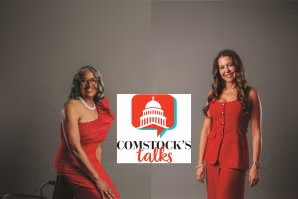
Women in Leadership 2025 With Cassandra Jennings and Yvonne Pire
PODCAST EPISODE: How do you lead diverse teams with differing opinions? Where do you find the confidence to make big career moves? Are women leaders expected to be nicer than men? Comstock’s Women in Leadership honorees Cassandra Jennings and Yvonne Pire join us for a special episode recorded in the wine cellar at Mulvaney’s B+L in Midtown Sacramento.
Is Our Future Tied to the Tracks? with James Stout
PODCAST EPISODE: Journalist James Stout delves into his latest feature for Comstock’s “What’s Holding Up Valley Rail?” where he investigated delays in railway expansion throughout the Central Valley. We discuss the hurdles that are baked into the system, changing attitudes towards public transit and whether hopping on a train might be more commonplace in future America.
Bio-informed Flight with Christina Harvey and Michelle Hawkins
PODCAST EPISODE: UC Davis faculty members Christina Harvey, an aerospace engineering expert, and Michelle Hawkins, director of the California Raptor Center, discuss a Defense Department-funded research project to inform future drone technologies.