


This story is part of our January 2026 issue. To read the print version, click here.
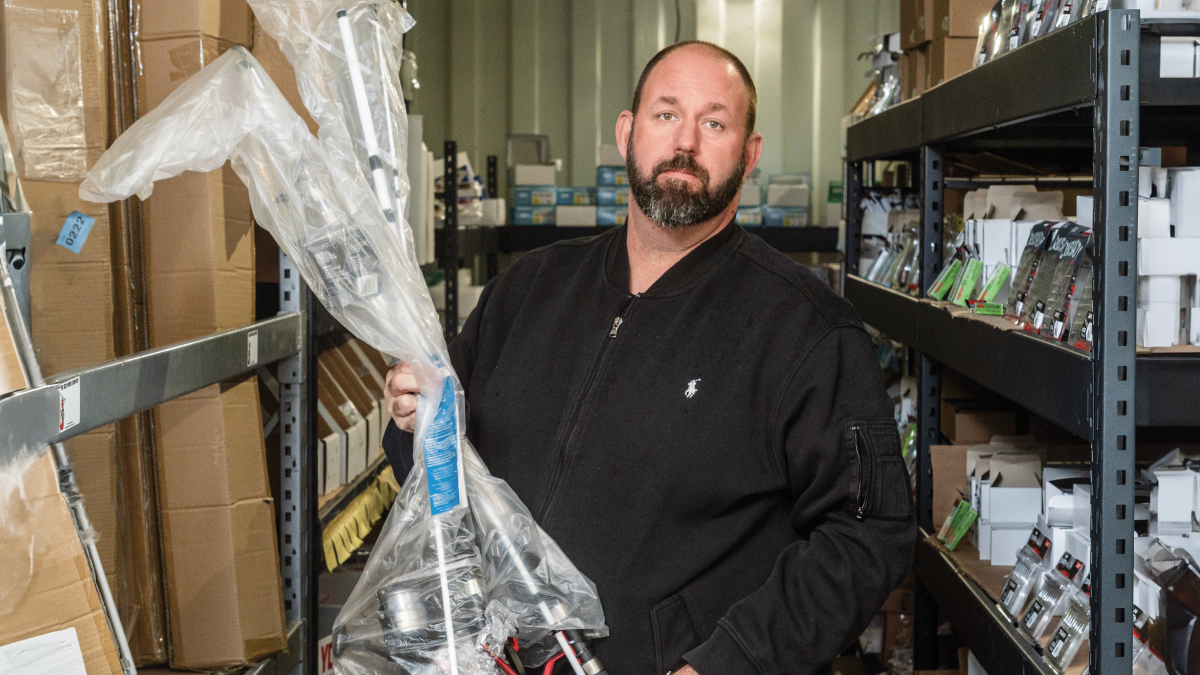
Glenn Chadaris feels squeezed. Since 2017, he’s run Big Red Worm Company in Rio Linda, which sells bait and tackle to fishing stores. He took over the business from his father, Steve, that year and has grown it into a $6 million-a-year operation.
The company buys its tackle from manufacturers who source most of their product from China. U.S. tariffs — taxes on those imports — have surged under President Donald Trump’s administration. In turn, suppliers have shoved the cost onto distributors like him. By October, the cost Chadaris was paying for supplies had risen by double digits. A snelled hook, one with a fishing line attached by a special knot, went from 80 cents to $1.20. Chadaris can’t pass along all of that cost: Fishing and hunting are optional activities, and customers can choose something less expensive, he says.
With tariffs on China swinging wildly this year, to control costs he stockpiled inventory when tariffs were lower. That tied up a lot of capital, preventing him from expanding. Worse, some of his manufacturers are cutting out distributors and selling directly to stores to keep down their costs.
“I’m in a primarily Republican business,” says Chadaris. “So a lot of these people are Trump supporters, right? A lot of us, actually, to an extent, we understand tariffs,” he says, citing what’s happened to U.S. auto manufacturing. But tackle has few domestic suppliers, and the cost to get new ones up and running would be huge. “No one is going to take a risk of an investment like that if there’s a chance tariffs go away and China comes back online,” he says.
Conversations with Sacramento-area business owners show tariffs aren’t affecting all companies the same way. At least one is expanding fast because of them. But almost everyone is seeing some effect.
How tariffs boosted Sparkz
California businesses are more affected by tariffs than those elsewhere: The state is the country’s biggest importer and second-biggest exporter after Texas, which exports crude oil. Most of what’s going in either direction is manufactured goods. Nationally, the average tariff that the U.S. was imposing as of August was 18 percent, the highest since 1934 and up from about 2 percent in January 2025, according to the Budget Lab at Yale.
The theory behind taxing imports is simple: As those goods get more expensive, consumers and businesses substitute products made at home. In the long term, that should boost the domestic economy while generating revenue for the U.S. Treasury.
That’s how it’s played out for one area company. Sparkz, which started in 2019 and has a factory at Metro Air Park, makes cathodes that go into lithium, iron and phosphate batteries. Rechargeable batteries like these power cell phones, electric vehicles and more.
Sparkz, which started in 2019 and has a factory at Metro Air
Park, makes cathodes that go into lithium, iron and phosphate
batteries. (Photo courtesy of Sparkz)
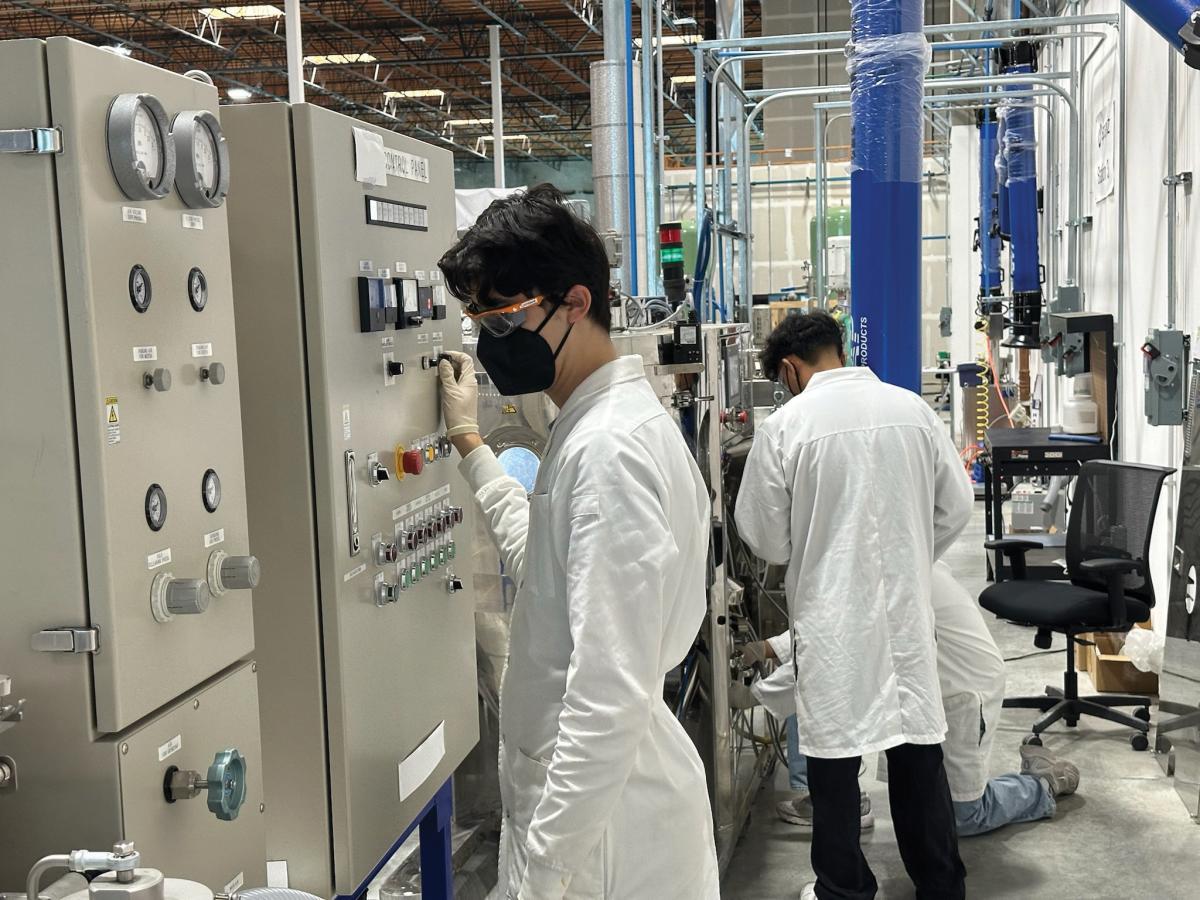
Until recently, they couldn’t be manufactured with domestically sourced materials because China had cornered the lithium-processing market, signing contracts around the world, says Sparkz founder and CEO Sanjiv Malhotra. A 2023 report from the U.S. Department of Energy noted that China manufactures almost 90 percent of the world’s cathodes. But 2025 tariffs have made those expensive in the U.S., creating an opening for Sparkz.
Sparkz started production at its Sacramento plant in March and soon plans to open a larger factory, though Malhotra won’t say where. “The tariffs have been very favorable for us, given that China was controlling the supply chain,” he says.
A ‘jaw-dropping’ fall in wine exports
But most economists say tariffs hurt the U.S. economy, in part because other countries retaliate with their own tariffs, cutting U.S. exports.
California agriculture is the poster child for this. As new Trump administration tariffs hit this year, exports of many top California farm products have dropped. U.S. wine sales to the world plunged 30 percent from January to August 2025 compared to the same period in 2024. Rice exports slid 25 percent; processed vegetables, 7 percent; beef, 9 percent, and fresh fruit, 2 percent.
The damage hasn’t come just from retaliatory tariffs but from outraged foreign consumers. Wine sales to Canada (prior to this year, the No. 1 U.S. wine export market) dropped 73 percent as shoppers revolted in response to U.S. tariffs on a close ally. Colin Carter, UC Davis professor emeritus of agricultural and resource economics, was in Calgary in October and stepped into a wine store. There wasn’t a single U.S. wine on the shelf, though the owner admitted he had some cached in the back.
“The wine story is pretty jaw-dropping,” Carter says. “It takes a long time to develop that relationship, especially in the food industry. And once it’s destroyed, it doesn’t come back overnight.”
The wine story is pretty jaw-dropping. It takes a long time to develop that relationship, especially in the food industry. And once it’s destroyed, it doesn’t come back overnight.
Colin Carter, UC Davis professor emeritus of agricultural and resource economics
Wine grapes were far and away Sacramento County’s top agricultural commodity in 2024, but demand has reportedly cratered. In November, Ken Oneto of KLM Ranches in Elk Grove was busy ripping out his merlot vines after making no wine grape sales last year. Those plants had another 12 to 17 years of life, he says. “You’re not expecting to go in here at 30 to 40 percent of its life and yank it out. We have a lot of money invested.” He’s heard the same story from other local growers who weren’t able to sell.
Grapes wither on the vine in Elk Grove as wine sales have plunged
in recent months, mainly due to tariffs but also because of
drinkers cutting back on alcohol use. (Photo by Francisco
Chavira)

With all farm product exports factored in, Sacramento, San Joaquin, Yolo, Solano and Sutter counties could take tariff-related hits of at least $20 million each, according to a paper in September 2025 by Carter and two co-authors. (In December, the Trump Administration announced $12 billion in payments for U.S. farmers impacted by unfair market disruptions.)
Tariffs aren’t all that affects prices
Other sectors of the local economy were supposed to get walloped by tariffs but haven’t been. In a 2025 National Association of Home Builders and Wells Fargo survey, home builders said tariffs on imported lumber, steel, aluminum, appliances and more would increase the cost of building a home last year by almost $11,000. Another poll of nonresidential builders reported a 2.5 percent increase in material and supply costs from August 2024 to August 2025, with 43 percent of respondents canceling, postponing, or scaling back projects in the first six months of 2025 because of higher costs.
But that mostly hasn’t happened in the Capital Region. Builders here are big operators working in multiple states and were able to wrangle agreements with suppliers to keep prices down, says Tim Murphy, president and CEO of North State Building Industry Association, which represents builders and related professionals. Some suppliers also are sourcing more items domestically, such as buying locally produced cabinetry to skirt a 25 percent tariff on imported kitchen cabinets that took effect in mid-October, he says.
And new U.S. tariffs of up to 48 percent on lumber haven’t raised prices because high interest rates have slowed the housing market, lowering demand for it. Lumber prices are now at a three-year low, which has offset tariff-driven price increases on steel and aluminum, says Murphy.
Aren Bazzocco, Sacramento division president for home builder Taylor Morrison, which operates in a dozen states, says that slowdown helped his company negotiate with subcontractors, who are looking for work. And some materials — say, countertops from Brazil or India — might be $400 or $500 more if customers select more expensive options. “That’s not a big deal when you’re talking about a $750,000 house, which is our average price,” he says. “It certainly doesn’t keep me up at night.”
The future of the trade war
One pro-tariff economist argues there’s a right and wrong way to impose tariffs. Oren Cass is the founder and chief economist of American Compass, a national think tank considered part of the “conservative labor movement.” He favors increasing tariffs gradually and pairing that with government help for priority industries. Policymakers already use that approach to protect some industry supply chains, including domestic battery production.
That’s helped Sparkz. In 2022, the company clinched two California state grants totaling $17.5 million to scale up production and start its Sacramento manufacturing plant. The company also was granted two state tax provisions, an $11 million tax credit in 2023 and a $15 million sales tax exclusion on equipment purchases in 2024. That year, it also got a $13 million federal tax credit. In October 2024, it won a $10 million federal grant, made possible by the bipartisan infrastructure law passed under the Biden administration, to turn a closed West Virginia plant into a production facility.
Now, the Trump administration is making federal loans to U.S.-based lithium-processing companies, directly investing in them, buying their products and easing permitting, says Malhotra. Combined with the new tariffs on China, this has Sparkz set to grow fast, he says.
China has spent decades investing in that infrastructure and training that labor.
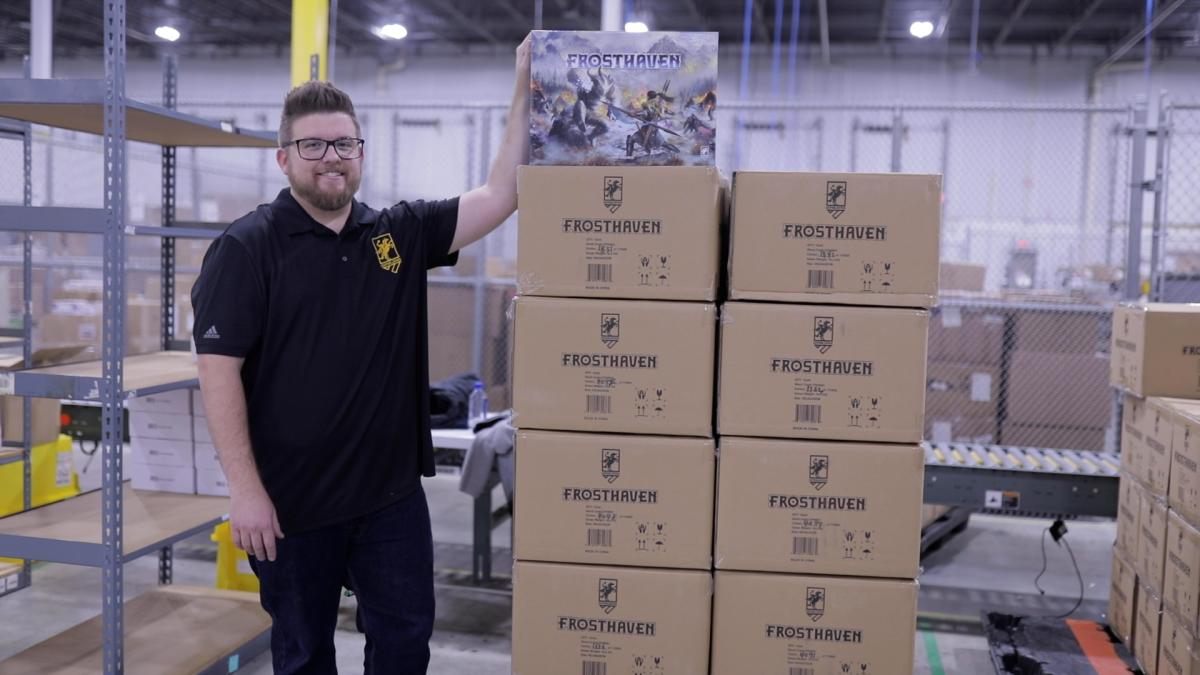
Price Johnson, chief operating officer, Cephalofair Games
Contrast that with the domestic board game industry, which is reeling as U.S. tariffs have splintered its supply chain. Price Johnson lives in Rocklin and is chief operating officer of 10-year-old Cephalofair Games. The company’s products require the manufacture of small figurines and other components that aren’t made in the U.S. “China has spent decades investing in that infrastructure and training that labor,” says Johnson. Many in the industry would like to see those materials developed domestically, but it would take 10 years, he says.
The company can’t raise prices enough to cover the tariff-driven cost spikes for supplies. Now they’ve cut one of the company’s eight full-time positions, and half of those who remain have been reduced to half-time. Since April, Johnson has taken a 50 percent salary cut and fears he’ll need to quit to help the company stay solvent.
Price Johnson lives in Rocklin and is chief operating officer of
10-year-old Cephalofair Games. (Photo courtesy of Price Johnson)
But one Sacramento business leader thinks the trade war may not last. As U.S. threats to wreck the import of Chinese goods escalated this fall, Margaret Wong predicted the countries’ mutual economic interests would win out. In 1984, Wong founded mwConnect, which produces lighting controls and related products using design and manufacturing plants in the U.S. and Asia. Wong also regularly leads delegations of California business executives on tours to China.
A week before the Trump administration’s latest tariff threat — a 100 percent surcharge on Chinese imports set to start Nov. 1 — Wong was in China leading two delegations from Sacramento and Sonoma to meet with sister cities and attend an annual U.S.-China conference. She was also preparing her company for the Nov. 1 deadline by shifting to suppliers in other parts of Southeast Asia.
But she was optimistic. China still has one of the world’s largest consumer markets, which needs everything from medical and sports products to technology. She points to a new free-trade zone in the southern island province of Hainan that allows foreign companies to import products to the mainland tariff-free if they meet certain conditions.
“It’s tough, but I’m positive,” Wong says of the U.S.-China relationship. “Bottom line, I believe we need each other.” The 100 percent tariff never happened: On Nov. 1, Trump and Chinese President Xi Jinping met and made a deal.
–
Stay up to date on business in the Capital Region: Subscribe to the Comstock’s newsletter today.
Recommended For You
Sacramento Manufacturers and Distributors Weigh the Effects of Tariffs
Local businesses say there are winners and losers in the tariff game
Changes in prices and supplies have been creating uncertainty in the marketplace for regional businesses. We asked Capital Region businesses how they are adapting — and whether they see any benefits.
The Egg-onomics of Bird Flu: Capital Region Businesses and Consumers Scramble to Deal with Shortage
How the bird flu is affecting businesses that produce and sell eggs in Sacramento and beyond
As the ongoing bird flu crisis continues to decimate millions of
infected chicken flocks across the country, and eggs become
pricier and harder to find, Capital Region businesses weigh in on
the impact of the shortage and what’s helping them through
another major economic challenge so close on the heels of the
pandemic.

Let’s Keep the Main Thing the Main Thing | Opinion
FROM THE PUBLISHER: What is Sacramento's 'main thing'?
Sometimes it’s not a bad idea for an entire region to get in touch with itself — and for that, I turn to a favorite quote from the late educator and writer Stephen Covey, whose simple but direct point for businesses and individuals was to focus on “the main thing.”

Comstock’s Most-Read Stories of 2025
From profiles of local leaders to deep dives on science and technology, here are the stories that drew the most attention this year
This year, Comstock’s readers revealed an interest in the kind of hyperlocal news only regional media can provide, from profiles of rising leaders to behind-the-scenes explorations of the developments and investments that impact the cities where we live and work.