


This story is part of our February 2026 issue. To read the print version, click here.
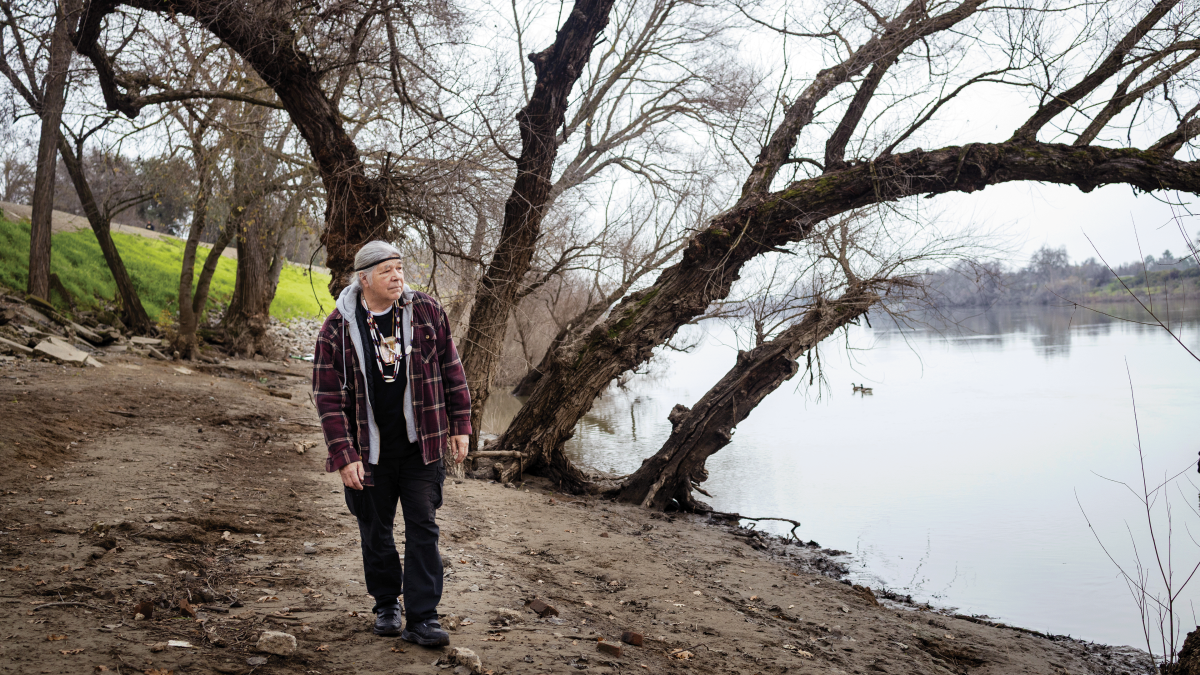
Gary Mulcahy steps through tufts of wild rye spilling down a bank of the Sacramento River, tromping into a clearing where several men have their rods and reels fixed under the branches of a blue oak.
Mulcahy has fished up and down this river for most of his life, beginning with catching salmon as a teen in Shasta County. Mulcahy was raised there in the homeland of his people, the Winnemem Wintu Tribe. Later, he would fish for sturgeon off boats near the riverbend he’s staring at now — the north gateway to the Sacramento-San Joaquin Delta.
This river is a part of him.
Mulcahy, government liaison for the Winnemem Wintu, has been engaged in salmon and wildlife conservation for 25 years. In 2022, his tribe joined forces with the Shingle Springs Band of Miwok Indians, the Stockton-based Filipino cultural group Little Manila Rising and the conservation nonprofit Restore the Delta to form the Delta Tribal Environmental Coalition, or DTEC. This group was founded on shared conservation values and is actively opposing the Delta Conveyance System, better known as the Delta tunnel.
The conveyance system is one of California’s largest proposed public infrastructure projects in a generation, a 45-mile underground tunnel that would siphon water from an inland network of rivers and farming islands between Sacramento County in the north and Contra Costa County in the south. The network forms the largest freshwater estuary in the western hemisphere, commonly referred to as the California Delta.
Southern and Central California water districts want the tunnel to move more fresh water to their agriculture and Los Angeles-area customers, which have greater demand for water but fewer sources than Northern California. Gov. Gavin Newsom is championing their cause, insisting that California needs the tunnel because of “climate whiplash,” or the increased severity of summer droughts and winter floods due to climate change.
DTEC — already concerned about large water exports shipped through existing pumps from the Delta — worries the $20-billion project will wreak havoc on the plants and wildlife of the estuary and its connected rivers. They view the potential collapse of the Sacramento and Klamath Chinook salmon populations as the most immediate threat, an extinction that the state’s own data forecasts.
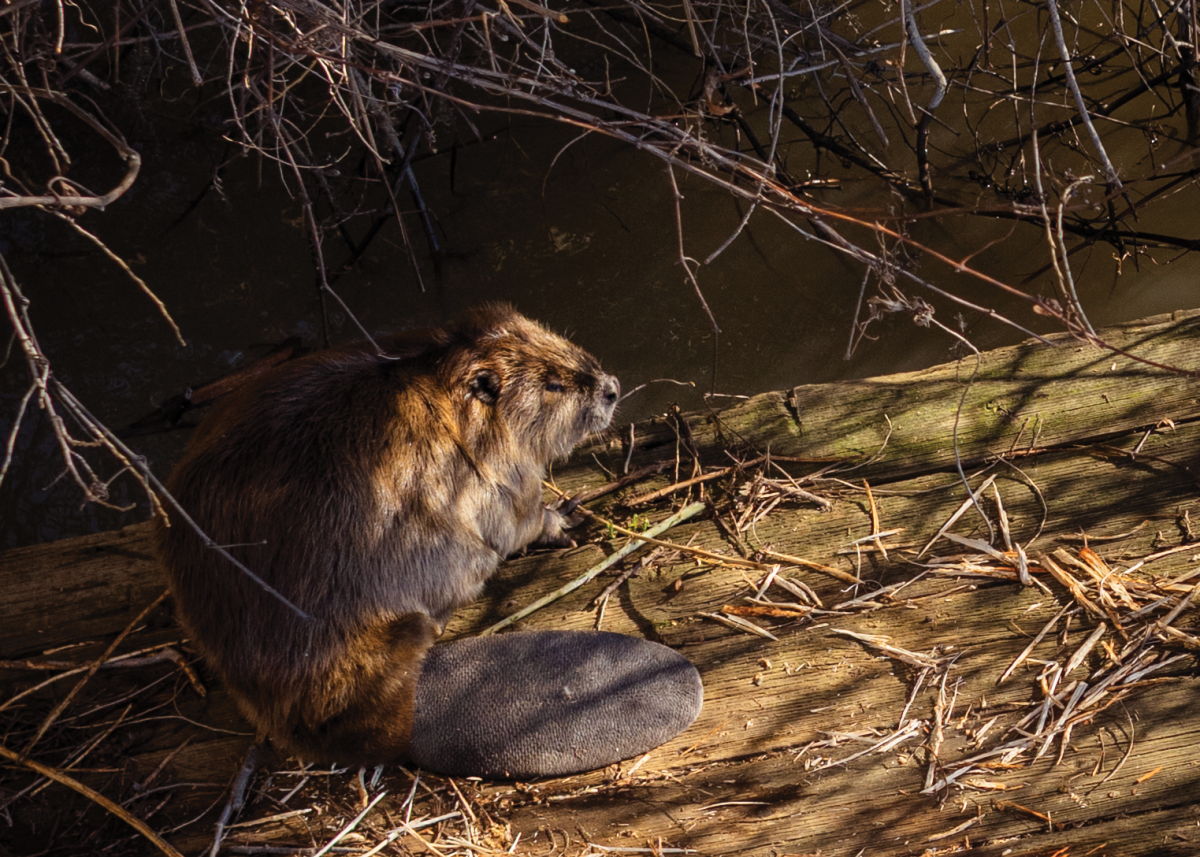
Beavers are among several animals Delta tunnel opponents fear
will be impacted if the water project goes through. (Photo by Wes
Davis)
Not long after joining forces to establish the DTEC, the four groups and the environmental nonprofit Save California Salmon filed a Title VI civil rights complaint against the state Water Resources Control Board with the civil rights division of the U.S. Environmental Protection Agency. The coalition alleges that the state board consistently violated the Clean Water Act by failing to update water quality standards in the Delta around over-pumping. They also claim California tribes were shut out from participating in policy decisions that affect them.
The Delta’s “waterways are plagued by dangerously low flows, native fish die-offs, high water temperatures, encroaching salinity and overgrowths of toxic algae,” the complaint reads. It was officially accepted for review by the EPA in August 2023 and is under investigation.
Related: The Delta in Decline: Wildlife and businesses in the Sacramento-San Joaquin Delta are suffering from lack of fresh water
The tribes also worry that building the tunnel will create a de facto federal mandate for raising Shasta Dam, which could feed more water to the project. If the dam is raised, it will erase the few remaining Winnemem Wintu cultural sites that haven’t already been destroyed by the federal government in the last 75 years. Much of their homeland was flooded after the opening of Shasta Dam in 1945.
Aerial view of Shasta Dam and Shasta Lake, March 11, 2019. (Photo
by the Bureau of Reclamation, licensed under CC BY-SA 2.0)

Now, with the California Department of Water Resources pushing to jump legal and regulatory hurdles before Newsom leaves office, the tribes are preparing for a potential showdown in court. But they won’t be alone in that fight. The tunnel is fiercely opposed by farmers and business owners across the Delta, along with the Golden State Salmon Association, the Sierra Club, the Natural Resources Defense Council and the governments of Sacramento, Yolo, San Joaquin, Contra Costa, Solano, Plumas and Butte counties.
“I don’t know why more Californians aren’t aware of what is happening,” Mulcahy reflects while staring at the river. “I’ve been out here warning people about it for years.”
The Delta’s first protectors
The Delta tunnel is running up against tribes whose commitment to healthy riverways goes back millennia.
The Shingle Springs Miwoks fished the Sacramento, American and Feather rivers until Gold Rush-era land grabs triggered a forced relocation to the Placerville area. Farther north, in Shasta County, the Winnemem Wintu, or “People of the Middle Water,” have their own scars from 19th- and 20th-century development, which separated them from the rivers intrinsic to their culture.
Salmon are at the heart of the Winnemem Wintu’s origin story and spiritual beliefs. Their tradition holds that all life came from a spring on Mount Shasta — but humans were the last to emerge and struggled to speak with the spirits and the earth.
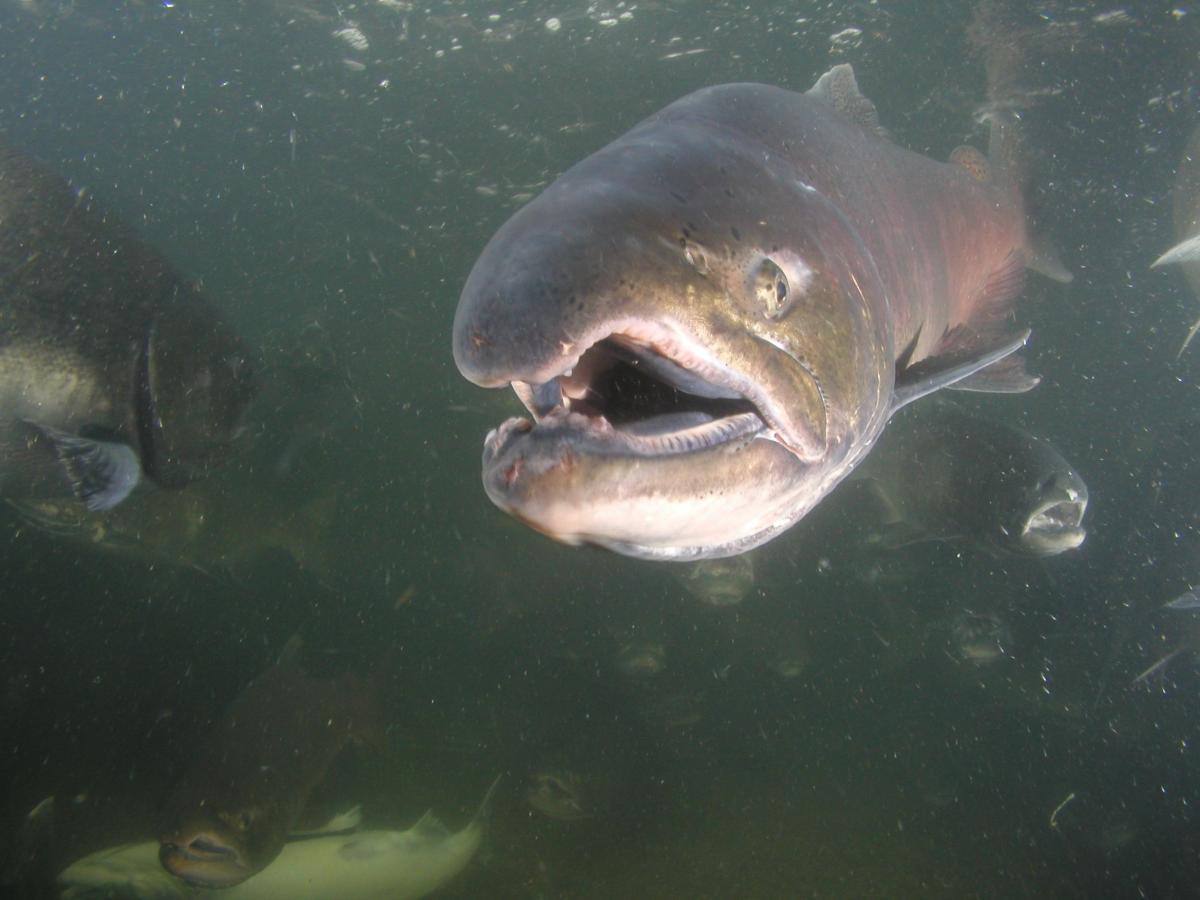
A male chinook salmon swims in the Feather River. (Photo by
California Department of Fish and Wildlife, licensed under CC BY
2.0)
“The salmon came back and said, ‘We’ll help you — we’ll give you our voice so that you can speak with the spirits and everybody else, but you must promise to always speak for us,” Mulcahy explains. “So we’ve been speaking for the salmon ever since.”
It was largely the Winnemem Wintu’s bond with salmon that brought them into partnership with the Shingle Springs tribe, Little Manila Rising and Restore the Delta. While salmon may be making a comeback in some California river systems, their populations are plummeting throughout the Delta.
In 2023, the California Department of Fish and Wildlife and the state’s Secretary of Commerce declared a disaster for Sacramento River Fall Chinook and Klamath River Fall Chinook fisheries. Commercial and recreational salmon fishing remained mostly closed in California for three years. There were brief openings in the recreational ocean salmon fishery in June and September 2025, and the Mokelumne, Feather and American Rivers had limited recreational openings starting in July.
Related: Delta Blues: The battle over water has been fought to a standstill, but there’s hope that science and technology will make voluntary agreements by all sides possible
While Newsom’s administration has worked with the Winnemem Wintu on a salmon restoration project in Shasta County’s McCloud River and put hundreds of millions of dollars into other salmon recovery initiatives, the tribes argue that recent disaster declarations show efforts aren’t keeping up with the looming threat, at least not in the Delta.
State officials logged warning signs of this threat a full decade before. A 2010 report from the state Water Resources Control Board stated that “the Delta is in ecological crisis” and “recent Delta flows are insufficient to support native Delta fishes for today’s habitat.” Despite those findings, the state-controlled Delta pumps, along with federally controlled Delta pumps, have together continued to export millions of acre-feet of water from the estuary in recent years.
Malissa Tayaba, vice chair of the Shingle Springs Band of Miwok Indians, said her tribe has been noticing environmental degradation from low water flows on the Sacramento River. They’ve made these observations while collecting items for their ceremonial regalia, traditional basket-weaving and tule boats.
“Part of what we do is take our children down to the river and we build things, with everything coming from the land — everything that captures who we are as tribal people,” says Tayaba, the head of her band’s traditional ecology department. “It was very alarming to see some of these conditions. … We were seeing how dirty the water was and even in some areas, the harmful algal blooms.”
For Tayaba’s tribe, the timing is ironic. They’ve been embarking on their own comeback story.
Verona is a sacred river site in Sutter County known to them as Wóllok — “the village of the flicker bird.” A century and a half after being uprooted from it, the Shingle Springs Miwoks used gaming revenues from Red Hawk Casino in El Dorado County to buy back their land.
Related: This Collaboration Between Farmers, Water Officials and Environmentalists Is Saving Wildlife
They’ve since taken this spot at the confluence of the Feather and Sacramento rivers into trust under the Bureau of Indian Affairs and are, after generations, using it for ceremonies and spiritual gatherings again.
“Reclaiming Verona means everything to us — it’s a true victory,” Tayaba says. “It places us back on the river.”
But the tribe wants to follow that victory by convincing the state water board about the ecological peril ahead from the tunnel.
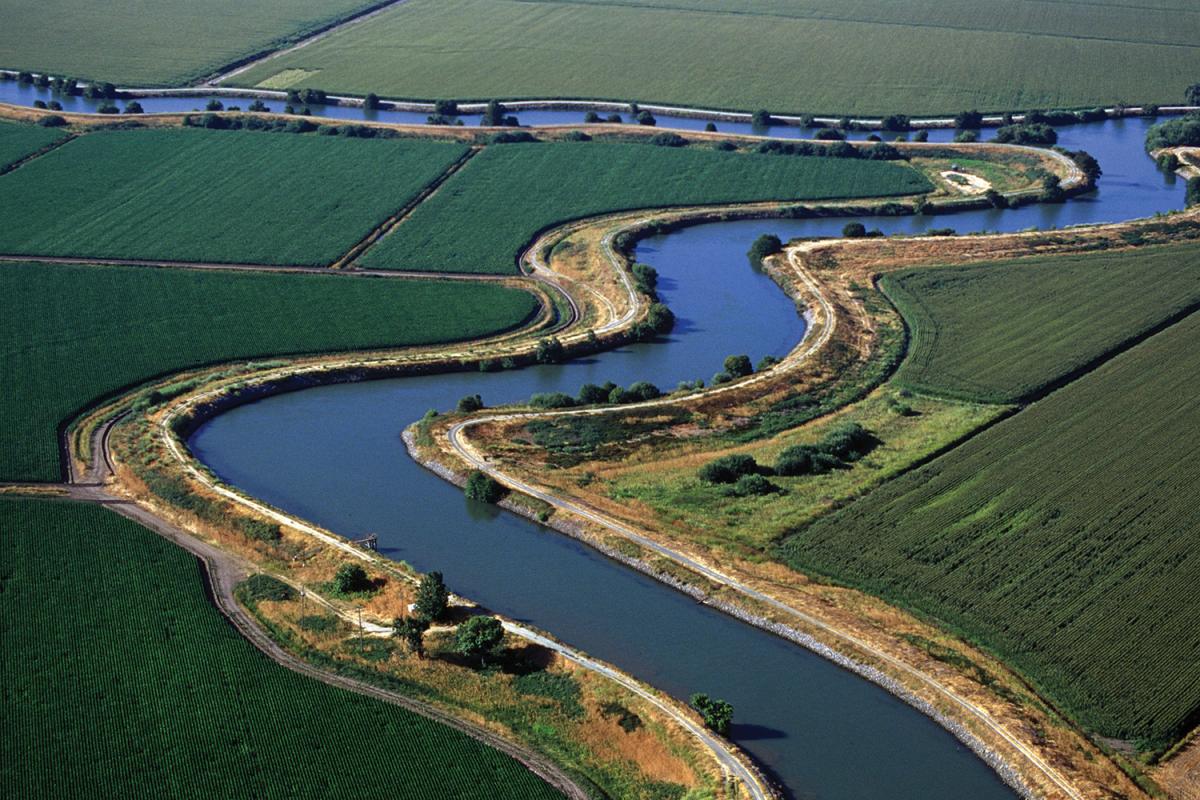
A waterway in the Sacramento-San Joaquin Delta. (Photo courtesy
of DWR)
Last year, California’s Natural Resources Secretary Wade Crowfoot made a strong public defense of the Delta tunnel while appearing at an administrative hearing for the state Water Resources Control Board. Crowfoot argued that the tunnel will make the state’s overall water supply more resilient in the face of climate change as well as the possibility of an earthquake, which could disrupt the Delta’s current means of transporting water. Part of his reasoning is that state scientists have forecasted California’s water infrastructure potentially losing 23 percent of its supply in the next 20 years due to changing flow patterns and weather shifts, which worries impacted farmers who have already had to take tracts of land out of production.
Crowfoot was also there to defend Newsom’s engagement with affected tribes. He acknowledged that, historically, state agencies have not been “effective communicators” with Native governments but asserted the Delta tunnel was different.
Related: A Tarnished Past: How stakeholders in the Sierra Nevada are confronting the lasting legacy of the Gold Rush
“I am proud of the outreach that happened for this project,” Crowfoot stated. “Over 120 tribes were identified and were reached out to at the inception of this project; and for the 13 that responded, we’ve conducted over 150 government-to-government consultations.”
He added, “I will acknowledge there will be those who continue to oppose this project.”
Leaders for the Winnemem Wintu and Shingle Springs Miwoks were mystified by Crowfoot’s speech. To start with, the coalition coordinates with the California Indian Environmental Alliance, which is made up of 80 tribes and officially opposes the Delta tunnel.
“It used to be that the business people didn’t like the ‘tree-huggers’ and that the farmers didn’t like the environmentalists, but honestly, everyone is on the same side when it comes to this.”
Dan Whaley, owner, Willow Ballroom and Events Center
Mulcahy says that what Crowfoot described were basic outreach efforts around the tunnel, but, in his opinion, not meaningful dialogues.
“He’s delusional if he thinks that’s listening to us,” Mulcahy retorted.
Crowfoot declined an interview request for this story.
Tayaba had a similar reaction to Mulcahy, noting her tribe’s consultations with state water officials felt like window dressing, since Newsom refuses to divert from his plans.
The governor’s office did not respond to requests for comment.
The next battlefronts
Last spring, Newsom proposed fast-tracking the Delta tunnel in the form of major legislative changes to permitting, funding, environmental rules and property seizures around the project. He built those proposals directly into the May revision of the state’s budget and lawmakers’ efforts to solve a $12 billion deficit. The move drew condemnation from a cadre of Democratic and Republican legislators, eventually getting voted down by the Senate Budget Committee.
January of 2026 opened with good news for tunnel adversaries. The Court of Appeal for the Third Appellate District upheld a Sacramento County Superior Court judge’s 2024 ruling that the Newsom administration’s bond-funding plan to finance the project is invalid. Attorneys Thomas Keeling and Roger Moore represented the seven opposing California counties in that victory.
While state authorities decide how to respond to their funding plans being upended, the California Department of Water Resources is engaged in public hearings before various regulatory entities to determine if it can obtain the state and federal permits it needs for the tunnel.
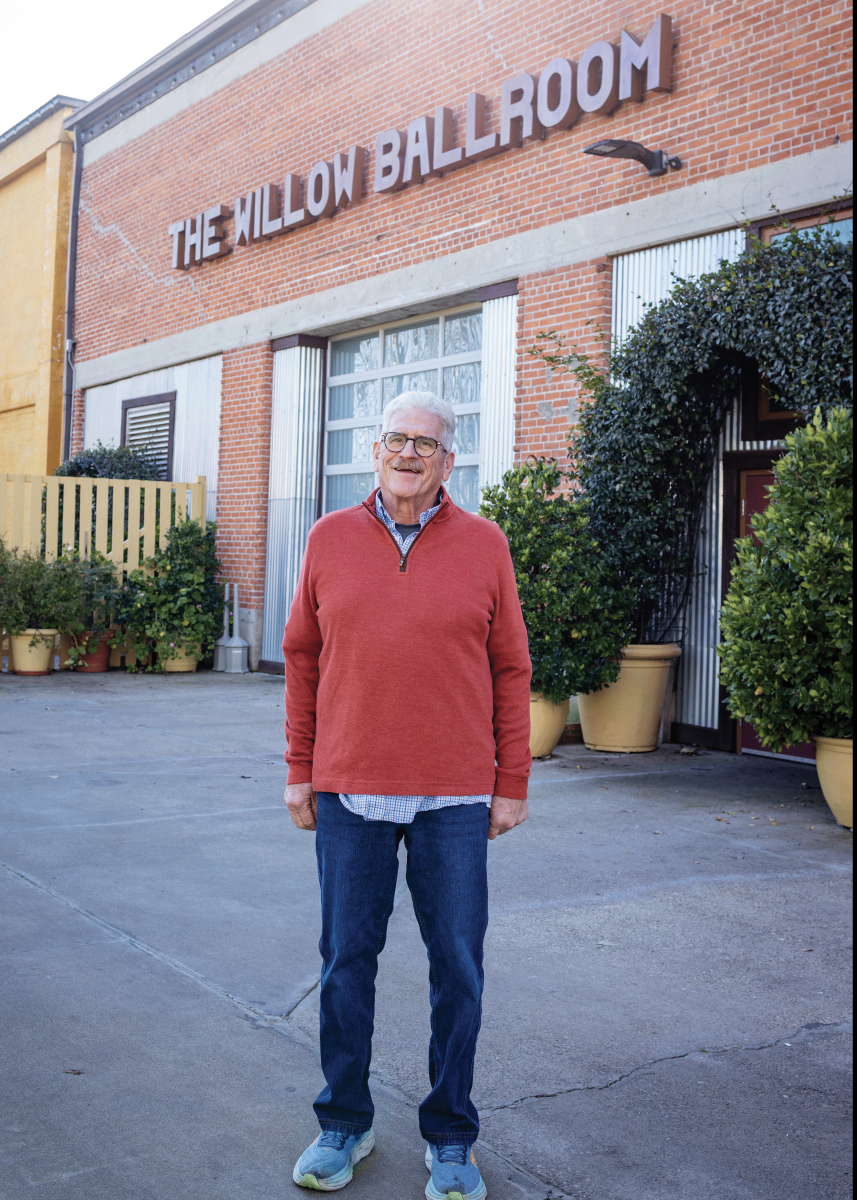
Dan Whaley, owner of the Willow Ballroom and Events Center in the
Delta town of Hood, is the chairman of Delta Legacy Communities,
which protects cultural resources and opposes the project. (Photo
by Wes Davis)
“It used to be that the business people didn’t like the ‘tree-huggers’ and that the farmers didn’t like the environmentalists, but honestly, everyone is on the same side when it comes to this,” Whaley says. “In terms of the impacts on Hood, they’re talking about 100 heavy trucks coming through every day. They’re also going to drill down a hundred feet and have to de-water the area around the town, which could eliminate everyone’s well water within several miles. … Beyond that, there’s several hundred abandoned gas lines and gas wells that they’re unable to know where they really are and could hit when they start drilling.”
Whaley adds, “This is not something they should be trying in the breadbasket of California.”
–
Stay up to date on business in the Capital Region: Subscribe to the Comstock’s newsletter today.
Recommended For You

The Delta in Decline
Wildlife and businesses in the Sacramento-San Joaquin Delta are suffering from lack of fresh water
The life cycle of a salmon, so the story goes, is a heroic journey. The fish emerge from fertilized eggs in a river bed, swim to the ocean where they spend most of their lives and return to give birth in the exact place where they were born.
Delta Blues
The battle over water has been fought to a standstill, but there’s hope that science and technology will make voluntary agreements by all sides possible
For decades, the California water debate revolved around one metric: unimpeded flow, which is the amount of water in the river and streams. While flow is still without doubt the key issue, it is no longer the only one.
This Collaboration Between Farmers, Water Officials and Environmentalists Is Saving Wildlife
The Floodplain Forward Coalition helps farmers help salmon while protecting water supplies
Water policy in California is defined by fighting. Plans to fix the system languish for decades, and if they’re implemented, they end up in court for many more years. The Floodplain Forward Coalition has broken out of that paradigm.
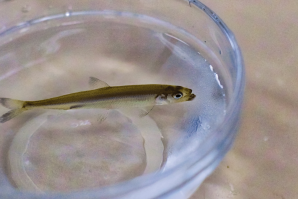
Scientists Attest to Value of UC Davis Smelt Lab
Federal funding has been imperiled for facility near Byron
The San Francisco Chronicle reported on Feb. 6 that the federal government was looking to not renew funding for the UC Davis Fish Conservation and Culture Laboratory after its current round expires on Friday. While sources close to UC Davis are confident of a new contract being signed with the U.S. Bureau of Reclamation, that hadn’t happened as of press time, and some are worried about what comes next.

Hydrologic Engineering Center in Davis to Keep Federal Government Lease
Longtime center had been sent a lease termination notice
Behind a nondescript door in downtown Davis exists a little-known but vitally important piece of infrastructure, the Hydrologic Engineering Center. A recent threat to this center’s existence appears to have passed.