


This story is part of our August 2026 issue. To read the print version, click here.
Between 2022 and 2024, the city commissioned surveys on how to make it a more livable and workable place for artists. It allocated $750,000 to accelerator programs for creative businesses, and it dedicated $250,000 to arts-related journalism that could help ticket sales for stages, galleries and music venues. The city even piloted several alternative capital allocation models designed to spur property ownership among artists.
And these priorities seemed justified to many when Americans for the Arts issued a study in 2024 revealing that the arts and culture industry in Sacramento County generated $241.7 million in one year alone, not to mention supporting nearly 4,400 jobs and yielding $164.8 million in personal income. Towards the end of 2024, many in Sacramento’s creative economy seemed to feel hopeful about the future.
However, the following year saw various efforts on the federal level to slash funding to the National Endowment for the Arts and the National Endowment for the Humanities. The uncertainty around those political battles has had ripple effects for artists and nonprofits across the country. That, coupled with persistent inflation and cost-of-living hikes, has created a challenging environment for any organization relying on patrons’ disposable income.
And beyond those headwinds there are more existential questions: How is the deluge of constant media stimuli from smartphones affecting people’s ability to concentrate on performances? How will AI-generated imitations of art impact a creator’s ability to find audiences and have an income?
With so much low-simmering stress in the air, Comstock’s convened a roundtable that included Scott Klier, CEO of Broadway Sacramento; Jeremy Ganter, executive director of the Mondavi Center for the Performing Arts; David Sobon, founder of the Wide Open Walls Mural Festival; Mae McCoy, a Sacramento-area musical artist, radio broadcaster and independent record label owner and Jeff Eisenberg, a local visual artist and Sacramento’s District 2 commissioner for the Arts, Culture & Creative Economy Commission. We engaged this panel in a discussion about the overall state of the arts in the Sacramento region.
Comstock’s: How healthy is the overall state of the arts in the region, and what do nonprofits and elected officials need to do to keep it moving in a positive direction?
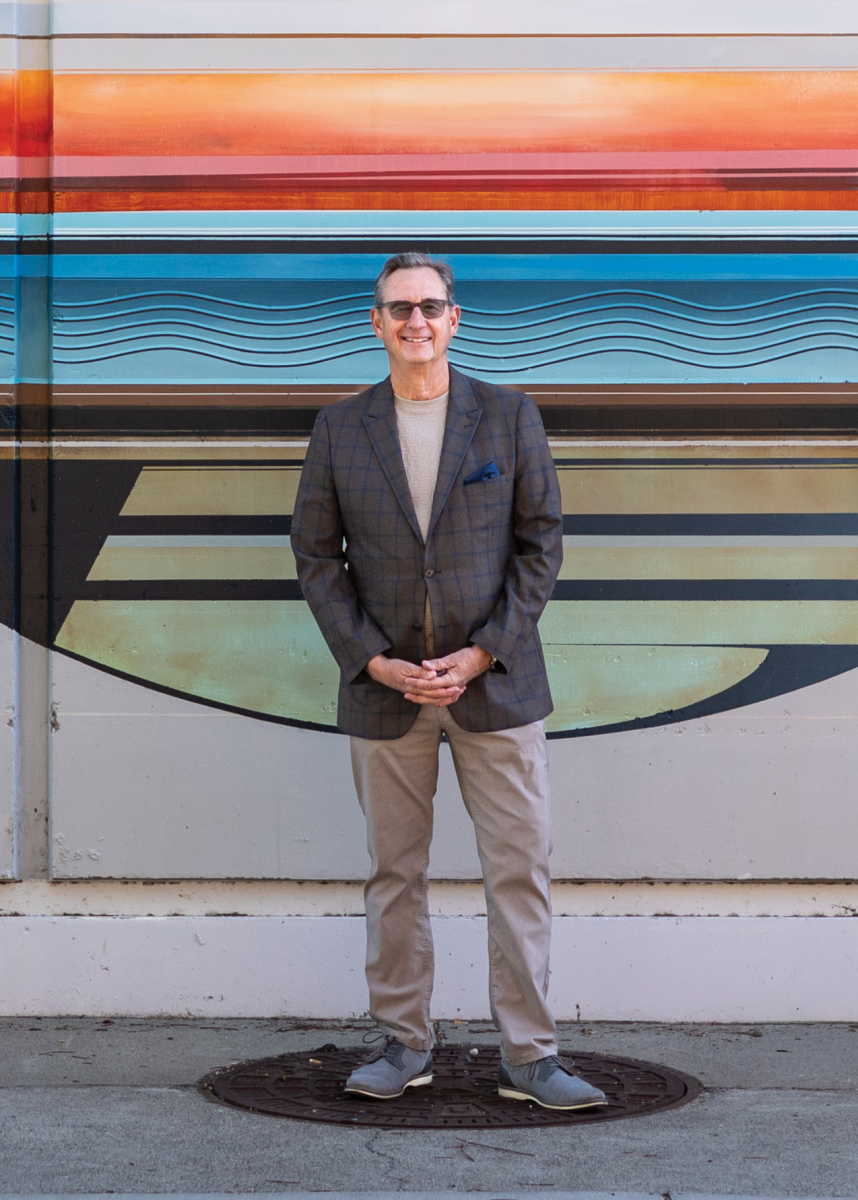
Mae McCoy (artist/broadcaster): I agree with Jeff that these challenges do cause artists to be more scrappy and learn how to find their own route, especially when it looks like there’s no real clear path.
Scott Klier (Broadway Sacramento): I would say there is a lot of great art happening in the performing arts sector of Sacramento. We’ve seen a lot of expansion with our company, and I know that our colleagues at B Street Theater and Capital Stage would likely say the same. But we are dependent on our community having discretionary income at their disposal to make choices like going to the theater or having a night out. And so, things will ebb and flow with that.
I don’t think any of the organizations have allowed that to stop their growth or prevent them from finding new ways of reaching a larger audience. What I also hope we’ll see is a kind of “return to Sacramento”: We’ll see what happens with the workforce. I think the greatest roles our elected officials could play is making sure people feel safe and incentivized to leave the comforts of home.
David Sobon (Wide Open Walls): I think Sacramento artistic talent has never been stronger. The challenge isn’t creativity, it’s coordination. We have world-class artists, organizations and festivals, but we’re still telling those stories separately rather than collectively. When visitors come to Sacramento, they don’t really care who funded something or where the money came from. It’s just more about “Where should I go? What should I see?” As far as local government’s role, it’s about encouraging partnerships and integrating the tourism part with economic development. We can’t treat those individually.
Scott Klier is CEO of Broadway Sacramento.
Comstock’s: Speaking of grants, between the current economics of the creative economy and the scarcity of grants at the moment, how hard is it for artists to make a living in the Sacramento region?
Eisenberg: I can speak to that from the visual arts perspective. As far as artists go, everyone is having to cobble together multiple sources of income. They’re trying to pursue grants. They’re trying to develop clients on their own. You have to be your own promoter, your own agent. And on top of that, people have studio space — and then they don’t have studio space.
McCoy: As someone who helped run a nonprofit organization for traditional music in the past (the Western Swing Society), I think we didn’t always pursue some of the grant opportunities that were out there. Right now, I’m finding it difficult as far as grant money goes. It’s a tough time.
Klier: Our organization has never been dependent on grants, but we certainly are a nonprofit organization — and we prove that most years. What Sacramento does not have that other major metropolitan areas do is a strong corporate presence. Without major companies headquartered in the area who are incentivized to support their local nonprofits, there aren’t a lot of revenue sources outside of our individual patrons, who, on top of their ticket buying, dig into their pockets to make other contributions. So, there is lack of corporate sponsorships in our area. With Sacramento being primarily a government town, I don’t see that changing, even though it needs to change.
“One encouraging thing, overall, is that we’re seeing audiences still very much value the live experience — and that there is no way to really replace that. It’s an interesting conversation for us to be having in the AI era, but I’m still seeing people turn to live performances for solace, for entertainment.”
— Jeremy Ganter, executive director, Mondavi Center
Ganter: One encouraging thing, overall, is that we’re seeing audiences still very much value the live experience — and that there is no way to really replace that. It’s an interesting conversation for us to be having in the AI era, but I’m still seeing people turn to live performances for solace, for entertainment. And I’ve been witnessing this in theaters all across the country, where there is a lot less use of cell phones during performances, and people paying attention to what’s actually happening on stage. I take that as a sign of this kind of re-affirmation of experience in the moment.
Comstock’s: What needs to happen to ensure the members of the youngest generation become regular patrons of the arts and get invested in the cultural institutions of this region?
McCoy: Definitely meeting them where they are at. I’d say that’s the online space. For me, being a radio broadcast host and podcaster, I like to go online and make sure that I’m tagging younger artists and creating conversation with them — always in connection to California — and also letting them know from the vantage point of an underground record label that they’re being encouraged to carry the torch.
Ganter: What Mae said about meeting them where they’re at is so important. We’re finding, if we put the data side by side, that with a touring artist who maybe isn’t as social media savvy as one who is, the engagement from younger generations is extraordinarily different. I also think this is a generation that’s much more adept at co-curating experiences and making their own experiences, because that’s the way a lot of our technology is set up. So, it’s about creating ways to get away from this old model of “sit down, shut up and stare at the stage for 90 minutes.”
Eisenberg: I think direct involvement in projects is a great way to get young people invested — supporting projects with a number of people helping. Literally building sets. Literally painting things. Literally setting up and hanging the shows. For young people who don’t have experience with that, it creates a personal investment.
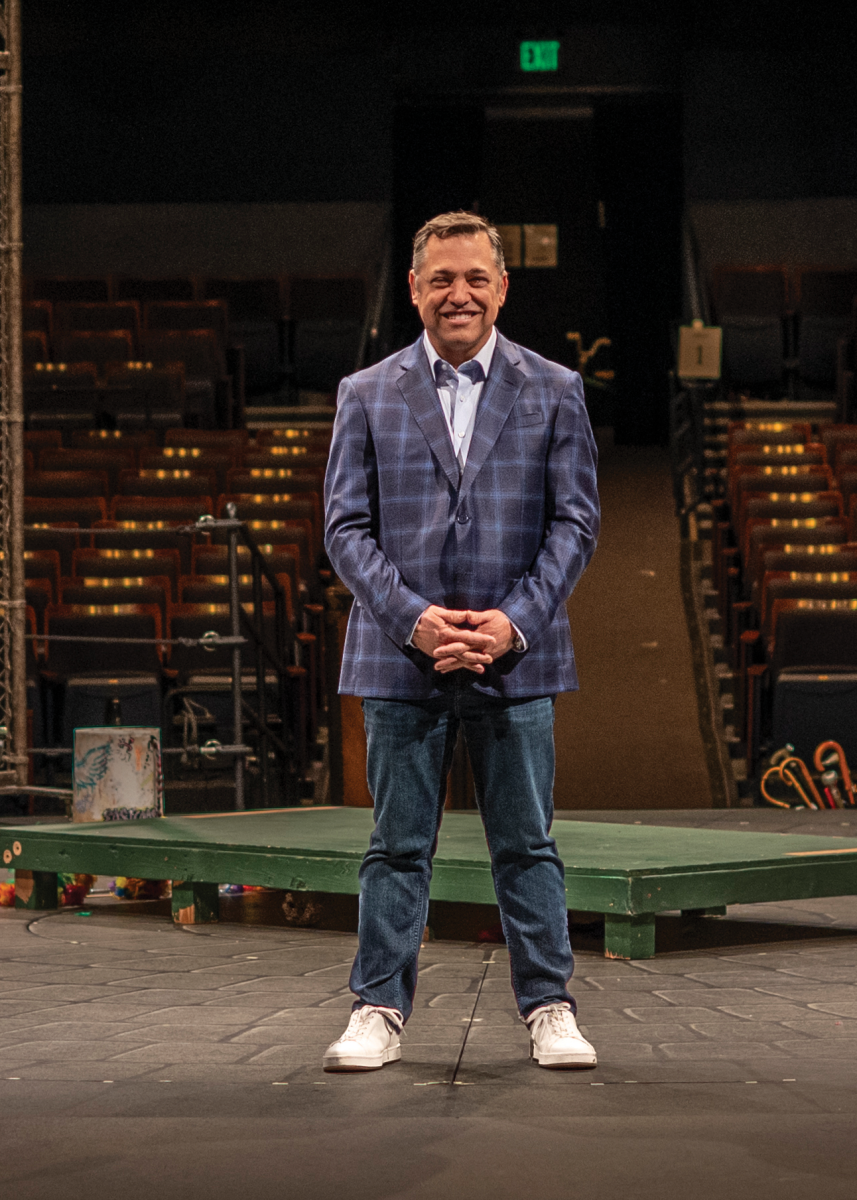
Jeremy Ganter is the executive director of the Mondavi Center.
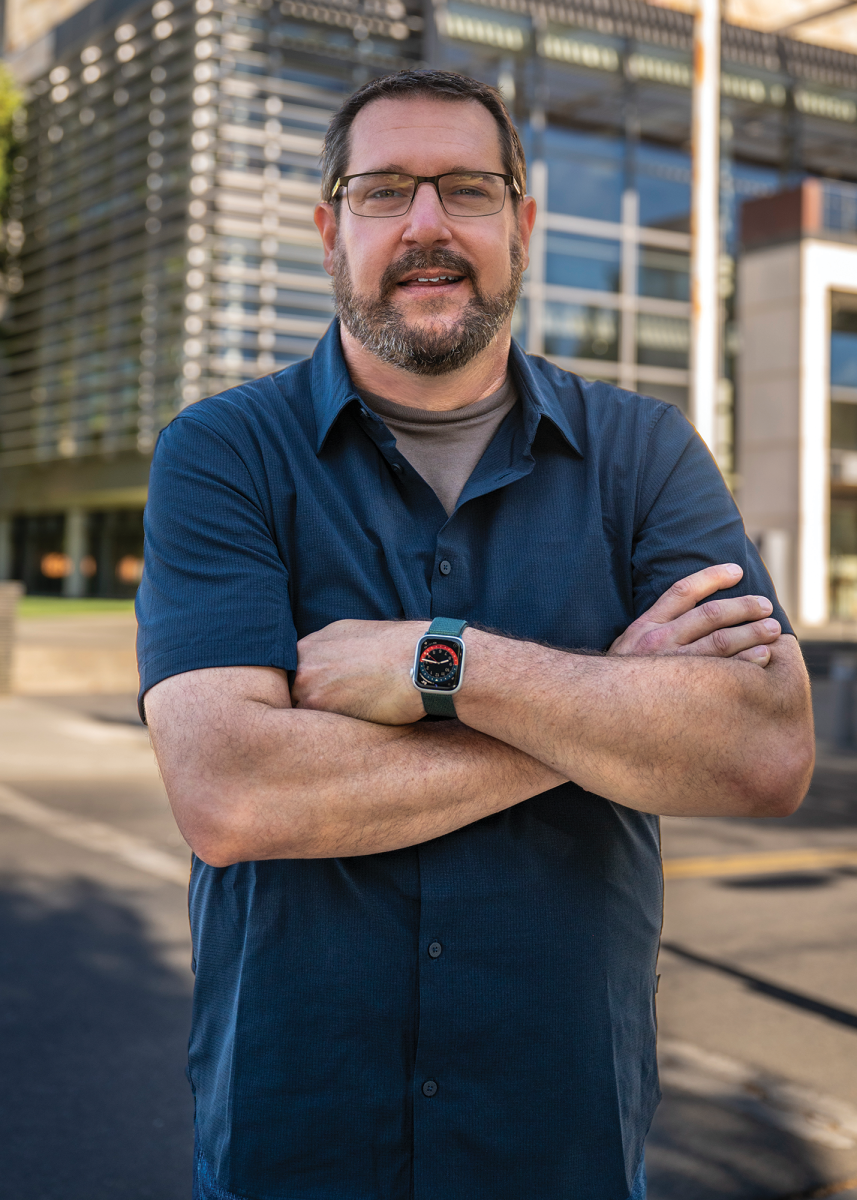
Klier: We have to listen to them. And we don’t have the luxury of repeating what we’ve always done while having some expectation that they’re going to show up for it. Art is created for its audience, and we have to make sure that we understand the sensibilities of this new audience and find ways to reach them and excite them, as well as maintain the existing patrons at the same time, which can be a tough juggling act.
Comstock’s: What do you think ultimately sets Sacramento apart as an artistic and cultural destination? What makes it most unique and special?
McCoy: We have an incredible history here, especially with traditional music. It has such a footprint that everyone I talk to around the United States mentions Sacramento, specifically. And we have an airport, which means these indie bands that are coming through are always looking at the area and saying, “Where can I land? Where can I play?” So, we still have the magic.
Ganter: It’s such a cool city. I know from working with touring artists, primarily, how much they love coming here. It’s because of the vibrant art scene, that history Mae talked about and all the outstanding restaurants. It’s just such a great place to be — and such a great place to perform.
Eisenberg: The amount of diversity in it, and that runs across the cultural, and generational and socio-economic. Coming from the Bay Area, I saw all that flattened in my time there. That’s not the case here. And I think it brings people a variety of perspectives and solutions to things, which I think is a strength.
Klier: I think Sacramento has a generosity of spirit that very few cities can boast. Sacramentans are humble and kind, and have a huge appetite for great art — and for living in community.
Sobon: I think we are authentic. Sacramento culture has just grown organically. It wasn’t forced.
–
Stay up to date on business in the Capital Region: Subscribe to the Comstock’s newsletter today.
Recommended For You
Why California Nearly Stopped Funding Public Murals
Mural work restarts across Sacramento after being put on hold by legal snag
Sacramento’s mural boom hit an unexpected obstacle when a
little-known state licensing law froze public art projects across
California. Now, artists are painting again.
From Cat Curators to ‘Stinkovision,’ Here’s What Sacramento Indie Theaters Are Doing to Draw New Audiences
Local cinemas are leaning into immersive technology and niche audiences to stand out
Cinemas are finding creative ways to lure people off the
couch and back into those folding seats.
Can an Actor Make It Big Out of Sacramento?
Working out of the Capital Region brings its own challenges and opportunities
We spoke to Sacramento-based actors at all stages of their careers, from students starting out to professionals with dozens of roles on their IMDb pages, to get a sense of what it’s like to launch or land a film or television career in the Capital Region.
The Crocker Art Museum’s CEO Wants the World — and People of Sacramento — to Love His Newly Adopted City
Agustín Arteaga brings an architectural eye to the job
Arteaga’s job requires him to maintain the viability and contemporary relevance of the oldest art museum in the West.