



This story is part of our June 2026 issue. To read the print version, click here.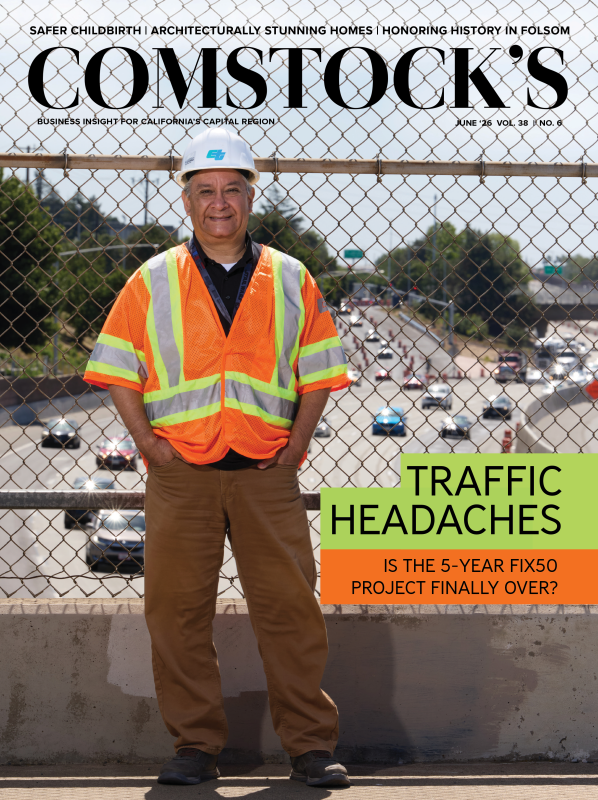
Some call the times we’re living in the Era of Technology, the Epoch of AI or the Century of Social Media. But what we seem to be approaching, from frustration with our elected leaders and the ubiquitousness of social media, is an Age of Apathy.
Our news and opinions are fed to us in a 24-hour blather cycle. Wars are being fought around the world but as long as they don’t interrupt our regular TV programs or streaming schedule, we’re okay with that. We may have strong opinions, but we feel we can’t do anything about it, even when we post record turnouts at the polls. Yes, we’ve been very excited to elect people. But once we do, many of them become inaccessible, working to stay in office rather than follow through on promises they made to us.
Why do we shrug off betrayal or consider it “politics as usual”? That’s apathy born of frustration.
Some think the numbing of America began with the advent of television and its offshoots — like the TV tray table and its usual contents, the TV dinner. Inventions like these conspired to do away with family conversations at the end of the day (and genuine nutrition). We could eat food we hadn’t prepared, which deprived us of a form of creative engagement, and then watch programs that were created for us. Our job was to simply sit, eat, watch and, oh yes, purchase the products being advertised to allow the shows to keep being funded by the sponsors.
Doctors and scientists tell us that apathy is often a neurological condition (related to Alzheimer’s or Parkinson’s disease, mental health issues, stress or a variety of autism subsets). But it’s also a very real social reaction to being bombarded with political noise, economic uncertainty and educational excesses (yes, I’m talking about the people who want to limit what children can learn or to augment basic learning with forays into sexual orientation and supposed options. Come on, folks. School is about learning to think).
A couple of weeks ago, the Democratic Party released an “autopsy” on why it lost the presidential election in 2024. Without getting very partisan about this, why isn’t the party admitting that almost everyone who worked with and for Joe Biden and knew he was having cognitive issues shot itself in the foot by not taking action sooner to get him out of the race? While I doubt the outcome would have been different, his staff and colleagues’ silence about the obvious resulted in a politically fatal form of apathy. By not taking action and just assuming no one would notice, they doomed themselves to an embarrassing loss.
Many have said that one of the greatest dangers to our future is apathy, arguing that the feeling of helplessness — the concept that no matter what we do, we can’t make a difference — leads to inaction. I think this applies to so many of our combined frustrations and fears, including homelessness, ethnic hatred and AI. Of the latter, many of us fear AI will overtake every aspect of our lives no matter what we say or do.
Apathy isn’t a question, exactly, but it does require some answers. One of the reasons I enjoy podcasts, which I mentioned in my letter last month, is because they try to engage with their audience. Hopefully, they educate and inform in the process. We can disagree with them, or write letters or discuss what we heard with our friends. We are watchers and listeners, but we aren’t apathetic ones. Watching or listening with a keen interest isn’t a signpost of apathy; using media as background noise is.
When elected leaders tell us that high-speed rail in our state is going to cost another several billion dollars and still won’t deliver on its initial promise of taking us from Northern California to Southern California in a fraction of the time it would take to drive back and forth by automobile, what’s our reaction? A collective sigh.
And when a different set of elected leaders (though really, most attend the same school of over-promising and under-delivering) say that homelessness can’t be eradicated, we may react with anger but mostly we react cynically — by muttering something along the lines of, “Well, as expected.”
Cynicism and apathy are direct cousins, both sired by frustration. The observation that a cynic knows the price of everything but the value of nothing is accurate but doesn’t go far enough. Cynics believe that anything that can go wrong will go wrong. Once you believe that, your only follow-through is to shrug your shoulders — in apathy.
I don’t think of myself as a hell-raiser, but I feel very strongly that until we, the people, start standing up for common sense, demanding that leaders fulfill their promises or get tossed out of office, and even sue our own governmental entities for failure to launch on so many things our votes have funded — should we even rename the Department of Energy the Department of Lethargy? — we’ll remain mired in mediocrity. That’s something none of us should take lying down. To do so is … apathetic. What do you think?
Winnie Comstock-Carlson
President and Publisher

–
Stay up to date on business in the Capital Region: Subscribe to the Comstock’s newsletter today.
Recommended For You
Meet the Candidates in California’s Wide-Open Governor Race
Former Congressman Eric Swalwell’s abrupt departure created a major shift in the race
It’s a race for the California governorship unlike any other in recent memory. While several candidates sit near the top, no dominant frontrunner has emerged among the crowd.
In an Era of Doubt, Local Journalism Builds Trust | Opinion
FROM THE PUBLISHER: Comstock’s president and publisher considers trust in today’s media landscape
Even the staunchest defenders of the press have to admit that seeing isn’t always believing any longer.

Are Capital Region Leaders Awake at the Switch? | Opinion
FROM THE PUBLISHER: Comstock's president and publisher considers the importance of paying attention
Leadership often comes down to one simple question: Who’s truly paying attention when it matters most?

Let’s Keep the Main Thing the Main Thing | Opinion
FROM THE PUBLISHER: What is Sacramento's 'main thing'?
Sometimes it’s not a bad idea for an entire region to get in touch with itself — and for that, I turn to a favorite quote from the late educator and writer Stephen Covey, whose simple but direct point for businesses and individuals was to focus on “the main thing.”