


This story is part of our December 2025 issue. To read the print version, click here.
Peace on Earth, goodwill toward men: The season’s reminder of our hope for lasting peace and happiness. The wording is Christian, but every known religion carries the same message in slightly different terms.
In Judaism, it’s tikkun olam — help repair the world; Islam calls it sadaqah, giving from the heart; Buddhism speaks of compassion; Hinduism teaches seva, selfless service. Even people with no particular faith feel the spirit of giving, smiling more and being kinder to each other.
Different prayers, same wish.
And every year about now, that hope gets brighter. Whether it’s Christmas, Hanukkah, Diwali, Kwanzaa or just the turn of the year, something in us warms and softens. Maybe it’s the long nights, maybe the memories. Whatever the cause, the holidays bring out the part of us that wants to help, to give, to connect.
News headlines make that hard to believe. The shouting, the anger, the sense that everyone’s turned mean. But I don’t buy it. There’s no shortage of rude rants online, but how many of those people do you meet in person? Any? Face to face, most folks are still decent and polite. They smile, and they still want to do what’s right. The world hasn’t changed as much as we fear — only the volume of the noise has. And lately, the noise has gotten louder.
Surveys show record numbers of Americans saying the country is off track, and the future feels bleak. Gallup and Pew report pessimism at multidecade highs. Maybe it’s the headlines, the pace of change or simple fatigue. But that gloom can feel like winter’s darkness pressing in. And yet, beneath it, the impulse to kindness keeps flickering.
My good friend and former KFBK colleague Gregg Fishman, president of SMUD’s board of directors, tells of his childhood in Penngrove, California. His family is Jewish; they didn’t celebrate Christmas, nor did they object to it. Still, in a town full of lights, nativity scenes, pageants and carols, Jewish kids may have felt a little left out. But not Gregg. Friends down the street welcomed him to help decorate their Christmas tree and share their food and music of the season.
As he tells it, “I have to laugh at that memory now because, you see, our neighbors, the Shimazus, were Buddhists. I don’t think there’s another country in the world where the little Jewish kid can run down the street to help his Buddhist neighbors trim their Christmas tree. And just between me and you, sometimes I got a bite of ham out of the deal, too!”
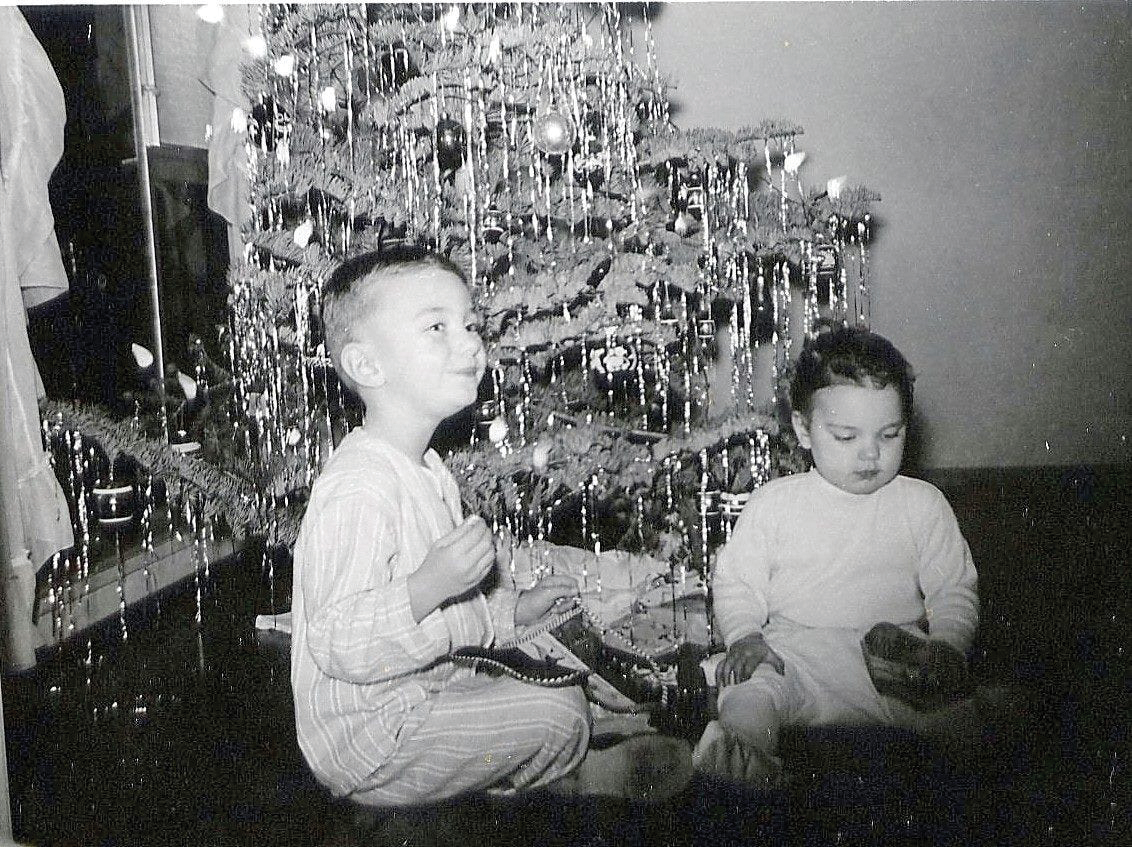
Around that same time in my own 1960s childhood, Christmas morning was the one day my siblings and I bounced out of bed before sunrise. We’d race down the hall to see the magical display of gifts Santa had left. Stockings were fair game, but the wrapped gifts had to wait until Mom and Dad were up and sipping coffee. We tried to be quiet — we really did — but excited children just have one volume. Our parents joined us with sleepy smiles, and the day was on.
By early afternoon we were at Grandma and Grandpa Webster’s house. Aunts and uncles and cousins everywhere, the smell of turkey, pies and pine, laughter bouncing off the walls.
One year, a few days after Christmas, I was there again with my uncles — boys only a few years older than I was — when we found two unopened boxes of wrapped presents stashed behind the trash cans. Somehow they’d been overlooked. We thought we’d hit the jackpot. But even then, a small thought crossed my mind: We don’t need more.
That thought returns every year. I still wonder how best to give. Drop a few dollars in the red kettles? Buy toys for kids I’ll never meet? Serve meals at a shelter? Maybe all of the above.
But the harder question is why. Am I doing it out of compassion or to quiet the guilt of being advantaged when others aren’t? What would Jesus say? Or Abraham? Or the Buddha? Maybe even God?
I don’t know. I still don’t have the big answers. But I think they’d all offer some variation of the Golden Rule: Do unto others as you would have them do unto you (Matthew 7:12).
As children on Christmas Eve, we all looked at the night sky, wondering if Santa and his sleigh were out there, heading toward our house soon. The stars seem brighter than on any other night, and we’d think of the one that shone over Bethlehem, wishing we could see it now.
Here’s a secret I’ve never told anyone: Even now, in my 70s, I still do that. The magic is still there.
–
Stay up to date on business in the Capital Region: Subscribe to the Comstock’s newsletter today.
Recommended For You

From Legendary Eggnog to Midnight Mochi, Here Are Sacramento’s Sweetest Holiday Traditions
Local makers keep cherished winter rituals alive
Like Santa’s workshop, Sacramento has a bevy of elves preparing goods for your holidays, and some are months in the making. We stopped in to observe the preparations.
Nevada City Is More Than a Christmas Town
Visit the oldest theater in the West and other remnants of Gold Rush-era splendor
This Sierra Nevada foothills community is often the subject of glowing profiles in the national media and labeled a “Gold Rush-era town.” So what exactly does Nevada City tell us about that unusual and relatively brief time in history?
The Heart of a Campfire
Remembering generations of sleeping under the stars in California
Like my father before me, I taught my son to build a campfire the
old-fashioned way: with balled-up paper under kindling, under
twigs, under larger sticks, all fastidiously layered beneath
three logs wigwammed in the center. It was a thing of beauty. We
stood back in proud appreciation of our handiwork before striking
a match in a solemn generational ceremony.

Essay: An Empty Nester’s Melancholy Travels Without His Children
For the Last Word essay column, a writer shares his recent travels through Europe without his children
I could, I felt, either wallow in sadness at this state of affairs or, with my wife, chart our own course and go to places that we had never previously visited, using the strangeness of new locales to ask myself a series of questions on, broadly speaking, what it all meant.