


This story is part of our February 2026 issue. To read the print version, click here.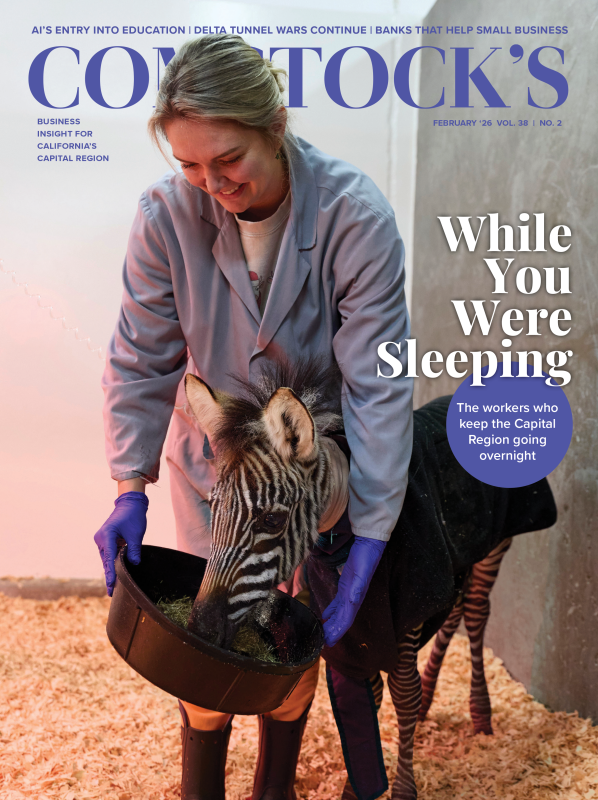
I think anyone who’s ever worked in public safety and medical emergency jobs — as well as anyone who’s ever owned a business, whether urban, suburban, domestic or agricultural — has always found it a little amusing that the majority of people think so-called “nine-to-five” jobs sound ideal.
Then there are the people who work in bakeries, the construction industry and the U.S. Post Office. They show up and leave at vastly different times, depending on their duties. For example, the people who work in restaurants that serve breakfast starting at 7 a.m. certainly don’t show up at 6:55! Likewise, doughnut makers can begin their workdays as early as 4 a.m. — as do the bus drivers who are there to pick you up at your stop at 7 a.m. And what about those commercial airline pilots on red-eye flights that take off after 9 p.m. and deposit us at our destinations as early as 5 a.m. — not to mention the cab and shuttle drivers awaiting us at the airport?
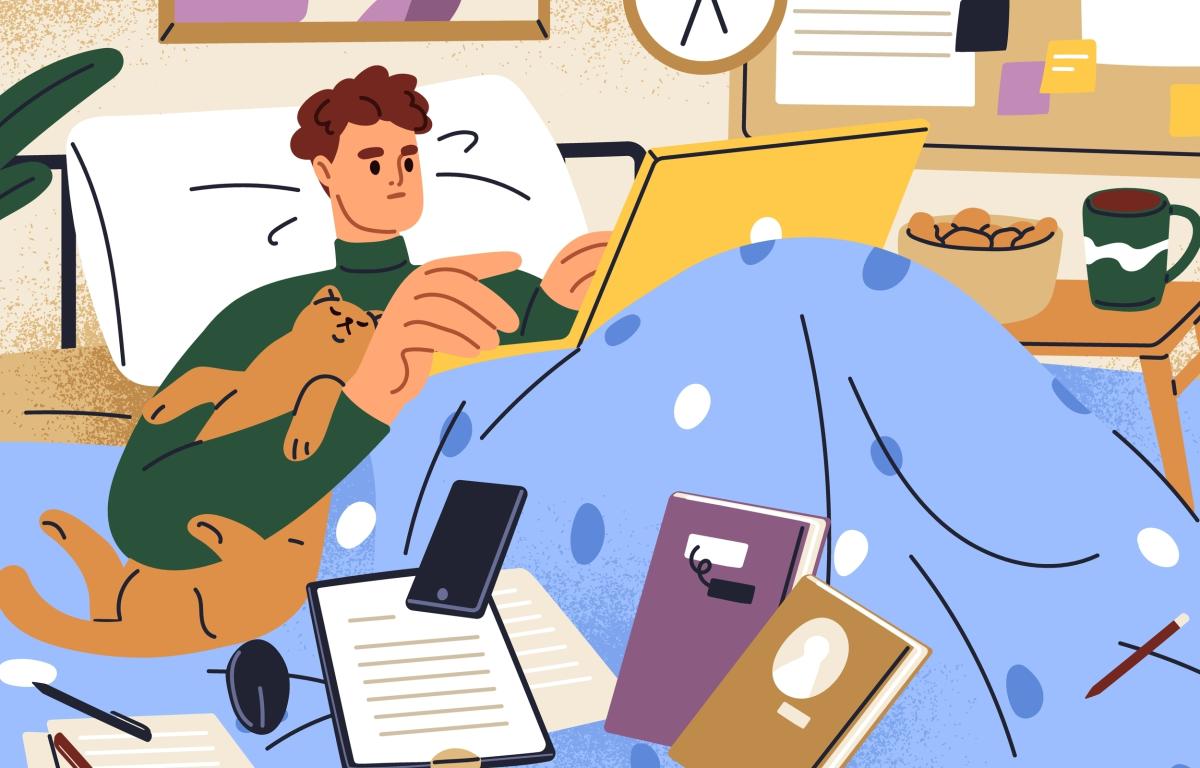
The computer age didn’t just modernize the office — it dissolved the boundaries of when and where work happens. Then the pandemic arrived and accelerated everything, scattering workers into spare bedrooms, kitchen tables, coffee shops and late-night video calls. What began as a necessity quickly became an expectation. Work no longer has a clear start or stop; it follows us wherever there’s a signal. The promise is freedom and flexibility. The reality is that many of us are always on, always reachable, always one notification away from being pulled back into “work mode.” Are we building a future where work fits into life, or one where life quietly rearranges itself around work?
Economic pressure only tightens the grip. For many people, longer and stranger hours aren’t a choice — they’re a survival strategy. The idea of unplugging for weeks at a time feels quaint when bills, housing costs and job insecurity loom large. Even as productivity tools multiply, the sense of running in place persists. We work harder, stretch further and still wonder why it never feels like enough. Is this relentless pace actually driving prosperity, or is it quietly draining the very energy and creativity we depend on?
Culturally, we’re conflicted. We praise “work-life balance,” yet celebrate those who grind the hardest. We complain about burnout while admiring the people who never seem to stop. Work gives us identity, community and purpose, but it also crowds out rest, reflection and relationships. Many people say they feel happier and more focused when given flexibility, yet organizations often pull them back toward old models of visibility and control. What are we really seeking from work: autonomy, meaning, security or some uneasy mix of all three?
Then there’s biology, the one factor we can’t negotiate with. Human bodies were not designed for endless hustle, rotating schedules or chronic sleep deprivation. Ignore that reality long enough, and it shows up as mistakes, exhaustion, illness and burnout. We know this, intellectually. And yet we keep pushing, treating fatigue as a personal failure instead of a systemic warning sign. If loving your job doesn’t protect you from exhaustion, what does that say about the way work is structured?
Now artificial intelligence enters the picture, promising efficiency, optimization and relief from drudgery. It may well deliver some of that. But it also raises uncomfortable questions about value and replaceability. If machines can do more of what we do — and do it faster — will that translate into more breathing room for humans? Or will it simply raise expectations again, asking us to produce more in less time, with fewer excuses?
So where does all this leave us? Are we moving toward a world with more humane, flexible ways of working — or one where the boundary between work and life dissolves completely? If the old models no longer fit, but the new ones leave us exhausted, maybe the real task isn’t choosing between office or remote, day shift or night shift. Maybe it’s asking harder questions about what we want work to give us and what we’re no longer willing to give up in return.
If you could design your ideal work schedule, what would it look like? If I had more time, I might take a cruise, play in my garden, be with family and friends I don’t see often enough and spend more time with the Bible, sewing and playing piano. And just as important — what’s actually stopping you from trying to make it real?
What do you think?
Winnie Comstock-Carlson
President and Publisher

–
Stay up to date on business in the Capital Region: Subscribe to the Comstock’s newsletter today.
Recommended For You
Let’s Keep the Main Thing the Main Thing | Opinion
FROM THE PUBLISHER: What is Sacramento's 'main thing'?
Sometimes it’s not a bad idea for an entire region to get in touch with itself — and for that, I turn to a favorite quote from the late educator and writer Stephen Covey, whose simple but direct point for businesses and individuals was to focus on “the main thing.”
A Thriving (but Manageable) Metropolis | Opinion
FROM THE PUBLISHER: An ode to Sacramento, despite what Joan Didion wrote
For most of us who live and work here, Sacramento, the once-called “cow town,” has grown with the region into a thriving but manageable metropolis.
To Halve or Not to Halve, That Is the Question | Opinion
FROM THE PUBLISHER: Reflections on the perennial question of dividing California
For 175 years, from California’s admission into the U.S. until now, it sits as the fourth largest economy in the world. More than 220 attempts have been made to divide our state into two, three and even six states. The various reasons have included its sheer size and its presumed ungovernability.
Let’s Talk About the Elephant$ in the Room | Opinion
FROM THE PUBLISHER: On California's most pressing issues, and why we should discuss them
The biggest, most bumbling elephant in the room these days may be summarized in that famous line from “Jerry Maguire,” the 1996 Tom Cruise movie: “Show me the money!”