


This story is part of our February 2026 issue. To read the print version, click here.
A woman driving a well-worn white minivan stopped in front of our new home one early morning about two years ago. My wife and I had just moved about five miles, from one Sacramento neighborhood to another. After nearly 30 years in East Sac, we were getting accustomed to our new community in Sierra Oaks.
Pedestrian access to the American River Parkway is just down the street, so I thought the woman might have needed directions. Instead, she lowered the driver’s side window as I approached her vehicle and introduced herself as the new newspaper delivery person.
The woman handed me a photocopied note that contained pleasantries and her contact information. The inside of her van was organized chaos. There was a stack of the day’s Wall Street Journal, the six-day-per-week publication to which I subscribe. Surprisingly, there were several other bundles, including The New York Times, The Sacramento Bee, San Francisco Chronicle and USA Today. Plastic newspaper sleeves and rubber bands covered the seats and floor. Sticky notes were the dashboard’s dominant decor.
Our conversation lasted maybe 30 seconds, but it was more than enough time to spark a reminiscence about delivering newspapers nearly 60 years ago in Walnut Creek. The concept was the same as it is today. It’s the most important job in the industry, but it’s also the weakest link and lowest paying newspaper position. Still, it remains integral to the success of the increasingly shrinking print newspaper readership.
Freddie Kafer, a young newspaper vendor, sells the Saturday
Evening Post outside Sacramento’s state Capitol in May 1915. The
photographer, Lewis Wickes Hines, photographed newspaper boys and
other child workers around the country for the National Child
Labor Committee. (Public domain via Library of Congress)

The demise of newspapers isn’t breaking news, but it is depressing. The 2025 State of Local News Report, published online by Northwestern University’s Medill School of Journalism, details the decline. About 3,500 newspapers have folded in the United States since 2005. Among U.S. dailies, 1,566 were published in 2005, and 937 remain.
Related: Gold Country Media Defies Newspaper Naysayers
The morning-delivered San Francisco Chronicle and the afternoon-published San Francisco Examiner were metropolitan newspapers of my youth. In 1950, the Examiner lured columnist Herb Caen, the most influential reporter in the Bay Area, away from the Chronicle for a reported $38,000 salary. But the latter persuaded the Sacramento-born, Pulitzer Prize-winning columnist to return.
Legend details that when Caen changed newspaper employers, the publications’ circulations increased or decreased by 20,000 in one day. If subscribers were unable to read what he wrote early in the morning because the newspaper was tossed into the bushes, on the roof, into a puddle or not delivered, the delivery person would quickly know. Continued employment was uncertain.
Newspaper columnist Herb Caen in his San Francisco Chronicle
office in 1994. (Photo by Nancy Wong via Wikimedia Commons,
licensed under CC-BY 4.0)
Suburban daily newspapers were published throughout the Bay Area. I delivered the Contra Costa Times, owned by Dean Lesher, a Harvard University-educated lawyer with marketing skills and a healthy ego. He purchased the Walnut Creek Journal-Courier in 1947, renamed it, used green newsprint and began free home delivery. He also owned a weekly, the Walnut Creek Sun, which I also delivered.
Related: Local News Is Breaking. Can These Websites Fix It?
I began distributing about 50 newspapers by bicycle daily to homes and businesses in the small downtown area in the late 1960s. The $2 monthly subscription rate was referred to as “payment optional.” Delivery boys (and later girls) retrieved newspapers in bundles from a large, unlocked green box at the base of a steep road near the elementary school I attended. Rubber bands and plastic bags were provided.
If the newspapers were the proper thickness, they could be folded with advertising inserts into thirds. Distributing the newspapers evenly across the canvas pouch was key to staying upright while cycling. I don’t remember specific delivery requirements, but any skilled delivery person, even at a young age, knows getting the paper on the porch or deep into a driveway is key. Knowing the neighborhood, cutting across driveways and taking side streets were important for efficiency. Using a finessed sidearm delivery worked best and resulted in bigger tips.
Payment for the Contra Costa Times was monthly, and the transaction was completed with a small green booklet. Customers were asked if they wanted to make a payment. Subscribers received a small, perhaps 2-inch-long receipt with an imprint of $2.
Some newspaper recipients “didn’t want to pay for that rag.” But they sometimes recognized the delivery boy’s good business practices. If the newspaper arrived on time, in the proper location and without damage, the $2 optional payment was given to the carrier as a tip.
Related: The Man Who Buys the Capital Region’s Dying Newspapers
About 30 years ago, an important shift occurred: The once youth-dominated employment domain changed. Routes became much larger and more geographically challenging. Adults began delivering newspapers in their automobiles. Delivery by bicycle became obsolete.
It was also an adult who understood the importance of newspaper home delivery as well as anyone I’ve known in my decades immersed in newspapers.
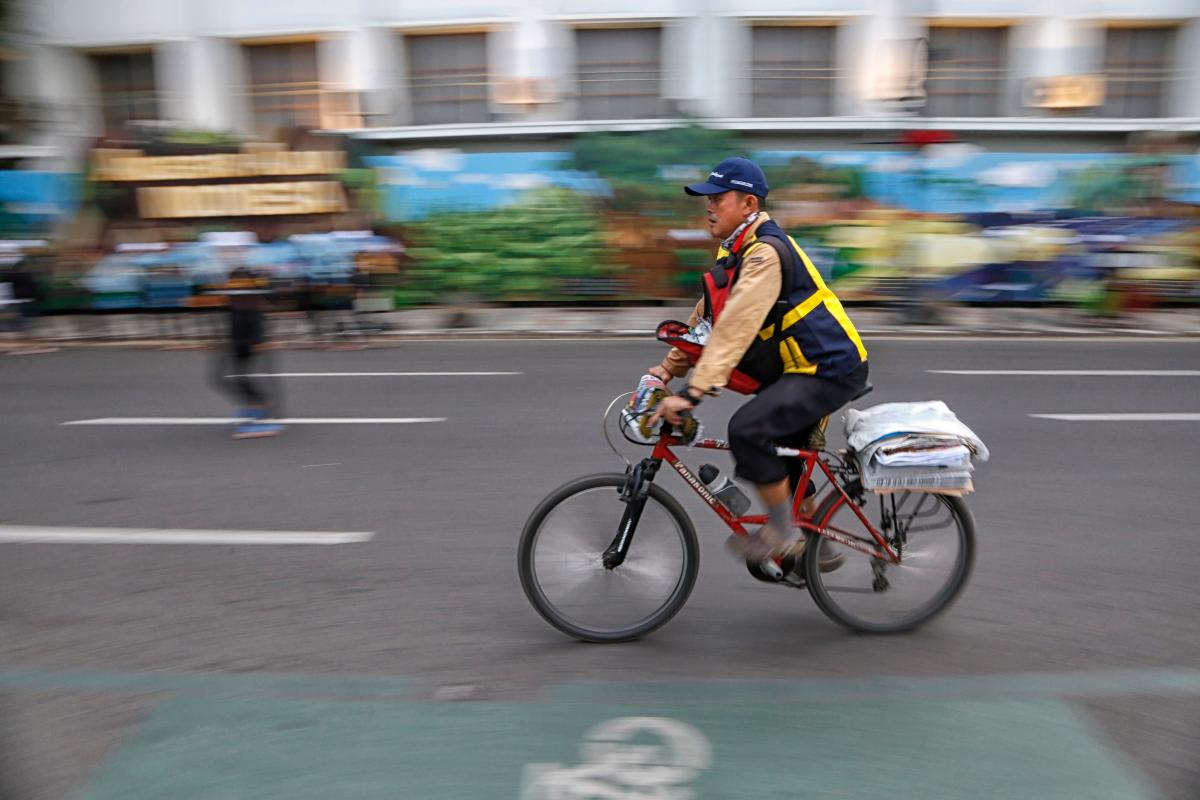
A man delivers newspapers in Bandung, Indonesia. Newspapers are
still delivered by bicycle in some parts of the world, but in the
U.S. most delivery people use cars. (Shutterstock photo)
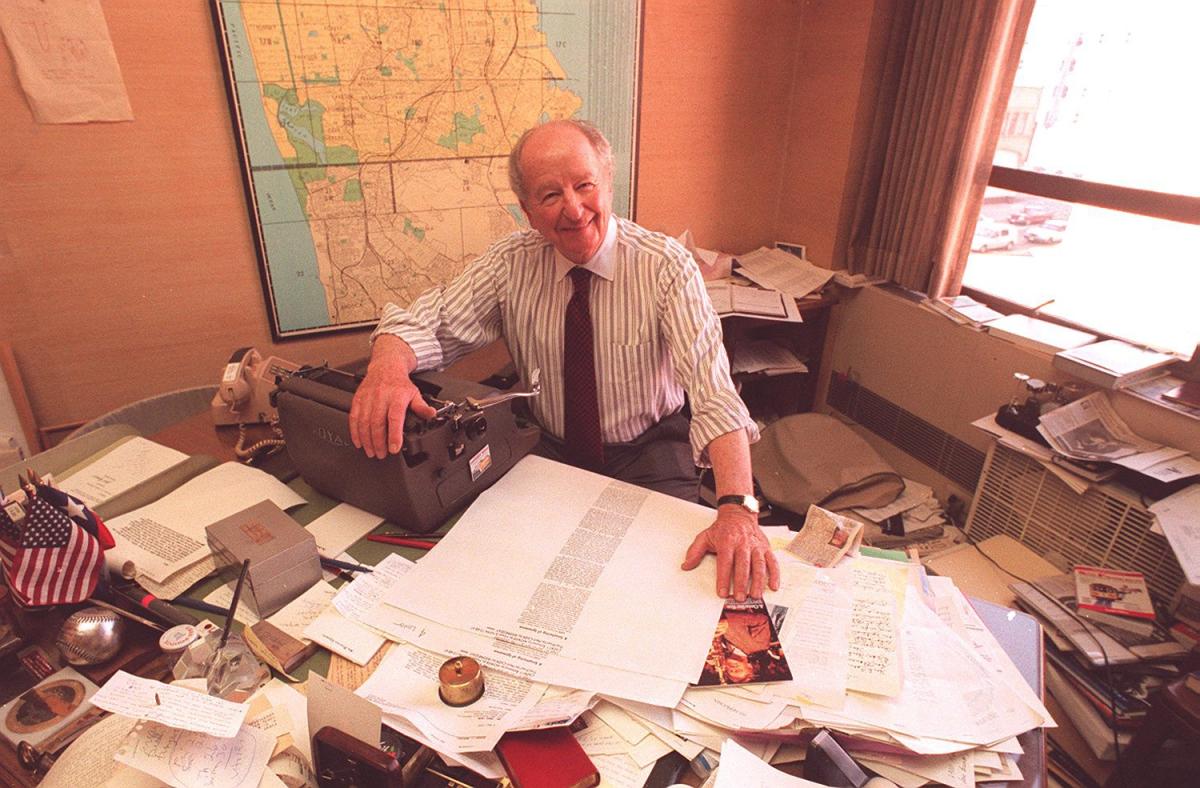
Bill Conlin worked for 60 years as a sports columnist for The Sacramento Bee and in several reporting and editing jobs at The Sacramento Union, which ceased publication in 1994. Conlin, a masterful storyteller and an old-school reporter who wore oddly patterned sports jackets, smoked cigars and had a wicked wit, died at age 84 in 1997. He was a sports columnist during my eight-year reporting tenure at The Bee that ended 40 years ago.
Related: As Niche Magazines Gain Popularity, Capital Region Publishers See Value in Paper and Ink
Conlin told the story of going to work on a Sunday morning, a usually quiet time and ideal for writing and editing. Conlin knew better, but he instinctively answered a call to the newsroom. It was an upset subscriber who hadn’t received the newspaper.
The circulation department would reopen on Monday morning, the caller was told. But he wasn’t satisfied. He wanted to know who he was talking to, what he was doing and why he couldn’t deliver the Sunday edition.
Conlin, then The Union’s editor, determined the subscriber had made a good point and asked for his address. He retrieved the morning’s edition from the loading dock, drove to the caller’s house and delivered the newspaper to the subscriber at his front door.
–
Stay up to date on business in the Capital Region: Subscribe to the Comstock’s newsletter today.
Recommended For You

The Man Who Buys the Capital Region’s Dying Newspapers
Paul Scholl has accumulated 18 print newspapers in under two decades
Paul Scholl started a newspaper about two decades ago to promote his services as a hospice chaplain. Now he brings relief to papers on their deathbeds. How did Scholl come to not only own 18 papers but to make them financially sustainable?
Gold Country Media Defies Newspaper Naysayers
For six Northern California publications, the alleged death of print is a very big typo
Award-winning Gold Country Media keeps pressing on in a
digital-dominated world.

Essay: An Empty Nester’s Melancholy Travels Without His Children
For the Last Word essay column, a writer shares his recent travels through Europe without his children
I could, I felt, either wallow in sadness at this state of affairs or, with my wife, chart our own course and go to places that we had never previously visited, using the strangeness of new locales to ask myself a series of questions on, broadly speaking, what it all meant.

Essay: My No-Resolution Resolution
We should work towards our goals year-round, not just in January
For the past 20 years, my resolutions have been mainly the same. Lose weight, get in better shape, travel more and spend more time with friends and family. This year, and I guess I actually started this a few years ago, I made this a way of life instead of a yearly goal.