

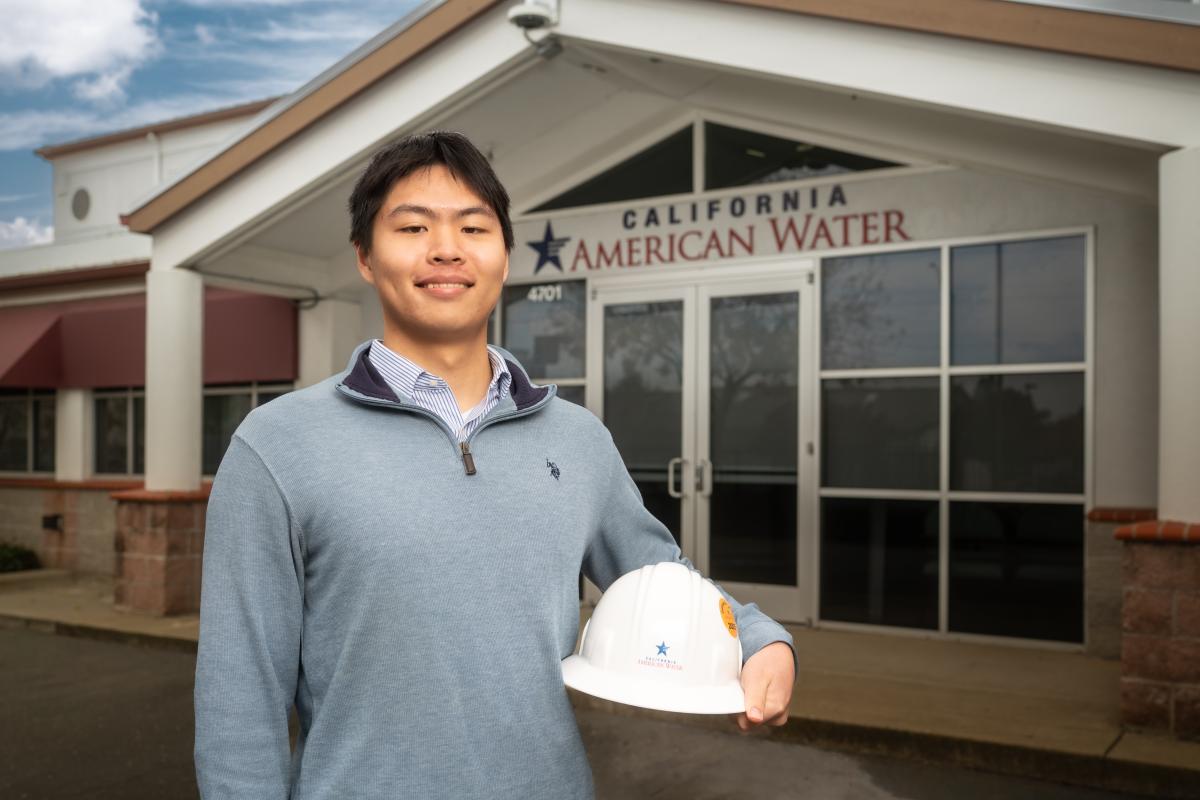
Clean, reliable water is easy to take for granted. You turn on the tap, fill a glass and rarely think about what it takes to make that moment possible. For engineers like Anli Liu at California American Water, that simple act is the end point of years of planning, design and quiet problem-solving that most people never see.
Liu’s hands-on work started with Engineers Without Borders UCLA, where projects often meant entering rural communities, listening more than talking and working alongside locals to design small but life-changing systems like gravity-fed lines from a hillside spring or a properly sized storage tank. That experience teaches a kind of engineering that is as much about humility and relationships as it is about calculations. You learn quickly that a design only “works” if the community can maintain it after you leave.
“If I had one piece of advice for engineers, it’d be to find work where you can actually see the difference you’re making in real time, like we do at California American Water. People count on us, communities depend on us and what we do will matter for generations to come.”— ANLI LIU, Engineer with California American Water
Today, the communities Liu serves look different, but the core philosophy is the same. At California American Water, the canvas is larger and the stakes are spread across thousands of households. Liu’s days are devoted to the kind of essential work that keeps modern life running with two main projects acting as the anchor of his schedule, each serving local communities in distinct ways. Across Sacramento, he’s tackling the complex task of upgrading and replacing an aging network of wells, while another project keeps him busy replacing water mains to ensure reliable access for residents.
The work being done by both Liu and California American Water means sitting in community meetings explaining why a street will be torn up for weeks, working with operations crews who know every stubborn valve in the system and navigating regulations that demand high water quality even as climate change tightens supplies. It is serious, slow, methodical work. And it underpins the moments most people never pause to notice: the glass of water that doesn’t make you sick, the shower that comes on at full pressure, the hydrant that works when firefighters need it. The fact that we rarely think about those systems is, in many ways, the clearest sign that engineers like Liu are doing their jobs well.